

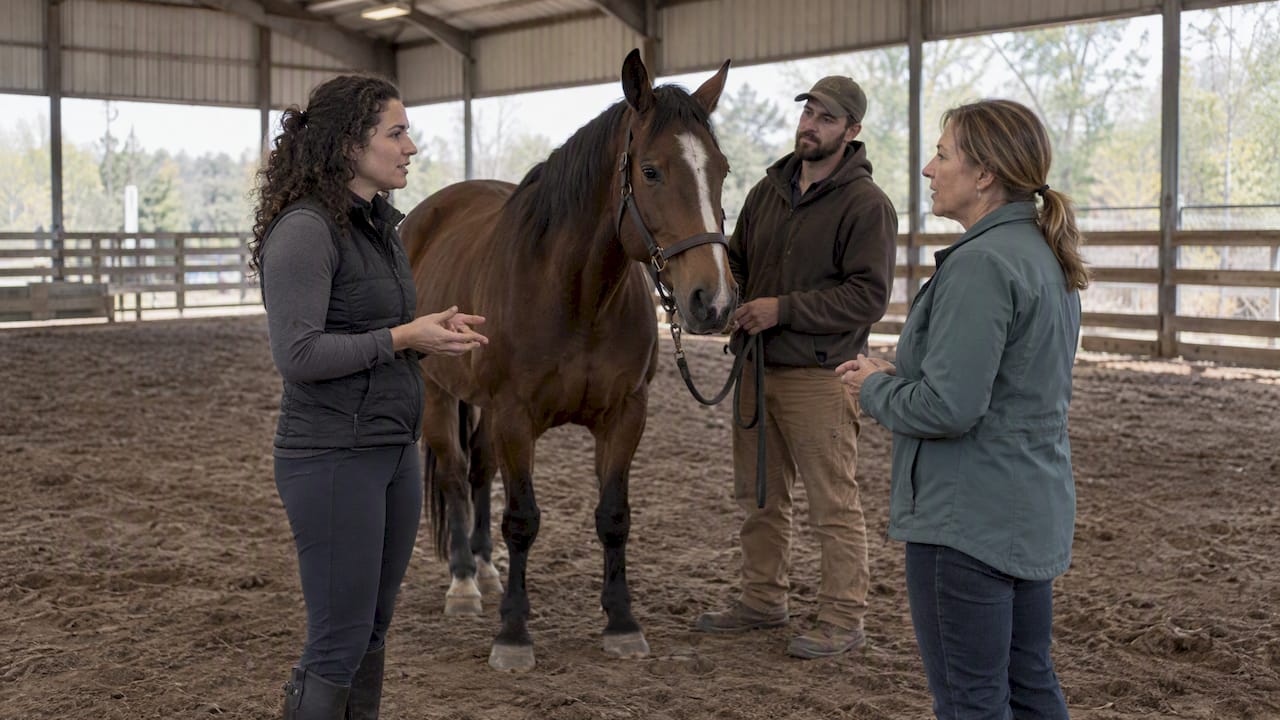
Equine-assisted therapy can be a promising adjunct that reduces anxiety symptoms in many people when delivered with clinical oversight and evidence-based elements. Randomized trials and systematic reviews show measurable, short-term drops in anxiety scores, particularly when programs use manualized, CBT-based protocols. We recommend seeking a program where a licensed clinician guides the treatment plan, not just an equine specialist.
Key Takeaways
Structured, clinician-led equine-assisted therapy using evidence-based protocols effectively reduces short-term anxiety symptoms, especially when combined with cognitive-behavioral techniques.
| Point | Details |
|---|---|
| Clinician oversight is essential | A licensed mental health professional guides the treatment plan and interprets horse feedback to ensure safety and efficacy. |
| Manualized protocols work best | Programs based on established, CBT-integrated protocols like Project Stride or RiA show measurable anxiety reductions. |
| Ground-based activities are accessible | Most programs use unmounted tasks like grooming and leading, making therapy suitable for those with mobility or fear issues. |
| Standardized evaluation matters | Effective programs track outcomes through self-report, caregiver input, and physiological measures, promoting consistent progress. |
| The Pursuit Counseling recommends a comprehensive approach | Our clinician-led equine therapy integrates structured groundwork with broader anxiety treatment for optimal results. |
Table of Contents
- What equine-assisted therapy actually involves
- What the strongest studies found
- Benefits people with anxiety commonly report
- What a session or program typically looks like
- How to vet a program before you commit
- Why clinical oversight changes the outcome
- Our approach to clinician-led equine therapy
- FAQ
- Sources
What equine-assisted therapy actually involves
The field uses a few overlapping terms, and they matter. Equine-Assisted Psychotherapy (EAP) pairs a licensed mental health clinician with an equine specialist to run unmounted, ground-based sessions focused on psychological goals. Equine-Facilitated Psychotherapy (EFP) is closely related and sometimes used interchangeably. Therapeutic or adaptive riding, by contrast, centers on mounted activities and often targets physical or developmental goals alongside emotional ones.
The mechanism behind all three is fairly consistent. Horses are prey animals, so they respond quickly to subtle nonverbal cues like tense posture or shallow breathing, and that responsiveness gives a clinician real-time feedback to work with. A person who cannot name their anxiety in words often sees it reflected back in how a fifteen-hundred-pound animal shifts its weight or turns away.
A typical session includes some combination of:
- Grooming or leading a horse to build body awareness and present-moment focus
- Unmounted groundwork exercises that surface patterns in trust, boundaries, and communication
- Mounted tasks, when riding is part of the program, that build confidence and physical regulation
- Structured reflection with the clinician, connecting the horse’s response to the client’s internal state
The team structure matters as much as the activities. A licensed mental health professional sets the therapeutic goals and leads the processing conversation, while the equine specialist manages horse welfare and physical safety throughout.
What the strongest studies found
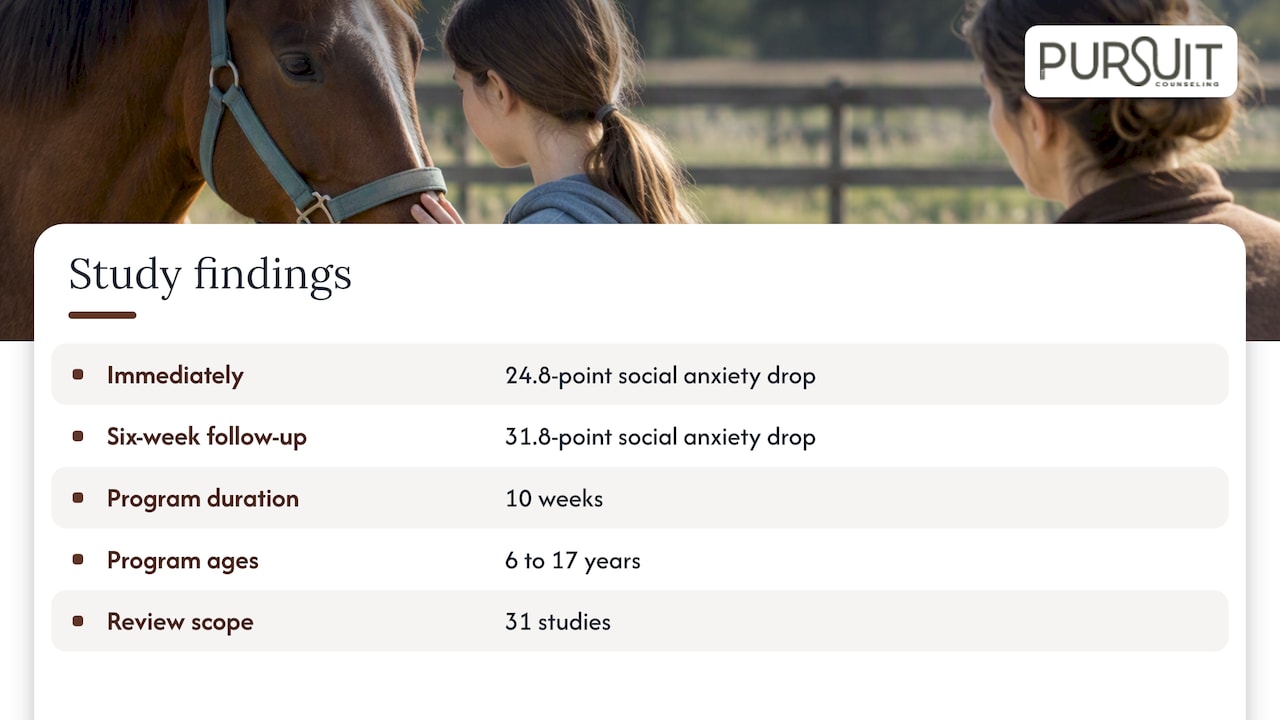
The evidence base for equine therapy and anxiety is still young, but a handful of controlled studies give us something to work with. The pilot RCT for Project Stride combined equine activities with cognitive-behavioral elements for young women with social anxiety, and the results were notable for a small trial: participants showed a 24.8-point drop in social anxiety scores immediately after treatment, with the reduction growing to 31.8 points at the six-week follow-up compared to the control group.
A manualized, 10-week CBT-based adaptive riding program for youth ages 6 to 17 reduced caregiver-reported anxiety and improved emotion regulation, with saliva testing showing decreased cortisol and, at some points, increased oxytocin.
Findings from the Reining in Anxiety (RiA) randomized controlled trial
That program, known as Reining in Anxiety, mapped five core CBT components, including exposure, cognitive restructuring, and relaxation training, directly into riding activities. Because the protocol is manualized, trained instructors delivered it consistently even outside a clinical office, which matters in areas where licensed therapists are scarce.
A 2026 systematic review examined 31 studies on animal-assisted therapy for anxiety in vulnerable populations and found that randomized trials consistently outperformed control groups, though long-term outcomes remained mixed across the reviewed studies. The reviewers pointed to inconsistent protocols and session lengths as the main reason results are hard to compare across programs, and they recommended more standardization going forward.
The practical takeaway is straightforward: short-term anxiety reduction has solid support, especially from manualized, CBT-integrated programs, but researchers are still working out how durable the gains are and which program features matter most.
Benefits people with anxiety commonly report
Beyond symptom scores, people describe a few recurring shifts. Many notice better emotion regulation in the moment, a calmer physiological baseline, and, in some studies, favorable changes in stress hormones. A randomized trial in a substance use disorder setting found that six weeks of weekly equine sessions improved emotion regulation and self-efficacy compared to a control group, which suggests the benefits extend beyond anxiety-only samples.
Common reported benefits include, especially improved emotion regulation with practical tools from programs like those at Connected Recovery Inc.:
- Improved emotion regulation and a greater sense of being able to manage stress as it happens
- Increased engagement with treatment, with some program types showing lower dropout than talk therapy alone
- Practice managing interpersonal anxiety in group formats, since horses and fellow participants both require real-time social attunement
- Accessibility for people who have no riding experience, since ground-based work requires no mounting at all
Pro Tip: Ask whether a program offers ground-based options if mobility limits or a fear of riding make mounted work feel like too much too soon.
What a session or program typically looks like
Session length and structure vary, but the research gives us useful benchmarks. Most studied sessions run 40 to 60 minutes, whether mounted or unmounted, and programs are built around a defined arc rather than open-ended visits.
- Intake and goal-setting, where the clinician establishes what anxiety symptoms the program will target.
- A structured series of sessions, commonly spanning six to ten weeks in the manualized models tested in research, including the 10-week RiA protocol and six-session pilot formats.
- Progress tracking, usually through self-report or caregiver-report anxiety measures, and in some studies through saliva-based cortisol and oxytocin testing.
- A review point, where the clinician and client decide whether to continue, adjust, or transition to another treatment format.
No prior riding experience is required in most programs, and safety staffing typically pairs a licensed clinician with an equine specialist throughout.
How to vet a program before you commit
Not every stable offering “equine therapy” is running a clinically sound program, so a short checklist helps before you book anything.
- Confirm a licensed mental health clinician is directly involved in treatment planning, not just present on-site.
- Ask whether the program follows a manualized, CBT-based protocol similar to those used in Project Stride or RiA.
- Request the program’s written risk and welfare policies for the horses themselves.
- Check staff credentials and any accreditation, such as PATH Intl. or EAGALA, where applicable.
- Clarify how outcomes are measured, what emergency procedures exist, and whether accessibility accommodations are available.
Cost and logistics vary by provider, so ask directly about session fees and whether sliding-scale or referral options exist. If you are managing a complex anxiety presentation, a comorbid condition like PTSD, or ongoing medication management, a clinically integrated program, one where a licensed therapist is steering the work, is the safer choice over a purely recreational riding program. For a closer look at vetting criteria specific to adult programs, see our breakdown of what the 2026 RCT found for equine therapy in adults.
Why clinical oversight changes the outcome
The research is encouraging, but it also tells us something people often miss: the horse is not the intervention. The protocol is. Programs that borrowed CBT’s structure, like exposure sequencing and cognitive restructuring, and built it into groundwork or riding sessions produced the clearest results. Programs that treated the horse as the whole treatment, with no clinical framework behind it, are harder to evaluate and harder to trust.
That distinction should guide how you choose a program. A horse can offer a kind of honest, immediate feedback that talk therapy alone does not always provide, especially for someone who intellectualizes their anxiety rather than feeling it. But that feedback needs a clinician in the room who can turn a reaction into insight, and insight into a skill the person carries home. Anxiety that is complicated, that is wrapped up in trauma or in years of avoidance, deserves a treatment plan with that kind of structure behind it, not a pleasant afternoon with an animal and no follow-through.
— Adam Glendye LPC, CPCS
Our approach to clinician-led equine therapy
We provide equine therapy sessions led by a licensed clinician, focusing on the principle that the horse supports the work, while a trained therapist directs it. Sessions blend ground-based activities with evidence-informed elements so the work connects to a broader anxiety treatment plan rather than standing apart from it.

If you want to see how this fits into a full course of care, our anxiety and stress management therapy page outlines therapy options offered alongside equine sessions, and the equine therapy page describes what a first session generally involves.
- Schedule an intake to discuss whether equine therapy fits your current treatment considerations
- Ask your clinician how experiential work like this might complement talk therapy or medication management
Find information through the services page to explore possible starting points that fit your needs.
This article is general information, not a substitute for advice from a qualified doctor. Consult a qualified healthcare professional about your own circumstances before acting on anything here.
FAQ
Can horses help with anxiety, or is this mostly anecdotal?
Controlled studies, not just personal accounts, show measurable short-term reductions in anxiety symptoms from structured equine programs. The strongest evidence comes from manualized, CBT-based protocols like Project Stride and RiA, rather than unstructured time around horses.
How does equine therapy work for anxiety specifically?
Horses respond to subtle nonverbal cues, which gives a clinician real-time feedback on a client’s internal state during a session. That feedback becomes material for the clinician to process with the client, connecting a physical reaction to a thought pattern or coping skill.
How long does an equine therapy program typically last?
Research protocols commonly run six to ten weeks, including the 10-week RiA program and shorter pilot formats. Sessions themselves typically run 40 to 60 minutes.
Do I need riding experience to start equine therapy?
No. Many effective programs rely entirely on ground-based tasks like grooming and leading, which require no mounting and work well for people with mobility or sensory concerns.
What should I ask before choosing an equine therapy program?
Ask who provides clinical oversight, whether the program follows a manualized protocol, and how outcomes are tracked. A program integrated with licensed mental health care is generally the better fit for anxiety that coexists with trauma or other diagnoses.
Sources
- Project Stride: An Equine-Assisted Intervention to Reduce Symptoms of Social Anxiety in Young Women – PubMed
- Reducing anxiety and stress among youth in a CBT-based equine-assisted adaptive riding program – PubMed
- Animal-Assisted Therapy for Reducing Anxiety in Vulnerable Clinical Populations: A Systematic Review – PMC