

Equine therapy in Georgia usually ranges from lower to higher prices depending on session type, with private sessions generally costing more than group formats. Before you book anything, confirm that a licensed mental health clinician leads the clinical work and ask directly whether the program provides a superbill for insurance reimbursement. That one phone call tells you more about value than any price sheet.
TL;DR:
- Private sessions cost between and 0 depending on the provider’s licensure, location, and whether it is a one-on-one or group format.
- Out-of-network reimbursement is possible with a superbill, but approval depends on your insurer’s behavioral health benefits and requires prior verification.
- Costs for intensive or multi-day programs are billed as flat fees and may include additional charges for horse care, facility, or overnight stays.
- Session prices are influenced more by staffing, format, and infrastructure than by the horses or activity itself.
- Equine therapy is generally recommended for those who process difficult material experientially rather than verbally, not as a crisis first step.
Table of Contents
- Typical Price Ranges and What They Actually Buy You
- What Actually Drives the Price You’re Quoted
- Paying for It: Insurance, Superbills, and Lower-Cost Paths
- A Checklist for Vetting a Reputable Program
- What’s Actually Included in a Session, and How to Compare Offers
- Evidence, Safety, and How We Approach This Work
- Costs Beyond the Session Itself
- How the Cost Compares to Other Georgia Therapy Options
- What a Full Program Actually Costs Over Time
- When Equine Work Helps, and When It Isn’t the Right First Step
- How We Can Help You Get Started Locally
- FAQ
- Sources
Typical Price Ranges and What They Actually Buy You
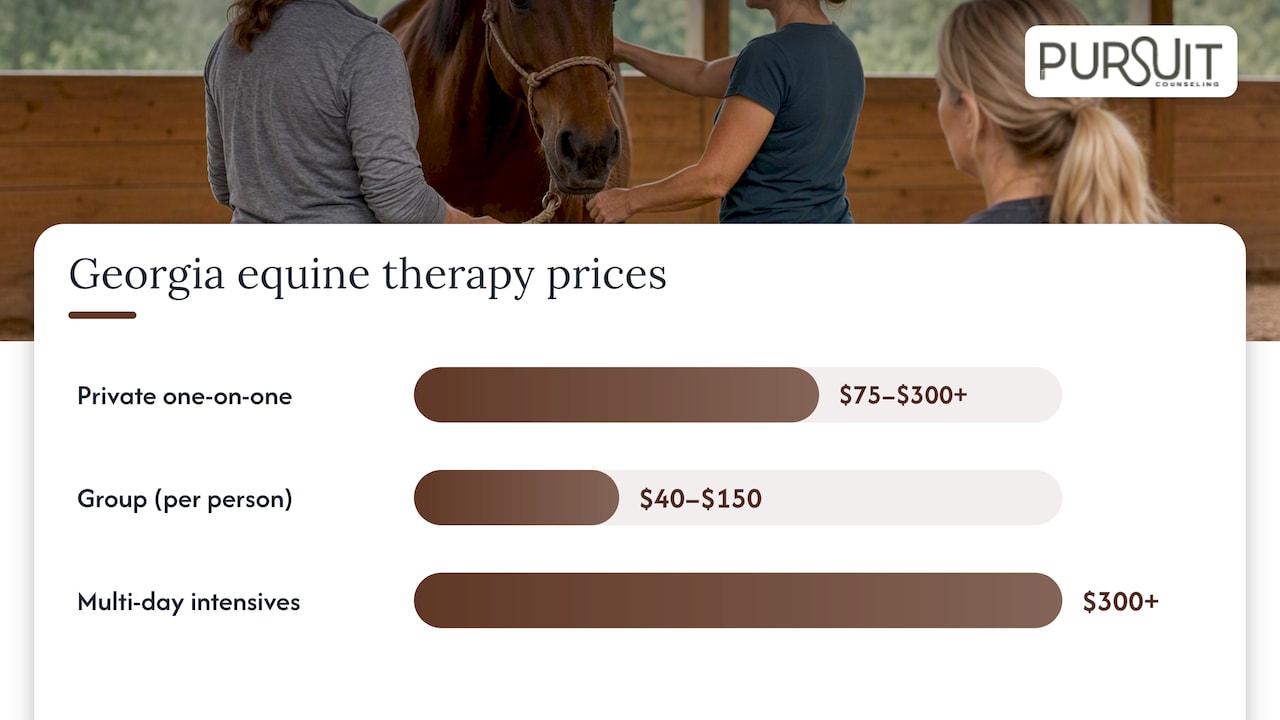
Numbers without context are almost useless here, so let’s ground them. Private, one-on-one sessions in Georgia generally fall between and 0 or more, depending on who runs the session and where. Group sessions, often used for teens, veterans’ cohorts, or corporate team-building, tend to run to 0 per person. Multi-day intensives and executive-style programs sit at the high end, sometimes priced as flat packages rather than hourly rates.
Weekly series pricing works differently than a one-day intensive. A six-week series billed weekly accumulates cost gradually, while an intensive compresses the same clinical ground into one or two concentrated days, which raises the per-day price but can lower the total time investment. Youth and community programs frequently sit at the lower end of the range, sometimes subsidized by grants or nonprofit funding.
What changes a quote the most is how a provider itemizes fees. Some bundle everything into one session rate; others separate the clinical fee from a facility or horse-care fee.
- Private sessions generally fall within a moderate to higher price range depending on clinician licensure and location
- Group sessions typically cost a lower amount per participant, varying by program details
- Intensive or multi-day formats are usually offered as flat program fees instead of hourly rates
Regional variation matters too. A program near metro Atlanta may price differently than one in a more rural part of the state, partly because facility and horse-boarding costs shift with land values and partly because urban clinicians often carry higher overhead.
What Actually Drives the Price You’re Quoted
Price differences rarely come down to the horses themselves. They come down to staffing, format, and how much clinical infrastructure sits behind the session.
A licensed mental health clinician leading the work costs more than an unlicensed facilitator running a recreational activity, and that distinction matters for your money and your outcome. Explainer resources recommend verifying the licensed mental health lead before you book, since “therapy” should mean a licensed clinician is directing treatment, not simply present in the barn.
- Team model costs: a licensed therapist paired with a certified equine specialist costs more than either role alone
- Private sessions cost more per hour than group formats because staff time isn’t shared
- Multi-day intensives add horse care, insurance, and facility overhead that single sessions don’t carry
- Rural or remote locations sometimes add travel fees for the clinician or specialist
Pro Tip: Ask every provider to break down what you’re paying for, the clinical hour, the facility fee, and any equine specialist charge, so you can compare quotes on the same terms.
Session length and group ratio also shift cost. A 90 minute private session with a 1 to 1 staff ratio will always price higher than a 60 minute group session split among four participants.
Paying for It: Insurance, Superbills, and Lower-Cost Paths
Most equine programs expect payment at the time of service. Very few bill your insurer directly, which surprises people who assume this works like a standard therapy copay.
What many programs do offer is a superbill, an itemized receipt with CPT codes that you submit to your own insurer for possible out-of-network reimbursement. Reimbursement isn’t guaranteed. It depends entirely on your plan’s out-of-network behavioral health benefits, so the real work happens on a phone call with your insurance company before you assume anything.
- Ask your insurer directly whether out-of-network behavioral health claims are reimbursed, and at what rate
- Request the CPT codes a provider will use on a superbill before your first session
- Ask about sliding scale fees, which many Georgia programs offer for financial need
- Look into community or nonprofit-run group programs, which often cost less than private clinical sessions
Our own guidance on out-of-network therapy reimbursement walks through exactly how that submission process works, and our couples therapy insurance coverage guide covers similar payment logic that applies broadly to behavioral health services, including equine-assisted work.
A Checklist for Vetting a Reputable Program
Price alone won’t tell you whether a program is safe or clinically sound. These are the questions worth asking on your first call.
- Ask for the name and Georgia license number of the mental health clinician leading the work.
- Ask which equine certification the specialist or instructor holds, such as PATH Intl. or CTRI.
- Ask who specifically handles horse safety and handling during sessions versus who handles clinical processing.
- Ask about staff-to-client ratios, especially for group or youth programs.
- Ask whether you’ll receive a written treatment plan and how sessions integrate with any other therapy you’re in.
- Ask what insurance the facility carries and what safety protocols exist for falls, spooked horses, or medical emergencies.
PATH Intl. definitions guidance stresses that strong programs draw a clear line between licensed psychotherapy and adaptive riding activities, and that distinction should show up in how a provider answers these questions, not just in their marketing copy. A program that can’t name its licensed lead or dodges the certification question is a red flag worth taking seriously.
What’s Actually Included in a Session, and How to Compare Offers
A fair comparison starts before the horse ever enters the picture. Most programs begin with an intake or assessment, where the clinician gathers history and sets goals, separate from the equine activity itself.
A standard 60 to 90 minute session usually breaks into three parts: groundwork or activity time with the horse, clinical processing where the therapist helps you connect what happened to your goals, and integration tasks you carry into daily life. PATH Intl. guidance notes that the integration piece, the processing and follow-up work, often matters more to lasting change than minutes spent with the horse.
Intensives add overnight stays, multiple consecutive days, or coaching follow-up calls, which explains their higher price tag relative to single sessions.
- Does the quote include intake or assessment time, or is that billed separately?
- Is clinical processing time included, or only the activity portion?
- Does the program offer any follow-up or integration coaching after the session ends?
- Is the quoted price per session, per hour, or a flat program fee?
Evidence, Safety, and How We Approach This Work
A review of nine peer-reviewed studies on equine facilitated therapy and trauma found promising but limited evidence that this work can ease PTSD and trauma symptoms, while the same review called for larger, controlled studies before anyone treats those findings as settled. That’s an honest place to start: encouraging, not conclusive.
We lead with a licensed clinician paired with an equine specialist, because the processing work, not just time spent near a horse, is where change tends to happen.
We pair licensed clinical leadership with equine-informed experiential work, offered both in person and online, through formats ranging from single sessions to full intensives.
If you’re weighing whether this fits your situation, the first call should cover licensure, format, and whether a superbill is available for your insurer. We can answer all three directly.
Costs Beyond the Session Itself
The quoted session or program rate rarely covers everything you’ll spend. Transportation to a rural facility adds up if you’re driving outside metro Atlanta regularly for weekly sessions. Some programs charge a separate intake or assessment fee before your first equine session, distinct from the ongoing per-session rate.
Equipment is usually provided by the facility, but ask directly. A handful of programs charge a small materials or liability fee, particularly for youth or group cohorts where helmets and safety gear see heavier use. If a program includes any overnight or multi-day component, lodging and meals may be billed separately from the clinical fee, so read the fine print on what a “program fee” actually bundles.

Follow-up coaching calls, written treatment summaries, or additional integration sessions after an intensive sometimes carry their own charge rather than being folded into the original price. None of these add-ons are automatically a red flag, but a provider who can’t itemize them clearly when asked is one.
Before you commit, ask for a full written estimate that separates the clinical fee, any facility or horse-care charge, transportation expectations, and anything tied to overnight stays. That single request will surface most hidden costs before they surprise you on an invoice.
How the Cost Compares to Other Georgia Therapy Options
Equine-informed work sits in a similar price range to other specialized, experiential therapy formats rather than standard weekly talk therapy. A typical individual therapy session in Georgia runs lower, often in the range offered through standard outpatient practices, while trauma-focused work like EMDR tends to price closer to or above the midpoint of the equine range because of the specialized training involved.
Intensives, whether equine-based or traditional couples and individual intensives, consistently price higher than single weekly sessions across the board, because they compress hours of clinical work into one concentrated block. If you’re comparing an equine program to a standard weekly therapy track, the real question isn’t which costs less per hour. It’s which format matches how you process difficult material, verbally across many weeks or experientially in fewer, longer sessions.
Group-based equine work often lands closer in price to community support groups than to private individual therapy, which makes it a reasonable entry point if cost is the main barrier. For readers weighing format against budget, our services and specialties page lays out comparable pricing across individual therapy, EMDR, and experiential options so you can see the range side by side before deciding where your money goes furthest for your specific goal.
What a Full Program Actually Costs Over Time
A single session price only tells part of the story. A six-week series of weekly private sessions, using a mid-range rate, can total somewhere in the low to mid thousands of dollars once you multiply a per-session fee across six visits. A twelve-week series roughly doubles that total, though many providers offer a modest discount for committing to a longer block upfront.
Intensive formats flip this math. Instead of paying weekly over six or twelve weeks, you pay a larger flat fee for one or two concentrated days, then often return for periodic follow-up sessions rather than a full weekly cadence. That structure can mean less total calendar time in treatment, even when the upfront number looks larger.
Group-based six-week or twelve-week programs cost meaningfully less in total than private equivalents, since the per-session group rate is shared across participants rather than billed one-on-one. If budget is the deciding factor, ask any program directly for their total cost across your expected program length, not just the per-session rate, since fee structures and any multi-session discounts vary by provider and aren’t standardized across Georgia.
When Equine Work Helps, and When It Isn’t the Right First Step
Equine-informed sessions tend to help people who process better through doing than through talking: leaders working on team dynamics, clients using it as an adjunct to trauma work already underway, or anyone stuck in their own head during standard talk therapy. It’s rarely the right first move during active medical instability or an immediate crisis, where stabilization has to come first. If you’re considering it, budget honestly, expect integration work between sessions, and give the process more than one visit before judging whether it’s working for you.
— Adam Glendye LPC, CPCS
How We Can Help You Get Started Locally
If you’re weighing equine-informed work against other formats, we offer both as part of one coordinated approach, not a separate side service.

- Experiential and equine-informed sessions through our Adventure Therapy offering
- Intensive formats through our Couples Intensive and Executive Experience programs for concentrated work
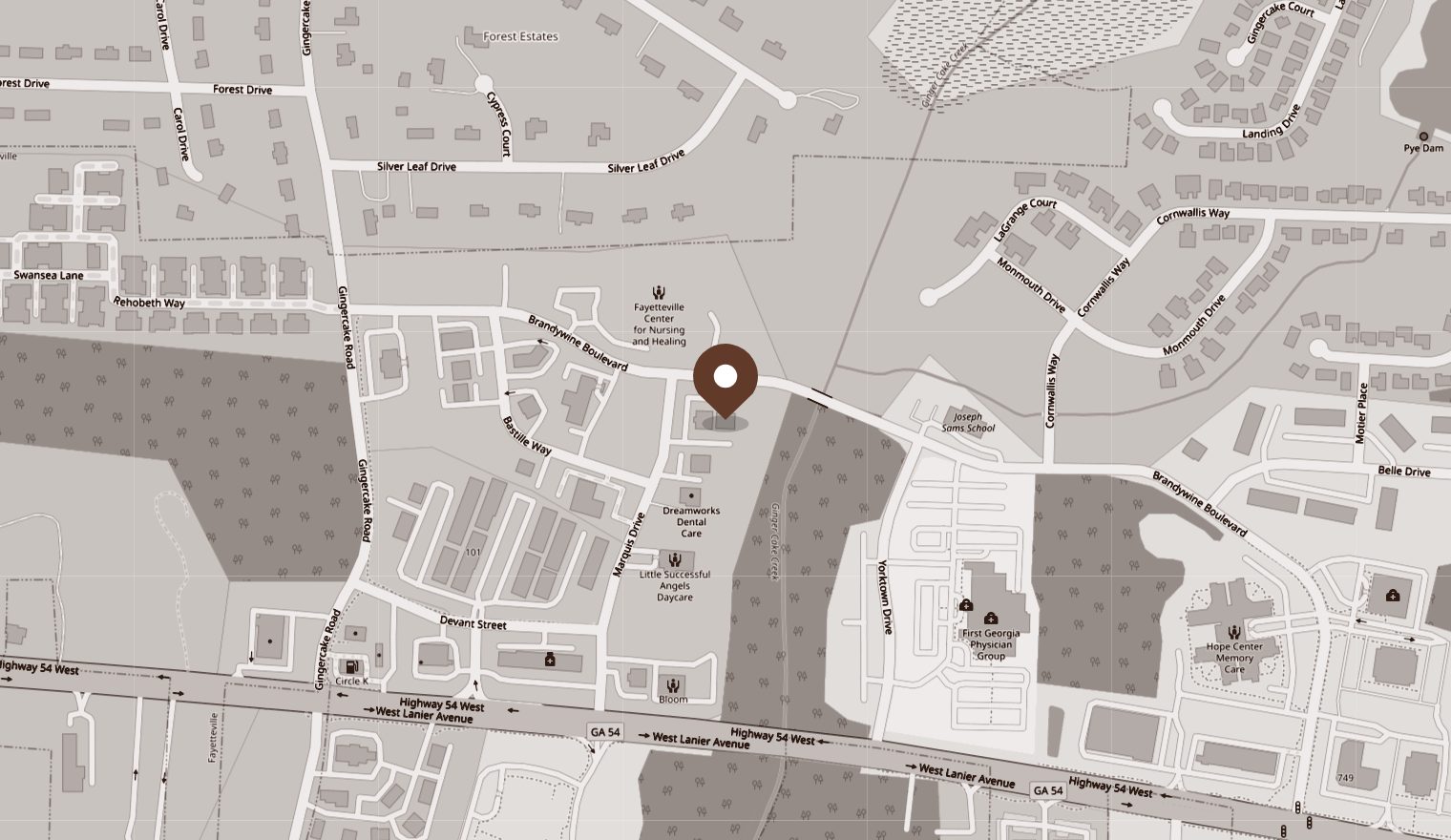
- In-person access in Fayetteville and Fayette County, plus online sessions for Peachtree City, Senoia, Brooks, Tyrone, and South Atlanta
Call to ask about current pricing, whether a superbill fits your insurance situation, and what intake looks like before your first visit. Our services and specialties page lists current formats and rates so you know what to expect before you call.
This article is general information, not a substitute for advice from a qualified doctor. Consult a qualified healthcare professional about your own circumstances before acting on anything here.
FAQ
How much does an equine therapy session cost?
Private sessions in Georgia typically run to 0 or more, while group sessions usually cost to 0 per person. The exact rate depends heavily on whether a licensed clinician leads the session and whether it’s private or group format.
Will insurance pay for equine therapy?
Most programs require payment at the time of service and don’t bill insurers directly, but many provide a superbill you can submit yourself for possible out-of-network reimbursement. Whether you get reimbursed depends entirely on your specific plan’s behavioral health benefits, so confirm with your insurer before booking.
Is equine therapy worth the cost?
A review of nine peer-reviewed studies found promising but limited evidence that equine-facilitated work can ease trauma and PTSD symptoms, though researchers called for larger, controlled studies. Whether it’s worth it for you depends on whether experiential processing fits how you work through difficult material, and on confirming a licensed clinician leads the treatment.
Who qualifies for equine therapy?
There’s no single qualifying diagnosis. People use equine-informed work as an adjunct to trauma treatment, for leadership and team development, or simply because they process better through experience than through conversation alone, and a licensed clinician can help you determine fit during an initial consultation.
Sources
- Equine Facilitated Therapy and Trauma: Current Knowledge, Future Needs
- PATH Intl. definitions guide for service providers
- Equine‑Assisted Psychotherapy (EAP): What to Know