Maybe it's anxiety — still running on high alert even when nothing's technically wrong. Maybe it's heavier than that — the kind of tired that sleep doesn't fix, the flatness where things used to feel like something. Maybe it's something that happened, still firing like it's happening now. You don't need the clinical term for it before you reach out. This is where we talk about what's actually happening underneath — not generic coping tips, the real mechanics of why some things stay stuck no matter how many times you've discussed them, and what actually helps.
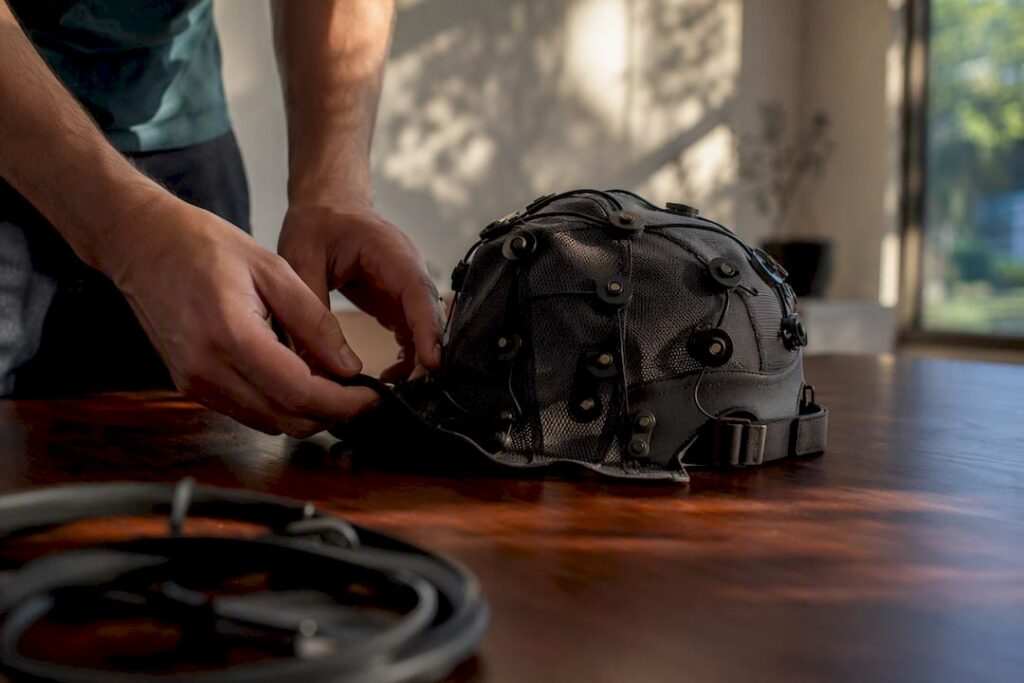
Brain training that uses small rewards to help your brain practice healthier activity patterns — similar to how you'd practice a sport. Sensors read your brain's electrical activity in real time; nothing is sent into your brain. When it settles into the pattern the training is aiming for, you get a small signal — a brightened screen, clearer sound — and over time your brain does more of that on its own, even outside of sessions. We work with this across ages — kids and teens, not just adults.
For some families, it's explored as a starting point before medication; for others, it works alongside it. The honest picture: the evidence is genuinely mixed — large blinded studies show little group-level effect, smaller personalized programs report real gains for some people. It's not a proven cure — it's a reasonable adjunct inside a plan built around your actual brain patterns, not a stand-alone fix.
Learn more about our programs →Eye Movement Desensitization and Reprocessing addresses trauma-related activation that underlies a lot of what gets talked about as "just anxiety." It's not about reliving what happened in detail — it's a structured way of helping your brain finish processing something that got stuck, so it stops firing like it's still happening.
It's often the missing piece for people whose perfectionism, fear of failure, or reactivity traces back to early experiences of criticism or failure — the layer that talk therapy alone doesn't always reach, even when the talking itself was genuinely helpful.
Learn more about our programs →Yes. Looking fine and feeling fine aren't the same thing, and the effort it takes to maintain that gap is real — whether that's anxiety, depression, or both. You don't need to be falling apart to justify getting support.
If low mood persists for two weeks or more, interferes with daily functioning, or comes with sleep changes, appetite changes, or loss of interest in things you used to care about, that's worth a real conversation — not something to just wait out.
No — that's a common misconception. EMDR and other trauma approaches are specifically designed to process what's stuck without requiring you to narrate every detail out loud.
That's actually a common reason people end up here — not because talk therapy failed, but because it was reaching a different layer than the one still holding the reaction.
Neurofeedback and EMDR exist for exactly this — reaching what talking alone hasn't been able to move.
Explore our programs →