

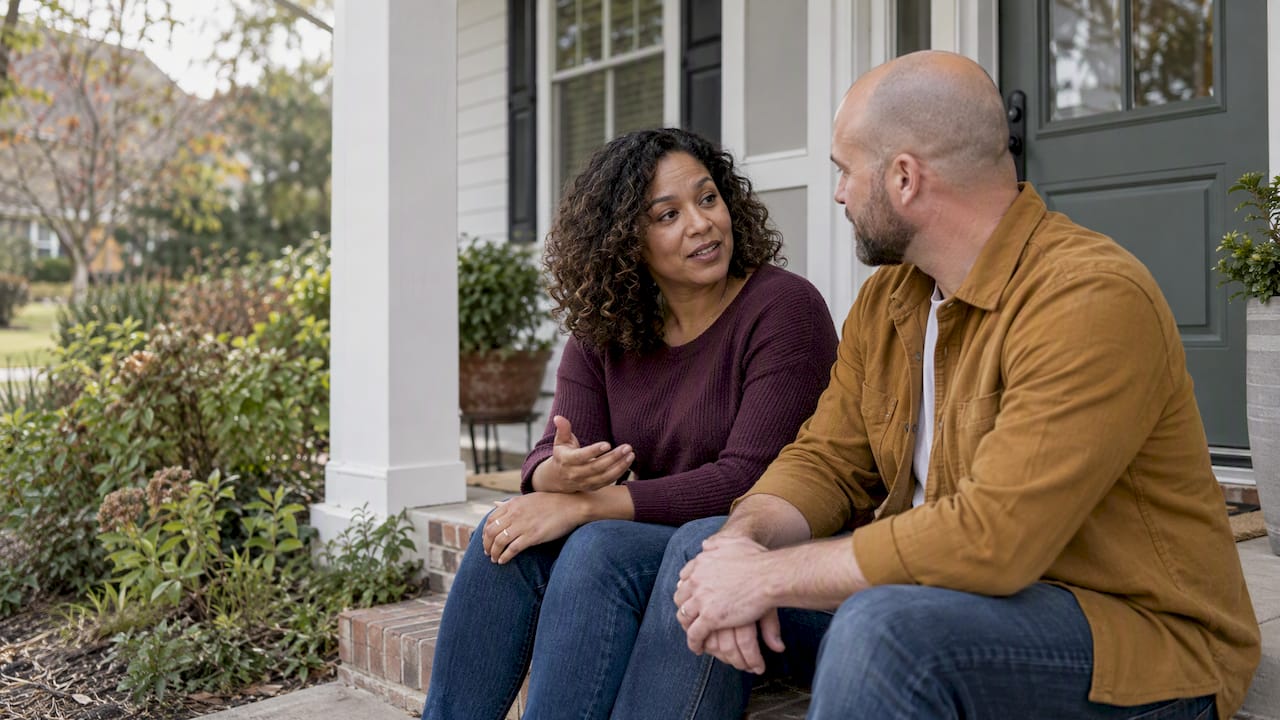
ADHD affects relationships because its symptoms (inattention, impulsivity, emotional intensity, trouble following through) are easy to read as lack of care. A forgotten promise feels like indifference. A sharp reaction feels like contempt. Over time, two people who love each other start keeping score. This article explains what is happening underneath that pattern, what tends to help, and when it is worth bringing in a therapist who understands ADHD.
If you are reading this at 11 p.m. because the same argument happened again, you are not alone, and you are probably not the problem. The pattern is.
Key takeaways
- ADHD symptoms are often misread as not caring, which feeds blame in both directions. Naming the pattern is the first real step.
- The non-ADHD partner often ends up carrying the household load, and the relationship can slide into a parent-child dynamic. That deserves a structural fix, not more willpower.
- Simple external systems, clear requests and specific praise usually work better than reminders, nagging and good intentions.
- Standard couples counseling can miss ADHD entirely. Look for a therapist who treats it as part of the system.
- This article is education, not assessment. Only a qualified clinician can evaluate whether ADHD is present.
Table of Contents
- How ADHD shows up between two people
- What the research says about marriage and ADHD
- The patterns that wear couples down
- What helps, in practice
- If you are the partner without ADHD
- If you are the partner with ADHD
- Education is not assessment
- Our perspective
- When couples therapy for ADHD makes sense
- A next step that fits where you are
- FAQ
- Sources
How ADHD shows up between two people
Adults with ADHD frequently report trouble keeping long-term relationships and handling conflict. A review of research on adults with ADHD in interpersonal relationships ties this to inattention, impulsivity, hyperactivity and emotional dysregulation. None of those are character traits. They are how a particular nervous system handles attention and feeling.
The trouble is that your partner cannot see your nervous system. They see the outcome.
CHADD, the national ADHD organization, describes how poor communication, emotional outbursts and unfulfilled commitments can be taken as evidence that someone does not care, which fuels blame-heavy conflict. When ADHD is undiagnosed, that misreading is even more likely, because neither person has another explanation.
Here is what that looks like in ordinary life:
- Listening. You are in the room and engaged, then your mind drifts mid-sentence. Your partner hears: you don’t matter enough to hold my attention.
- Follow-through. The dentist appointment, the form, the call to your mother. It slips. Your partner hears: I can’t count on you.
- Reactions. A comment lands and you answer fast, louder than you meant. Your partner hears: you are attacking me.
- Timing. Late again, or a project that swallowed the whole evening. Both of you hear a ranking of priorities that was never intended.
On the other side, the person with ADHD often carries guilt and shame they rarely say out loud. They know they let people down. They do not know why it keeps happening despite trying hard.
What the research says about marriage and ADHD
The numbers do not describe doomed relationships. They describe a measurable strain that responds to the right support.
A 2021 study of couples where one partner had an ADHD diagnosis found higher conflict, lower marital adjustment and more negative conflict-resolution styles compared with control couples. A WebMD overview of ADHD and marriage cites research indicating that over 90% of spouses of adults with ADHD reported doing more to compensate in managing the household or raising children.
That second finding matters because it names an experience many partners never get validated: the sense of being the only adult in the house. We will come back to it.
The patterns that wear couples down
The parent-child dynamic
One partner becomes the manager: reminding, checking, correcting, redoing. The other becomes the managed: defensive, quietly resentful, and less likely to take initiative because initiative gets criticized. Nobody chose this. It builds from a hundred small rescues.
WebMD notes that the non-ADHD partner can address over-helping by setting boundaries, not rescuing from consequences and working as a team. The key word is team. Withdrawing help without a plan is just a new way to punish.
Resentment on one side, shame on the other
Resentment says: I do everything. Shame says: I can’t do anything right. They feed each other. The partner with ADHD retreats to avoid criticism, which looks like more neglect, which brings more resentment.

Rejection sensitivity
Many adults with ADHD describe perceived criticism, even imagined, hitting like physical pain, followed by a shame response out of proportion to the moment. This is often called rejection sensitive dysphoria. It is a commonly reported experience, not a formal diagnosis. We wrote more about it in our piece on rejection sensitivity and ADHD. In a relationship it can make even gentle feedback feel like a verdict.
Hyperfocus, then drift
Early love can be intoxicating for someone with ADHD: novelty, intensity, full attention. Then the novelty fades and attention goes elsewhere, and the partner feels the warmth leave. If that sounds familiar, our article on ADHD hyperfocus in relationships explains why it can feel like love left when it often did not.
Boredom and novelty
ADHD makes it harder to find motivation for uninteresting tasks. A long relationship is full of them: bills, logistics, routines. CHADD’s piece on when love gets lost in translation encourages couples to build in novelty and play on purpose, and to remember that what is easy for one partner may be genuinely hard for the other.
What helps, in practice
None of this is a cure, and none of it works every time. These are approaches clinicians and ADHD organizations commonly describe.
1. Change the story before you change the behavior
The most useful reframe is moving from “you don’t care” to “this is a system problem.” Specialists in couple work for ADHD describe reframing challenges as system issues rather than character flaws. This does not excuse harm. It makes it possible to solve it.
2. Slow the conversation down with mirroring
CHADD’s article on how couples can keep a strong relationship recommends mirroring, validating and empathizing. One person says something. The other repeats it back in their own words. The first person corrects or adds. Only then does the listener respond.
It feels slow and a bit artificial for the first week. It works because executive function differences can lead to what one author calls reconstitution of information, where what was said and what was processed are not the same thing. Mirroring catches the gap in real time.
3. Put it in writing
CHADD suggests writing down requests, using positive reinforcement and letting a partner experience the direct results of their actions, along with external supports such as automatic bill pay. Treat memory as a design problem. A shared list on the fridge, a recurring calendar alert, a bill that pays itself: each one removes a recurring argument. For more on building these supports, see our guide to executive function skills for adults, and our 10-minute reset for ADHD procrastination.
4. Make praise specific and frequent
Advocates in the ADHD community argue that, for the ADHD brain, praise acts as fuel while perceived criticism can cause a freezing response, as described in the CHADD feature on love and ADHD. That is a perspective, not a law. But many couples find that noticing what is working, in plain words, changes the temperature of the house faster than another conversation about what is broken.
5. Split the load by strengths, not by fairness charts
Equal is not always workable. If one of you is reliably terrible at mail and the other is fine with it, assign mail. Then trade something that costs the other person less. The point is that the plan matches the brains involved, and that both people agree to it when calm, not in the middle of a fight.
6. Make room for what ADHD brings
CHADD also points to real strengths: creativity, a love of play and novelty, and flexibility when plans change. Couples who only talk about deficits lose sight of why they chose each other.
If you are the partner without ADHD
You may be exhausted, and a little ashamed of how angry you have become. Both are common. Exhaustion is information, not a character flaw.
A few things tend to matter:
- Your resentment is real, and so is your partner’s effort. Both can be true.
- CHADD’s guidance for non-ADHD partners notes that you may need to accept that ADHD is lifelong and accommodations will be needed for the length of the relationship. That is not resignation. It is planning.
- Ask for specific things, in writing, with one request at a time.
- Keep your own support: friends, your own therapist, rest that does not depend on your partner changing first.
If you are looking for how to support a partner with ADHD, the honest answer is: help build the system, do not become the system.
If you are the partner with ADHD
You have probably been told to try harder for most of your life. You likely have been trying hard. The exhausting part is that effort alone does not fix a nervous system difference.
What tends to help is getting curious instead of defensive, telling your partner what you can and cannot reliably do, and getting your own care sorted. That can include a proper evaluation if you have never had one, and treatment decisions made with a medical professional. Women in particular are often missed for years, which we cover in hidden ADHD in women.
Education is not assessment
This article can help you recognize patterns. It cannot tell you whether you or your partner has ADHD. Anxiety, trauma, depression, burnout and sleep problems can all look like attention trouble, and they can also coexist with ADHD. A licensed clinician needs to evaluate that. If something here described you, treat it as a reason to ask, not as an answer.
Our perspective
We work with complicated people: pilots, executives, founders, busy moms, high performers who are excellent at everything except being understood at home. In couples where ADHD is involved, we rarely see two people who do not care. We see two people who are tired and have run out of explanations.
We do not treat the person with ADHD as the patient and the partner as the witness. The pattern between you is what we work on. That means naming what each of you experiences, in language that does not assign blame, and then building routines that fit the brains in the room. We want both of you doing the work, not one of you managing the other.
We also separate education from assessment. If ADHD has not been evaluated, we will say so, and we will help you find the right route. We promise no outcomes. We do promise to take the pain seriously and to be practical about what comes next.
— Adam Glendye LPC, CPCS
When couples therapy for ADHD makes sense
Consider it when the same fights repeat, when one of you has become the other’s manager, when trust has frayed around broken commitments, or when you have already tried counseling and left feeling it missed the point.
That last one is common. Arthur Robin, PhD, and Gina Pera, authors of a couple therapy model for adults with ADHD, emphasize that standard couple therapy often fails these couples because it overlooks ADHD neurobiology and focuses on generic issues instead of ADHD-specific cooperation. Effective work, they describe, involves educating the couple on ADHD, treating challenges as system problems, monitoring medication with the prescriber, and developing practical routines.
A good first session should leave you with a clearer description of your pattern, not just a place to vent. If you are unsure whether to choose marriage counseling or couples therapy, our Georgia guide to the difference explains how we think about it.
What working with us looks like
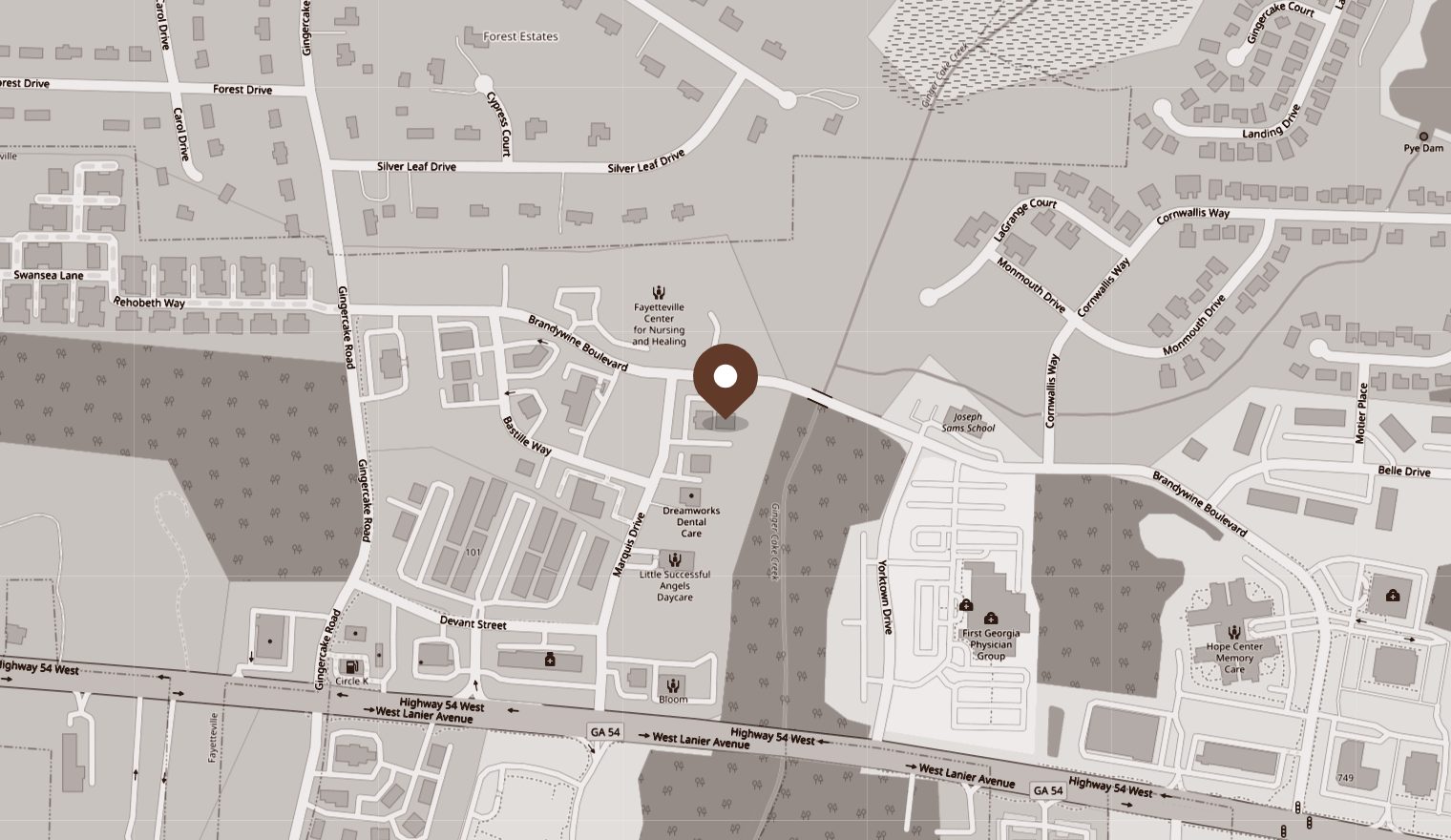
We are in Fayetteville, Georgia, and serve Peachtree City, Senoia, Brooks, Tyrone and South Atlanta, in person and online. Our couples and relationship counseling is private-pay. Individual therapy is 5 to 0 per hour depending on the service, and couples work is available weekly or as an intensive.
For couples who cannot find the room in a weekly 50-minute hour, our Couples Intensive concentrates the work. It is ,500 for a 3-hour intensive, and you can see current details on our intensives page. Intensives suit couples who want sustained time to get past the surface argument. They are not a guarantee of any result, and we will tell you honestly if a different format fits you better.
If you or your partner want ADHD-focused individual support alongside the couple work, see our ADHD therapy in Fayetteville. Some clients also explore neurofeedback for adults with ADHD; we are candid about what the evidence does and does not show.

A next step that fits where you are
Pick the one that matches your honest state, not your ideal one.
- You are not sure it is ADHD. Ask your doctor or a qualified clinician about an evaluation. Reading is not a substitute.
- You know it is ADHD and the house is tense. Choose one recurring argument and build one external system for it this week.
- You are past the point of fixing it alone. Book a consult, together or separately. You do not have to agree on everything to start.
- You are the exhausted partner. Get your own support first. That is not selfish. It is what makes the rest possible.
FAQ
How does ADHD affect relationships?
It affects them mainly through attention lapses, impulsive reactions, emotional intensity and missed follow-through. These get misread as not caring, which builds blame and resentment. Understanding them as symptoms of a system rather than flaws of character opens the door to practical fixes.
Can a marriage survive ADHD?
Many do, and many couples report real warmth and playfulness alongside the strain. Research shows higher average conflict, but averages are not your marriage. What tends to matter is whether both partners understand the pattern, share the load realistically and get support that accounts for ADHD. We cannot promise any outcome.
How do I support a partner with ADHD without becoming their parent?
Agree on systems together: written requests, shared calendars, automatic payments. Offer specific praise, and avoid rescuing your partner from consequences without a plan. If you are doing most of the managing, say so calmly and ask for a joint solution.
Is couples therapy for ADHD different from regular counseling?
It should be. Therapy that accounts for ADHD educates both partners, treats problems as system issues, coordinates with medication providers and builds routines that fit how the ADHD brain works. If your previous counseling ignored ADHD, it may be worth trying again with someone who does not.
Sources
- The experiences of adults with ADHD in interpersonal relationships (PMC)
- Marital Adjustment and Marital Conflict in Individuals with ADHD (PubMed)
- Marriage and Partnerships (CHADD)
- How ADHD Can Affect Your Marriage (WebMD)
- How Can Couples with ADHD Keep a Strong Relationship? (CHADD)
- A New Model for Adult ADHD Couple Therapy (CHADD Attention Magazine)
- Communicating, Paying Bills, and Moving Forward (CHADD)
- ADHD and Relationships: When Love Gets Lost in Translation (CHADD)
- Survival Skills for the Non-ADHD Partner (CHADD)