


If something happened that your mind and body still won’t file away, therapy can help. Trauma-focused psychotherapy is the first-line treatment for post-traumatic stress in the U.S., it usually runs weeks to a few months rather than years, and it is built to move at a pace you can tolerate. You don’t have to relive everything in the first session, and you don’t have to be “broken” to ask for it.
Maybe you’re functioning on the outside. You’re still showing up to the cockpit, the boardroom, the school pickup line. But you startle easily, sleep badly, or feel numb in rooms where you used to feel capable. This article explains what the research supports, what the work looks like, and how to choose a therapist who fits.
Key Takeaways
- Trauma-focused psychotherapies are the only treatments recommended as first-line for PTSD in U.S. guidelines. Cognitive Processing Therapy, Prolonged Exposure and EMDR are the best-studied.
- Treatment is usually time-limited. Many protocols run roughly 6 to 16 sessions, though some people need longer.
- Good trauma work is paced. Stabilizing and building skills come before, and alongside, processing the hard material.
- Education is not assessment. Reading about trauma can help you name what’s happening, but only a licensed clinician can evaluate you and recommend a plan.
- The first step is small: one consultation with someone experienced in trauma.
Table of Contents
- What trauma therapy is, and what it isn’t
- The approaches with the strongest evidence
- What sessions look like and how long it takes
- When therapy stirs things up
- Choosing an approach, and setting the pace
- Our perspective
- How we work at The Pursuit Counseling
- Finding a qualified trauma therapist
- Supporting someone you love
- FAQ
- Sources
What trauma therapy is, and what it isn’t
“Trauma therapy” is an umbrella term. It covers psychotherapies aimed at trauma-related symptoms and conditions, and it tends to be most useful when trauma is interfering with essential areas of life: sleep, work, relationships, concentration, or your ability to feel settled in your own body.
Trauma doesn’t only mean combat or catastrophe. Some people carry what we call “Big T” events: an accident, an assault, a death, a crash landing. Others carry the accumulation of smaller wounds, such as years of being on high alert, a hard childhood, or a relationship that wore down their sense of safety. If you want to understand that distinction, our pages on EMDR for Big T traumas and EMDR for little-t traumas go deeper.
One distinction matters here. Articles like this one are education. They can help you recognize patterns. They are not an assessment, and they can’t tell you whether you have PTSD, another anxiety condition, depression, or something else. A diagnosis comes from a licensed clinician who listens to your history. We won’t diagnose you in a blog post, and we’d be wary of anyone who would.

The approaches with the strongest evidence
The 2023 VA/DoD Clinical Practice Guideline recommends three individual, manualized, trauma-focused therapies for PTSD: Cognitive Processing Therapy, Eye Movement Desensitization and Reprocessing, or Prolonged Exposure. The American Psychological Association’s earlier guideline strongly recommends CBT, CPT, cognitive therapy and PE for adults, and conditionally suggests EMDR, brief eclectic psychotherapy and narrative exposure therapy.
Here is how the main options compare.
| Approach | What it does | Typical length |
|---|---|---|
| Cognitive Processing Therapy (CPT) | Examines the beliefs trauma left behind, such as “it was my fault” or “nobody is safe” | About 12 weekly sessions |
| Prolonged Exposure (PE) | Gradually approaches memories and avoided situations until they lose their grip | 8 to 15 weekly sessions of 60 to 90 minutes |
| EMDR | Brings a memory to mind while using bilateral stimulation, with less detailed retelling | Often 6 to 12 sessions, once or twice weekly |
| Trauma-focused CBT | Combines education, coping skills and work on trauma-related thoughts | Varies by protocol |
Two more points the research supports. First, the National Center for PTSD reports that 57 of every 100 people who receive CPT, PE or EMDR have meaningful symptom improvement after about three months, compared with 8 of every 100 people with PTSD who don’t receive treatment. Those are group figures, not a forecast for you. Second, a 2021 meta-analysis of 22 randomized trials found that PTSD symptom reductions held up at follow-ups at least 12 months after treatment ended.
The same guideline notes that evidence is still insufficient to recommend for or against several other approaches, including DBT, ACT, psychodynamic therapy and supportive counseling, as stand-alone PTSD treatments. That is a statement about the research, not about whether those tools can be useful alongside trauma work. We often use skills-based work as a stabilizing layer.
Why EMDR is a common starting point for people who dread retelling
EMDR differs from other trauma-focused treatments in that it doesn’t include extended exposure to the memory, detailed descriptions of the trauma, challenging of beliefs, or homework. For many high-functioning adults who have spent years containing the story, that is a meaningful difference. It isn’t easier work. It is different work. If you want a plain-language walkthrough, start with our introduction to EMDR or what EMDR is and how it can help.
What sessions look like and how long it takes
The National Center for PTSD describes trauma-focused talk therapy as typically 8 to 16 sessions with a licensed provider, in person or online. The National Institute of Mental Health says psychotherapy for PTSD can be one on one or in a group and usually lasts 6 to 12 weeks but can last longer.
In practice, treatment tends to move through a few phases. They overlap, and a good therapist adjusts them to you.
- Getting oriented. We hear your history at the level of detail you choose. We talk about what you want your life to look like and what is getting in the way.
- Building footing. You learn ways to settle your body and manage spikes of anxiety, so processing doesn’t happen on shaky ground.
- Processing. Using the chosen method, you work with the memories, beliefs and body responses that stay stuck.
- Integration. You test what has shifted in real life: work, sleep, relationships, the situations you used to avoid.
Mayo Clinic notes that the main treatment for PTSD is talk therapy, including exposure and cognitive approaches, and that combining treatments can teach skills to manage symptoms and address related problems like depression or anxiety. Some people notice changes within a few sessions. Others need more time, and that is not a failure.
When therapy stirs things up
Yes, trauma therapy can bring up distressing memories. That is part of how it works, and it is also the reason pacing matters. The National Center for PTSD notes that most people who complete CPT find the benefits outweigh any initial discomfort. Discomfort is not the goal, though. Regaining a sense of control is.
The APA’s guidelines for working with adults with PTSD say psychologists may emphasize safety to help clients regain a sense of control, focus on strengths rather than deficits, and value the therapeutic relationship. In plain terms, you should be able to say “slow down” and have it honored.
If you feel flooded, numb, or unable to function between sessions, tell your therapist at the next session or sooner. That is information we use to adjust. If you are in crisis or thinking about harming yourself, call or text 988, the Suicide & Crisis Lifeline, or go to the nearest emergency room.
If you are curious about what to expect specifically with EMDR, we wrote about side effects and what the trials report.
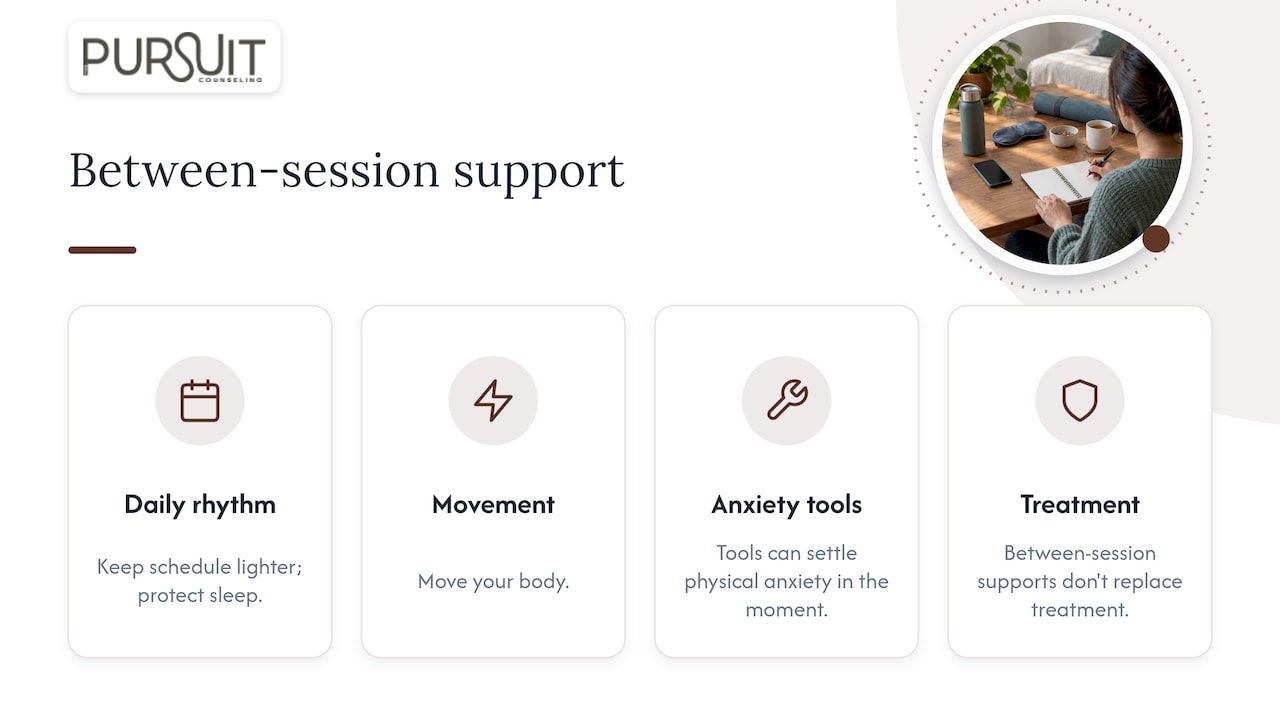
Managing the in-between days
Trauma work doesn’t stay in the therapy room. Expect some days after sessions when you feel tired, tender, or wired. Keep your schedule lighter where you can, protect your sleep, and move your body. Some people also look for tools to settle the physical edge of anxiety in the moment, and reading about how oxygen helps anxiety symptoms is one place people start. None of that replaces treatment, but it can make the in-between days feel more manageable.
Choosing an approach, and setting the pace
There is rarely one right answer. A therapist who knows trauma will usually weigh a few things with you:
- What you can tolerate right now. If retelling feels unbearable, a method with less verbal detail may be a better first step. If you crave structure and homework, a protocol like CPT might suit you.
- What you do for a living. Pilots, executives and first responders often have licensing, medical or performance considerations. Those deserve an honest conversation early.
- What else is going on. Anxiety, ADHD, sleep problems, substance use and relationship strain all shape the plan.
- How you respond. A plan is a working hypothesis. If something isn’t landing after a reasonable stretch, it should change.
The National Center for PTSD points out that a meta-analysis found greater benefit from psychological treatments than from medications for PTSD, and that negative reactions are generally more common with medication than with psychotherapy. Medication questions belong with a prescriber, and some people use both.
Our perspective
We work with complicated people. People who have carried a lot, and carried it well enough that nobody noticed. Pilots who can’t tell their flight surgeon what’s going on. Executives who lead through it. Moms who haven’t had a quiet minute to feel any of it.
Here is what we believe. The evidence for trauma-focused therapy is strong, and we take it seriously. EMDR is one of the methods the major guidelines recommend, and it is a core part of how we work. But a method is only as good as the relationship holding it. People tell the truth to someone who has earned it, and they do the hard work when they’re treated as an active partner, not a case file.
So we adapt. Some people need a still room and a steady voice. Others think better on a trail, which is why we offer adventure therapy alongside office sessions. Some need a concentrated block of time, which is what our intensives are for. We don’t promise outcomes, and we won’t hand you a script. We’ll sit with the pain cave, and we’ll look at the cracks with you, because that is often where the real work shows itself.
Adam Glendye LPC, CPCS
How we work at The Pursuit Counseling
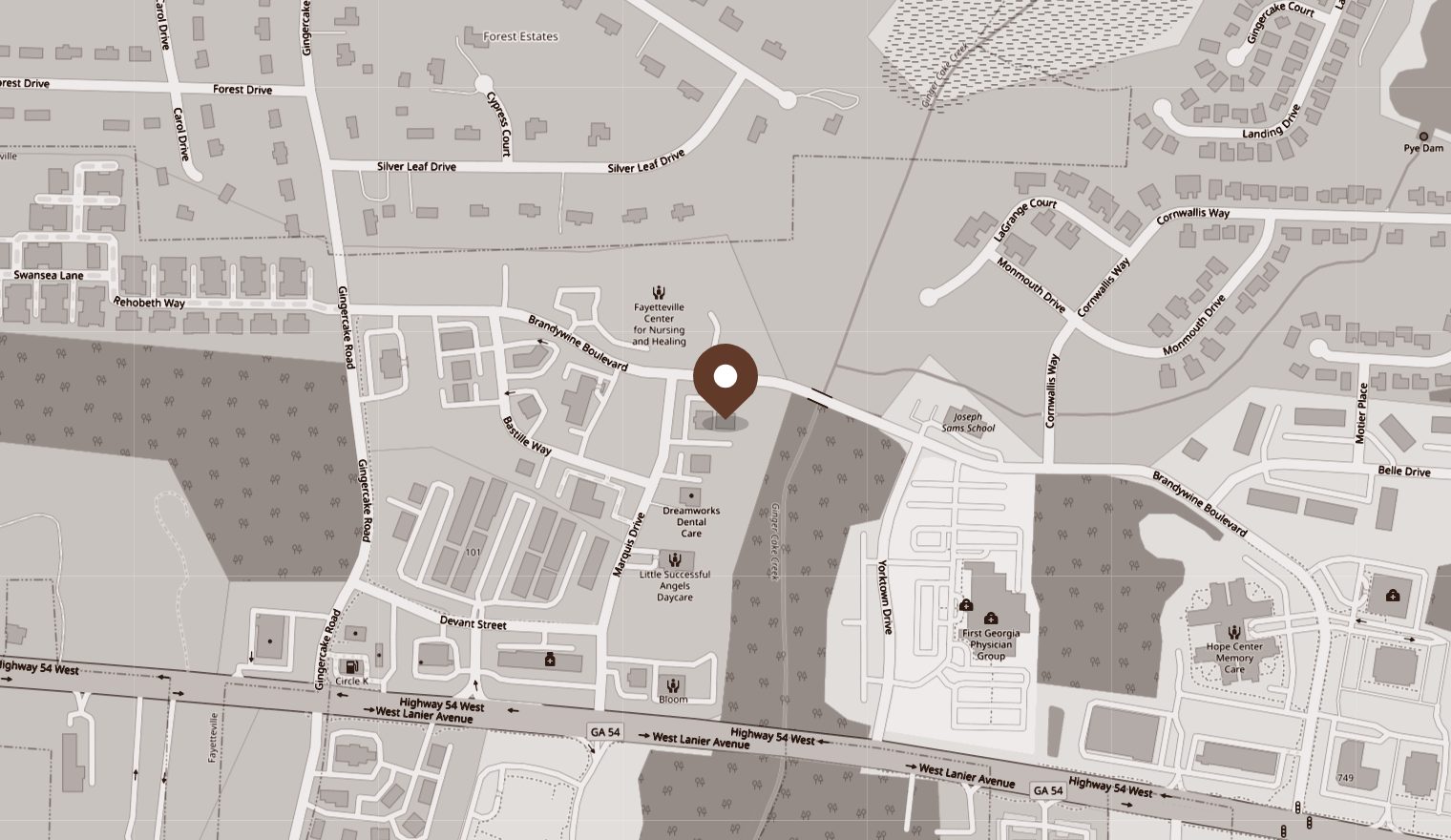
We’re in Fayetteville, Georgia, and we serve Peachtree City, Senoia, Brooks, Tyrone and the rest of South Atlanta, in person and online. We are private-pay.

If you’re ready to talk with someone, see our services and specialties or read how our trauma-informed counseling for adults works. If your schedule makes weekly sessions hard, our intensives offer concentrated time. Veterans and their families can read about post-traumatic stress and EMDR.
Finding a qualified trauma therapist
NIMH advises people with PTSD symptoms to work with a mental health professional who has experience treating PTSD. A few practical questions can help you tell who that is:
- Are you licensed in the state where I live? (Therapy across state lines is restricted, so this matters for online care.)
- Which trauma-focused methods are you trained in, and how often do you use them?
- How do you pace the work, and what happens if I need to slow down?
- What does a typical course of treatment look like for someone with my history?
- What are your fees and policies? Some practices, including ours, are private-pay.
A good answer is specific and unhurried. You are allowed to ask these before booking and to choose someone else if the fit isn’t there.
Supporting someone you love
If the person you’re worried about is someone else, the most useful thing is usually the least dramatic. Listen without pushing or judging. Let them know you’re willing to talk whenever they are, and don’t force details. Offer help with something practical, like finding a clinician or going with them to a first appointment. Pressure tends to make people retreat. Patience keeps the door open.
You may also need your own support. Living alongside someone’s trauma is heavy, and relationships can strain under it. If that’s the case, couples work is available as well.
FAQ
How do I know if what I went through is “bad enough” for therapy?
You don’t have to rank your pain. If an experience still affects your sleep, mood, concentration, relationships or work, that is reason enough to talk with someone. A licensed clinician can assess whether what you’re experiencing fits a diagnosis, and therapy can help either way.
How long does therapy after trauma take?
It depends on the method and on you. National Center for PTSD guidance describes typical trauma-focused treatment as 8 to 16 sessions, and NIMH says 6 to 12 weeks is common but it can be longer. Complex or long-standing trauma may take more time.
Will I have to talk through every detail?
Not necessarily. Methods differ. Prolonged Exposure involves approaching memories directly, while EMDR does not require extended detailed retelling. Your therapist should explain what each approach asks of you before you begin.
Can I do trauma therapy online?
Yes. The National Center for PTSD describes trauma-focused therapy as available in person or online with a licensed provider. We offer both in-person and online sessions, and we can talk through which fits your situation.
Is therapy better than medication for trauma?
The National Center for PTSD cites research favoring psychological treatments over medication for PTSD. Decisions about medication are individual, so talk with a prescriber about your own situation.
Sources
- Trauma Therapy: What Is It and Who Is It For?
- VA/DoD Clinical Practice Guideline for PTSD
- APA Clinical Practice Guideline for the Treatment of PTSD
- National Center for PTSD: Cognitive Processing Therapy
- National Center for PTSD: Prolonged Exposure
- APA: Treatments for PTSD
- National Center for PTSD: EMDR decision aid
- Long-term outcomes of psychological treatment for PTSD
- The management of PTSD and acute stress disorder: CPG synopsis
- PTSD treatment works: Resources from the National Center for PTSD
- NIMH: Post-Traumatic Stress Disorder
- Mayo Clinic: PTSD diagnosis and treatment
- National Center for PTSD: Overview of Psychotherapy for PTSD
- APA Guidelines on Working With Adults With PTSD
- How Oxygen Helps Anxiety Symptoms