


ADHD does not automatically ground you. The Federal Aviation Administration reviews pilots with an ADHD history through two distinct paths, Fast Track and Standard Track, and your eligibility depends on symptom history, treatment status, and documentation. If you currently take ADHD medication, you cannot fly until the FAA authorizes it under 14 CFR 61.53.
Key Takeaways
Pilots with ADHD can obtain FAA medical certification through either a fast track or standard pathway, depending on symptom stability and documentation.
| Point | Details |
|---|---|
| Fast Track eligibility | To qualify, you must have no ADHD treatment or symptoms for four years and no other psychiatric diagnoses. |
| Standard Track requirements | Most pilots fall into the Standard Track, requiring a comprehensive neuropsychological evaluation for attention and executive function. |
| Complete documentation | Gather all relevant medical, school, employment records, and personal statements before scheduling neuropsych testing. |
| Medication rules | ADHD stimulant medications are a concern; stopping them requires following FAA guidance based on the drug’s half-life before flying. |
| Role of The Pursuit Counseling | We support pilots by providing therapy and neurofeedback to build stability and document readiness for FAA evaluation. |
Table of Contents
- FAA ADHD Evaluation Pathways: Fast Track and Standard Track Explained
- Required Documents: Assembling the FAA ADHD Document Checklist
- Medication Rules and No-Fly Guidance: DNI vs. DNF
- The Forensic Evaluation: HIMS-Trained Neuropsychologists and Testing Expectations
- AME Decisions, Deferral, and Special Issuance: How FAA Reviewers Handle Cases
- Practical Next Steps and a Realistic Timeline to Avoid Delays
- How We Help Pilots Prepare for FAA Evaluation
- Support Services for Pilots Managing ADHD Documentation
- FAQ
- Sources
FAA ADHD Evaluation Pathways: Fast Track and Standard Track Explained
The FAA built two routes because most pilots with an ADHD history do not fit one mold. The Fast Track pathway is narrow by design, and most applicants will not qualify for it.
To use Fast Track, you must meet every one of these conditions:
- No ADHD medication or treatment in the past four years.
- No symptoms affecting your functioning in the past four years.
- No instability in school, work, or relationships during that four-year window.
- No other psychiatric diagnosis on your record.
Miss any one of those, and you fall into Standard Track, which is where most pilots with a documented ADHD history land. Standard Track requires a full neuropsychological evaluation rather than a streamlined review, because the FAA needs a deeper look at how your attention, processing speed, and executive function hold up under real flight conditions. The FAA’s ADHD pathway chart lays out exactly which documents separate the two tracks and what a HIMS-trained neuropsychologist needs before scheduling your evaluation. Knowing which track you fall into before you walk into your AME’s office saves months.
Required Documents: Assembling the FAA ADHD Document Checklist
The FAA will not move your case forward on a partial file. The ADHD pathway chart and document checklist specify exactly what has to be in your packet before a HIMS-trained neuropsychologist can even schedule testing.
Plan to gather:
- School records covering elementary through any post-secondary education.
- Employment history, including performance reviews where available.
- A complete medication list with start and stop dates for every ADHD prescription you have taken.
- All prior medical records touching on ADHD or related conditions.
- A personal statement describing your diagnosis history and current functioning.
- Any previous psychological or neuropsychological testing you have undergone.
Submit everything before you schedule your evaluation appointment, not after. A neuropsychologist working from an incomplete file cannot write the integrated report the FAA expects, and that delay compounds quickly once your case sits in a review queue.
Pro Tip: Build one dedicated folder, digital or physical, the day you decide to pursue certification. Pilots who scatter records across old employers and former providers lose weeks just tracking paperwork down.
Medication Rules and No-Fly Guidance: DNI vs. DNF
Medication status is often what decides timing more than diagnosis itself. The FAA sorts psychiatric medications into categories, and Do Not Issue and Do Not Fly tables list ADHD stimulants among the drug classes that carry aeromedical concern.
A few distinctions matter here:
- Do Not Issue means the FAA will not grant a medical certificate while you use that medication.
- Do Not Fly means you must stop flying for a defined window tied to the drug’s half-life before you’re cleared to act as pilot in command again.
- Your AME should defer rather than decide independently when a current ADHD prescription is involved, consulting the Regional Flight Surgeon or the Aerospace Medical Certification Division.
The FAA’s standard no-fly guidance uses five times a medication’s half-life or dosing interval, whichever is longer, as the minimum washout window before flight. This figure comes directly from the FAA’s medication guidance, and it explains why stopping a stimulant the night before a flight review is never sufficient.
Underneath all of this sits 14 CFR 61.53: you are responsible for grounding yourself the moment you know of a medical deficiency the FAA has not cleared, regardless of what your AME has or hasn’t said yet.

The Forensic Evaluation: HIMS-Trained Neuropsychologists and Testing Expectations
Not every psychologist can conduct this evaluation. The FAA requires a HIMS-trained neuropsychologist, someone specifically credentialed to interpret test results against aviation-normed data rather than general clinical benchmarks.
Your evaluator will typically need to provide:
- Raw test data, not just summary scores or a narrative conclusion.
- A battery interpretation that connects cognitive findings to actual flight-deck demands.
- An explicit diagnostic statement rather than a hedge or a list of possibilities.
- Integration of your history with current functioning, addressing whether any residual symptoms affect safety.
Supplemental pieces often round out the file, including urinalysis panels screening for amphetamine or methylphenidate use and a neurocognitive battery that follows the FAA’s specific testing protocol rather than a generic ADHD assessment. Pilots sometimes assume the neuropsychologist handles lab logistics automatically. Confirm early who orders what, because a missing urinalysis result can stall a case that’s otherwise complete.
AME Decisions, Deferral, and Special Issuance: How FAA Reviewers Handle Cases
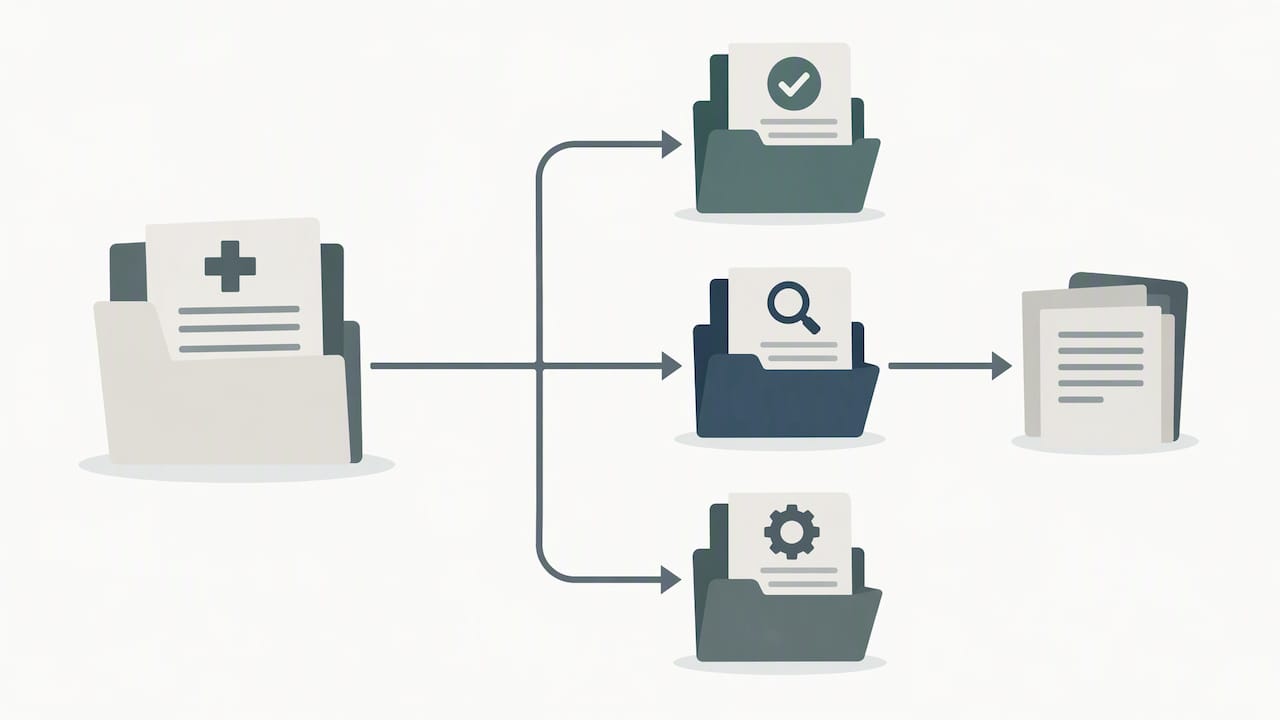
Your AME has three options at the end of your exam: issue, deny, or defer. With an ADHD history in your file, deferral is common and not a red flag, it simply means your case goes to the FAA for a closer look.
The Guide for Aviation Medical Examiners outlines what happens next:
- Deferral routes your file to FAA reviewers rather than leaving the decision solely with your AME.
- Special Issuance becomes possible once your documentation demonstrates stability and supports safe performance of pilot duties.
- Your AME uploads your records to the FAA’s system, so a well-organized packet directly shapes how quickly a reviewer can act.
Build a relationship with your AME early. Ask what they’ve seen work for other ADHD cases and what review intervals they’ve experienced, since timelines shift based on current FAA caseload.
Practical Next Steps and a Realistic Timeline to Avoid Delays
Here’s the sequence that keeps your case moving instead of stalling in a queue:
- Contact an AME and disclose your ADHD history before your exam, not during it.
- Check whether you meet every Fast Track condition, since even one gap sends you to Standard Track.
- Compile your full document checklist before scheduling any testing appointment.
- Choose a HIMS-trained neuropsychologist experienced with FAA-specific protocols.
- Confirm who orders required labs, including urinalysis, and schedule those early.
- Submit your complete packet to your AME for review and potential FAA deferral.
Fast Track cases that meet every criterion move noticeably quicker than Standard Track cases, which can stretch across several months once neuropsych testing and FAA review are factored in. Most delays trace back to incomplete files rather than the diagnosis itself.
Pro Tip: Follow the FAA’s testing specifications to the letter rather than asking your evaluator for “standard ADHD testing.” A generic battery that skips aviation norms often gets kicked back for revision, adding months you didn’t need to lose.
How We Help Pilots Prepare for FAA Evaluation
We’ve worked with pilots navigating exactly this process, and the emotional weight of it is real. Waiting on a diagnosis review while your career sits on hold is stressful in a way that’s hard to explain to people outside aviation.
We offer therapy and neurofeedback designed to support executive function, attention regulation, and the kind of documented stability an FAA reviewer looks for. None of this replaces a HIMS-trained neuropsychologist’s forensic evaluation or grants FAA clearance. What it offers is a place to stabilize symptoms, organize your thinking, and walk into your evaluation prepared rather than scrambling.
— Adam Glendye LPC, CPCS
Support Services for Pilots Managing ADHD Documentation
Preparing for an FAA evaluation while holding down flight hours, a job, and daily life is a lot to carry alone. We offer a few services that pilots in our care have found useful during this stretch.

- Individual therapy for symptom management and emotional support during a stressful certification process.
- A Neurofeedback Brain Map that gives you a clearer picture of your own attention patterns.
- The Executive Experience Program, built specifically for high performers managing ADHD alongside demanding careers.
| Service | What it supports | Price |
|---|---|---|
| Individual therapy | Symptom stabilization and documentation readiness | Pricing details are available on our website |
| Neurofeedback Brain Map | Attention pattern assessment | Available on request |
| Executive Experience Program | Executive function support for high performers | Pricing details are available on our website |
Pro Tip: Start clinical support before you schedule your neuropsychological evaluation. Reviewers respond to documented stability, and that takes time to build, not just time to claim.
We want to be direct about one thing: we do not grant FAA medical clearance, and no therapist or coach can promise that outcome. What we can offer is steady, confidential support while you assemble your case. If you’re a pilot weighing your next step, reach out to schedule a consultation and let’s talk through where you are in the process.
This article is general information, not a substitute for advice from a qualified doctor. Consult a qualified healthcare professional about your own circumstances before acting on anything here.
FAQ
Is ADHD a disqualifier for FAA medical certification?
No. ADHD is not an automatic or permanent disqualifier, but it does require review through either the Fast Track or Standard Track pathway. Your eligibility depends on symptom history, medication status, and whether you meet the strict four-year criteria for Fast Track.
Can you have ADHD and fly military aircraft?
Military aviation medical standards are set separately from the FAA’s civilian certification process and follow their own evaluation criteria. Pilots with an ADHD history pursuing military flight status should work directly with their branch’s flight surgeon rather than assume FAA pathways apply.
Can I still be a pilot if I take Adderall?
Current stimulant use, including Adderall, places you in medication categories the FAA treats as requiring deferral and review rather than automatic approval. The FAA’s Do Not Issue and Do Not Fly guidance lists these medications among those of aeromedical concern, and you cannot fly on them until you receive FAA authorization under 14 CFR 61.53.
Can you fly if you have ADHD?
Yes, many pilots with an ADHD history fly under FAA Special Issuance once they complete the required evaluation and documentation. The path depends on whether you qualify for Fast Track or need the fuller Standard Track review, which includes neuropsychological testing through a HIMS-trained evaluator.