


Most pilots being treated for anxiety, depression, or other common mental-health conditions can keep flying. The FAA’s expanded Antidepressant Protocol now allows for case-by-case Special Issuance consideration for pilots stable on a single approved medication for three continuous months. Combined with the HIMS AME network and Fast Track review, most treated pilots who document their care correctly retain or regain their medical certificate.
TL;DR:
- Most pilots on approved medications can retain or regain their medical certificate after three months of stability on a single drug, including newer antidepressants like SNRIs.
- The FAA evaluates mental health cases based on insight, stability, functioning, and risk, not solely on diagnosis or treatment, allowing for individualized review.
- Disqualifying conditions include active psychosis and recent electroconvulsive therapy, while most other conditions are reviewed case-by-case with low denial rates for well-managed cases.
- A clear, psychiatric diagnosis from a board-certified clinician, comprehensive test results, and thorough documentation are essential for successful FAA evaluation.
- Early, well-documented treatment and coordination with specialized aviation mental health professionals significantly improve the chances of certification and reduce delays.
Table of Contents
- What Is the FAA’s Current Stance on Mental Health Rules?
- How Does the Antidepressant Protocol Work Now?
- Which Mental Health Conditions Are Disqualifying vs. Case-by-Case?
- Which Certification Pathway Applies to Your Case?
- What Documentation Do Pilots Need for FAA Mental Health Evaluation?
- What Do the Mental Health ARC and H.R.2591 Change?
- How Should Pilots Handle a Mental Health Issue Step by Step?
- How Does Aviation-Aware Therapy Support Certification?
- Why Early Treatment Beats Silence
- Confidential, Aviation-Aware Support When You Need It
- Sources
- FAQ
What Is the FAA’s Current Stance on Mental Health Rules?
The FAA’s public messaging has shifted noticeably: seek help, don’t hide it. The Pilot Mental Fitness page and Item 47 of the FAA AME Guide serve as the two anchor documents any pilot researching aviation mental health standards should read first, since they lay out how the agency actually evaluates treated conditions rather than reacting to a diagnosis on paper.
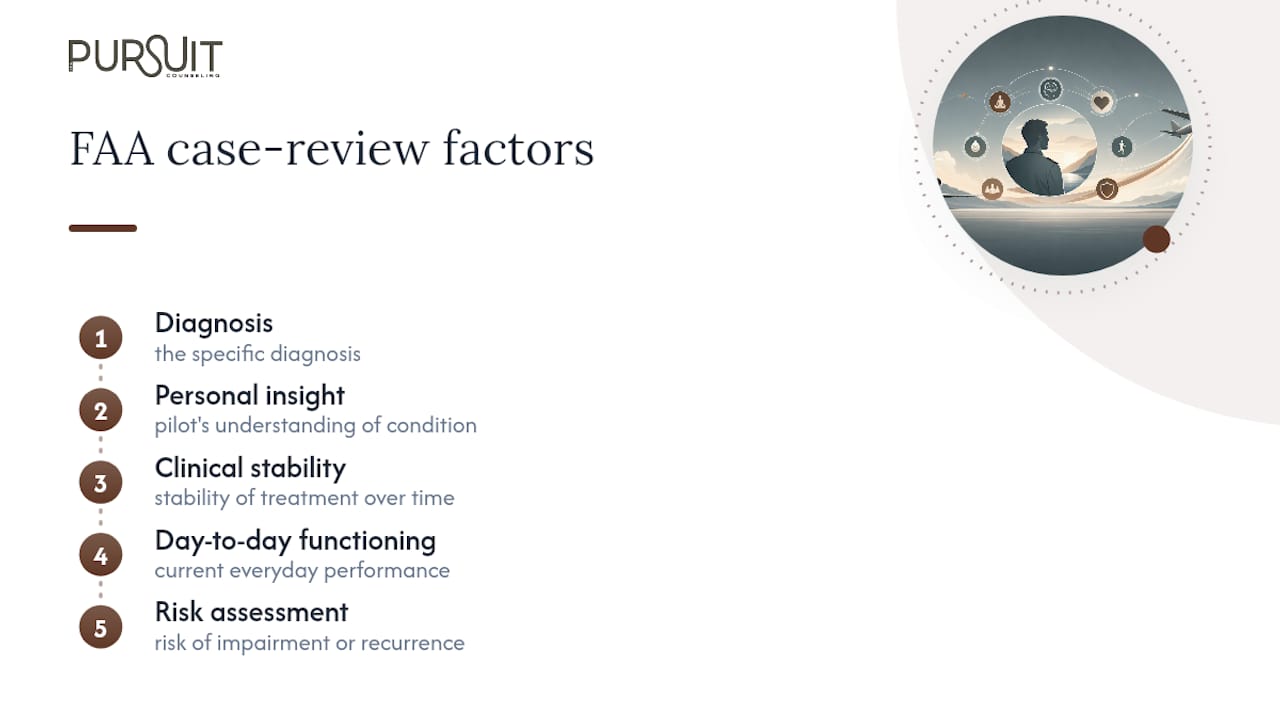
Instead of a blanket disqualification for anyone in treatment, the FAA runs cases through five factors: the specific diagnosis, the pilot’s insight into their own condition, clinical stability over time, current day-to-day functioning, and overall risk of impairment or recurrence. A pilot who understands these five factors going in can build a stronger case before an Aviation Medical Examiner ever sees the file.
How Does the Antidepressant Protocol Work Now?
The FAA renamed its old SSRI-only framework to the Antidepressant Protocol, and the change is more than semantic. Effective April 24, 2024, the FAA expanded eligible medications beyond SSRIs to include bupropion (Wellbutrin) and several SNRIs, among them duloxetine, venlafaxine, and desvenlafaxine.
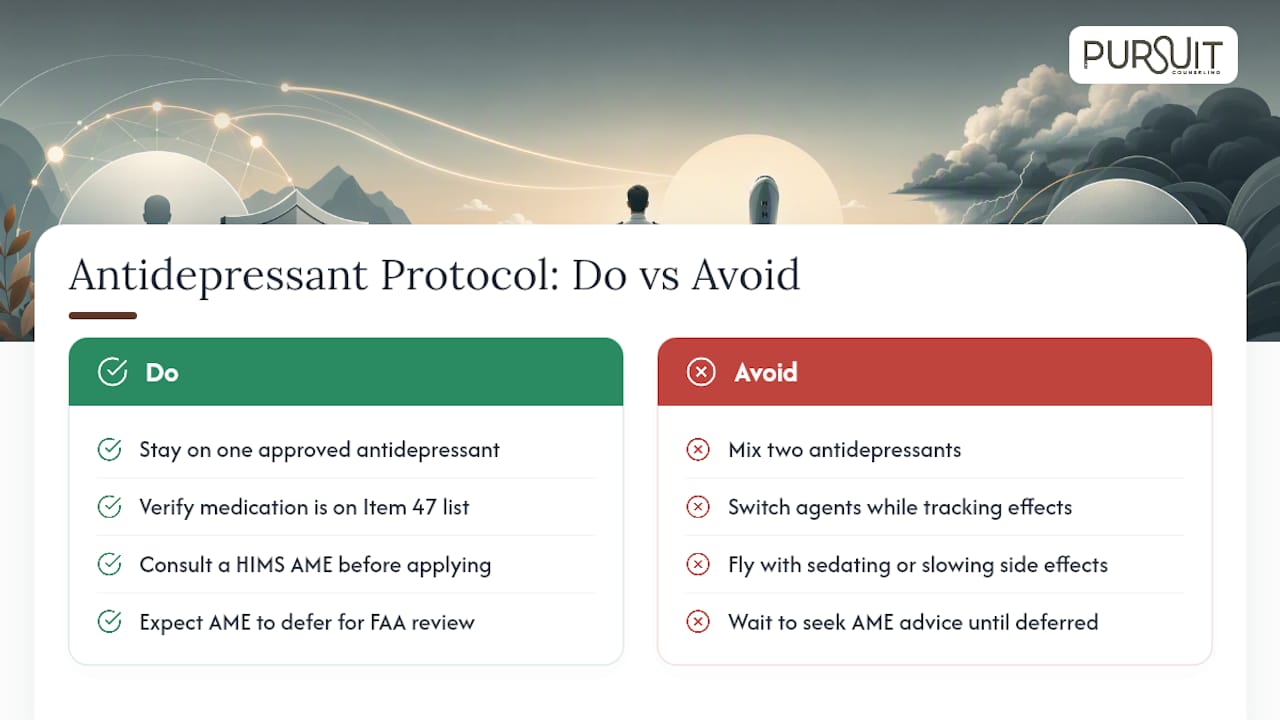
The core rule hasn’t loosened: pilots must be clinically stable for a continuous period on a single acceptable medication, with no aeromedically significant side effects like sedation or cognitive slowing. Mixing two antidepressants, or bouncing between agents while chasing symptom relief, resets that clock and complicates the file. The Antidepressant Protocol under Item 47 spells out exactly which medications qualify and which trigger automatic deferral.
If your case fits the criteria, your AME may still defer to the FAA for final Special Issuance authorization. That’s normal, not a red flag. The practical move is to talk with a HIMS AME before you apply, not after a deferral letter shows up.
Which Mental Health Conditions Are Disqualifying vs. Case-by-Case?
Some conditions are firmly off the table for unrestricted medical certification: active psychosis, current suicidal ideation, recent electroconvulsive therapy, and severe bipolar disorder with functional impairment. These trigger outright disqualification because they carry a documented risk of sudden incapacitation in the cockpit.
Everything else tends to land in a gray zone the FAA reviews individually. Uncomplicated anxiety, situational depression tied to a specific life event, and certain adjustment disorders often qualify for Row A or Fast Track disposition when a pilot meets the decision-tool criteria. Recurrence matters here: a single depressive episode five years ago reads very differently to an AME than three episodes with two hospitalizations and a history of switching medications. The FAA itself notes that denial rates among pilots who disclose treatment are low when the case meets established criteria, which undercuts the old fear that admitting to therapy ends a career.
Which Certification Pathway Applies to Your Case?
Four mechanisms handle nearly every mental-health case the FAA reviews, and knowing which one applies to you before you file saves months.
- Special Issuance kicks in after your file gets deferred to Oklahoma City; expect requests for psychiatric and psychological reports before authorization.
- HIMS AME examiners specialize in aviation-focused behavioral health. Involve one early, especially if medication is part of your treatment plan.
- CACI (Conditions an AME Can Issue) lets your examiner clear certain qualifying conditions on the spot, without FAA deferral at all.
- Fast Track reconsiders previously deferred anxiety or depression cases using a dedicated decision tool built specifically for those diagnoses.
A HIMS AME can usually tell you within one appointment which of these four paths fits your situation.
What Documentation Do Pilots Need for FAA Mental Health Evaluation?
Your psychiatric report generally must come from a board-certified psychiatrist, and should clearly state your diagnosis rather than hedge with vague language. Vague reports are the single most common reason files bounce back for clarification.
Psychological and neuropsychological testing has its own bar: doctoral-level clinicians, full test batteries, and pilot-specific norms wherever they exist. The FAA’s published evaluation specifications detail exactly which tests and formats reviewers expect, down to secure portals for submitting test data.
Before you submit anything, gather every treatment note, hospitalization record, and medication history you have, along with an FAA Form 8065-2 records request if your history spans providers. Pro Tip: Hand your treating clinician the FAA Certification Aid pages directly. Reports written without them almost always miss a question the FAA needed answered, which costs you another review cycle.
What Do the Mental Health ARC and H.R.2591 Change?
The Mental Health and Aviation Medical Clearances Aviation Rulemaking Committee delivered its final report on April 1, 2024, and its recommendations read like a direct response to decades of pilot silence. The ARC pushed for non-punitive disclosure, shorter stabilization windows for some medications, more decision authority for AMEs directly, and plainer communication about how cases actually get reviewed.
H.R.2591, the Mental Health in Aviation Act of 2025, would force much of that recommendation list into binding policy: updated Part 67 regulations on a fixed timeline, annual reviews of the Special Issuance process, reclassification of qualifying medications, expanded AME training, and substantial annual funding for public destigmatization campaigns over several years. The bill was referred to a Senate committee on September 9, 2025. If enacted, expect faster reviews and less deferral for straightforward cases.
How Should Pilots Handle a Mental Health Issue Step by Step?
- Assess honestly. If symptoms are actively affecting your judgment or alertness, self-ground under 14 CFR § 61.53 before your next flight. If you’re functioning but struggling, schedule an evaluation.
- Start treatment. Therapy, sleep and focus interventions, and medication when prescribed generally count as legitimate evidence of proactive care, not liabilities.
- Document everything. Log every appointment, medication change, and dosage. Request your own records early rather than scrambling later.
- Coordinate with a HIMS AME. Do this before your next MedXPress submission, especially if medication or a complex history is involved.
Pro Tip: You don’t have to report a single therapy visit the moment it happens. Disclosure happens on your next MedXPress application, not immediately, which gives you room to start treatment without panic.
How Does Aviation-Aware Therapy Support Certification?
Adam Glendye LPC, CPCS leads clinical supervision at a counseling practice where confidential, private-pay care focuses on conditions that often arise in FAA reviews: anxiety, focus and attention difficulties, and disrupted sleep. Sessions happen in person or by telehealth, and treatment options include EMDR and neurofeedback alongside pilot-specific programs.
Therapy tailored to pilots supports certification less by promising outcomes and more by producing exactly the kind of documentation the five FAA review factors ask for: demonstrated insight, stable functioning over time, and a coordinated record that a HIMS AME can actually use.
Why Early Treatment Beats Silence
I’ve watched the aviation mental health conversation shift from whispered fear to something closer to honesty, and the data backs that shift up. Documented, well-managed treatment reads to the FAA as evidence of insight and stability, not risk. Pilots who wait until symptoms are severe, hoping silence protects their certificate, almost always end up with a harder case file than the ones who sought care early and built a clean paper trail from day one. Talk to peers who’ve gone through HIMS. Organize your records before you need them, not after.
— Adam Glendye LPC, CPCS
Confidential, Aviation-Aware Support When You Need It
The Pursuit Counseling gives pilots something a general practice often can’t: therapy built around the specific FAA review factors that determine whether treatment strengthens your file or complicates it. Private-pay care means no insurance company sees your diagnosis, and sessions are available in person or by telehealth for clients who need flexibility around their schedule.

Services include confidential individual therapy for anxiety, sleep disruption, and attention difficulties, along with EMDR and neurofeedback for pilots whose history involves trauma or focus challenges beyond what talk therapy alone addresses. The clinic also offers intensives for clients who need concentrated progress before important deadlines rather than months of weekly sessions. None of this substitutes for your AME or HIMS coordinator, but it does give you documented, consistent care that supports the conversation you’ll eventually have with them. If you’re a pilot in South Atlanta weighing whether to seek help, book a consultation and start building that record now, not after a deferral letter arrives.
Sources
This article is general information, not a substitute for advice from a qualified doctor. Consult a qualified healthcare professional about your own circumstances before acting on anything here.
FAQ
Which Mental Health Conditions Can Disqualify You From the FAA?
Active psychosis, current suicidal ideation, recent electroconvulsive therapy, and severe bipolar disorder with functional impairment are disqualifying. Most other treated conditions, including anxiety and situational depression, get reviewed case-by-case rather than automatically denied.
Can Pilots Fly While on Mental Health Medication?
Yes, if the medication falls under the FAA’s Antidepressant Protocol and the pilot has been stable on a single approved drug for at least three continuous months. Multiple concurrent medications or unapproved drugs typically require deferral and further review.
Why Is the FAA So Strict About Mental Health?
Cockpit impairment carries safety consequences that other jobs don’t, so the FAA weighs risk of sudden incapacitation heavily. That said, the agency’s own guidance now frames early treatment as a safety-positive step rather than a career-ending disclosure.
Does Therapy Alone Require FAA Reporting?
No. A single therapy or counseling visit doesn’t require immediate reporting; disclosure happens on your next MedXPress application. Self-grounding is only required if symptoms are actively impairing safe performance.
Where Can Pilots Find Confidential Therapy That Understands Aviation Careers?
The Pursuit Counseling offers confidential, private-pay therapy for pilots dealing with anxiety, sleep issues, and attention difficulties, with both in-person and telehealth options. Current pricing details are listed directly on the clinic’s website.