

Trauma changes how your brain reads danger. The alarm system gets louder, the part that says “we’re safe now” gets quieter, and memory loses some of its sense of time. That is why capable people can feel jumpy, foggy or flat long after the event is over. It is not weakness, and it is not a character flaw. It is a brain that learned something well and has not yet been shown that the lesson can be updated. Trauma therapy, including the EMDR we offer in Fayetteville, works with exactly that learning process.
This article is education, not assessment. It cannot tell you whether you have PTSD or any other diagnosis. A licensed clinician does that, in conversation with you.
Key Takeaways
- Three regions do most of the work in the trauma response: the amygdala (threat detection), the hippocampus (memory and context) and the prefrontal cortex (regulation).
- Brain differences seen in trauma research are real, but researchers caution that they do not simply show damage. Some may reflect earlier vulnerability.
- Therapy does not erase a traumatic memory. It builds new learning that competes with the old threat response.
- The 2023 VA/DoD guideline recommends prolonged exposure, cognitive processing therapy and EMDR as the most effective treatments for PTSD.
- Most people recover naturally after trauma. If reactions interfere with work or relationships, that is the point to talk to someone.
Table of Contents
- The three regions that shape the trauma response
- The stress system: why your body stays on
- What it looks like in a working life
- How common it is, and when it becomes PTSD
- What the brain scans do and do not say
- Can the brain change? What neuroplasticity means here
- How trauma therapy works with the brain
- Where we start
- FAQ
- Sources
The three regions that shape the trauma response
You do not need a neuroscience degree to follow this. Three structures matter most, and they work as a team.
The amygdala is the brain’s threat detector. A 2006 review reports heightened amygdala responsiveness in PTSD, and the more severe the symptoms, the stronger that response tends to be. In daily life, this feels like startling at a sound, scanning a room, or a spike of dread that arrives before you have thought anything.
The hippocampus files memories with context: when, where, and whether it is over. The same review reports diminished hippocampal volume and functional integrity in PTSD. When that context tagging falters, a memory can feel like it is happening now rather than then.
The prefrontal cortex is the part of you that reasons, regulates and says “this is fine.” The 2006 review finds a smaller, less responsive medial prefrontal cortex in PTSD, with lower activity linked to greater severity.
A 2024 review in the American Journal of Psychiatry by Shalev, Cho and Marmar describes how these pieces interact. The amygdala forms the threat association. Neurons in the prefrontal cortex inhibit the amygdala to quiet the fear. Prolonged stress after trauma can compromise that braking ability.
Put plainly: the alarm is loud, the brake is weak, and the clock that tells you the danger is past is unreliable.

The stress system: why your body stays on
Trauma is not only a brain event. The body’s stress circuitry is involved too. A 2006 review of traumatic stress explains the HPA axis, the chain that runs from the hypothalamus to the pituitary to the adrenal glands and ends in cortisol release, while norepinephrine keeps you alert and vigilant during acute threat.
Researchers have not found a single tidy pattern here. The same review notes that many studies of PTSD find low cortisol, but not all do, and that trauma reminders can set off an amplified cortisol response. Bodies differ.
What the research does describe consistently is the cue-driven reaction. A 2017 neuroscience review explains that cues linked to trauma can later trigger fear and bodily responses, including a stronger startle, vigilance, faster heart rate and faster breathing. If you have ever felt your pulse climb in a meeting because of a tone of voice, or in a cockpit or a boardroom because something echoed an old event, that is this mechanism.
The same review makes a point worth sitting with: fear learning and avoidance are adaptive during real danger. They become a problem when they persist after you are safe again. The system did its job. It just never got the all-clear.
What it looks like in a working life
The brain regions are the map. Here is the territory. The VA’s National Center for PTSD lists common trauma reactions: trouble concentrating or making decisions, feeling jumpy and on guard, upsetting dreams and memories, problems at work, and avoiding people, places and things tied to the event.
The VA’s brain health resource adds that PTSD can disrupt memory, thinking and focus. Worries about the past, present and future can pull attention away, leading to zoning out, misplacing things and not absorbing what people say.
For the people we work with, that can look like:
- An executive or founder who makes sharp decisions at work but cannot switch off, and snaps at home.
- A pilot who stays composed in the air and then cannot sleep or feel anything on the ground.
- A mom who handles everything for everyone and startles at small things.
- A creative who has lost access to the part of themselves that used to make things.
This is also why trauma and attention problems are easy to confuse. Poor focus can come from trauma, from ADHD, from burnout, or from several at once. Telling them apart is an assessment question, and it deserves a real evaluation rather than a guess from an article.
How common it is, and when it becomes PTSD
Trauma exposure is common. The 2024 American Journal of Psychiatry review cited above states that lifetime trauma exposure in the United States ranges from 50% to 89%. In a national survey of 9,282 Americans, lifetime PTSD prevalence was estimated at 6.8%. The National Institute of Mental Health puts it at about 6 in 100 people over a lifetime.
So most people who go through something terrible do not develop PTSD. For a diagnosis, NIMH says symptoms must last longer than one month and interfere with daily life. The VA notes that most people recover naturally, but advises seeking help if reactions interfere with relationships or work.
That is the line worth watching. Not “was it bad enough?” but “is it costing me my sleep, my focus, my marriage, my work?”
What the brain scans do and do not say
It is tempting to read brain imaging as a verdict. The research itself is more careful.
A 2012 Nature Reviews Neuroscience review reports that smaller hippocampus and anterior cingulate volumes are the most frequently replicated structural findings in PTSD. It also reports that the amygdala and dorsal anterior cingulate are hyperactive while the ventromedial prefrontal cortex is underactive, patterns likely underlying attention to threat, difficulty regulating emotion and persistent fear memories.
The same authors caution that the evidence does not justify saying stress simply damages the brain. Some differences may reflect vulnerability that existed before the trauma.
A meta-analysis of 89 structural MRI studies pooled data from 113 studies and found reduced hippocampal, insula and anterior cingulate volumes in people with PTSD. Traumatized people without PTSD also had smaller hippocampi than people never exposed, which suggests trauma exposure itself may be associated with reduced volume.
The honest takeaway: these are group averages, not a reading of your brain. A scan pattern does not define you, and your symptoms are not a measure of how broken you are.
Can the brain change? What neuroplasticity means here
Neuroplasticity means the brain changes with experience and learning. In trauma work, the useful question is how.
The American Journal of Psychiatry’s 2025 psychotherapy review says fear extinction does not erase the original fear memory. New learning develops that can inhibit or compete with the old threat association. So the goal is not to delete what happened. It is to build a second, stronger lesson: that was then, and this is now.
Shalev and colleagues frame PTSD as a failure to update context and integrate safety signals, as if the war continues after the return to a safe environment. They also describe a reconsolidation window: when a traumatic memory is recalled, it becomes transiently plastic, which offers a limited opportunity for therapeutic work. Supportive relationships in a safe environment may enhance fear extinction.
That last point matters. The relationship in the room is part of the mechanism.
There is early evidence of brain-level change with treatment, too. A 2025 Frontiers review reports that prolonged exposure was associated with plasticity in a region involved in reappraisal, and that in neurofeedback studies, people with PTSD learned to downregulate amygdala activity in response to trauma-related words. This is a developing field, and no research promises a particular result for any one person.
How trauma therapy works with the brain
The 2023 VA/DoD Clinical Practice Guideline recommends prolonged exposure (PE), cognitive processing therapy (CPT) and EMDR as the most effective treatments for PTSD. The National Center for PTSD describes trauma-focused psychotherapy as making the processing of the traumatic event central.
Why approach rather than avoid? The 2017 review explains that avoidance is reinforced because it brings relief in the moment, but continued avoidance can obstruct processing and keep symptoms going. Evidence-based treatments help people encounter reminders safely, supporting habituation and extinction learning over time. The 2025 review describes PE as aiming to turn a traumatic memory from an overwhelming present-tense experience into a painful memory that belongs to the past.
Ongoing stress matters too. A 2015 review by Maren and Holmes says stress can impair fear extinction and limit how well exposure-based therapy works. That is a practical argument for pacing and for attention to what is happening in your life around the sessions: sleep, workload, relationships.
Where EMDR fits
EMDR is one of the three treatments the guideline names. In our practice, trauma therapy with EMDR. If you want to understand the method first, our pages on what EMDR is and EMDR for big-T traumas walk through it, and our overview of trauma therapy approaches shows how the options compare.
Concentrated work
For people whose schedules do not bend, some of our trauma work is structured as 3 to 10 day trauma intensives rather than weekly hours. We work with high-performing adults who cannot afford to disappear for months, and who also cannot keep white-knuckling it.
Where we start
We see complicated people, not diagnoses. So the first step is not a protocol. It is a conversation about what you are noticing, what it costs you, and what you want to be different. If focus is part of the picture, we can look at it alongside the trauma questions, including through qEEG brain mapping and neurofeedback, and we keep education separate from assessment throughout.
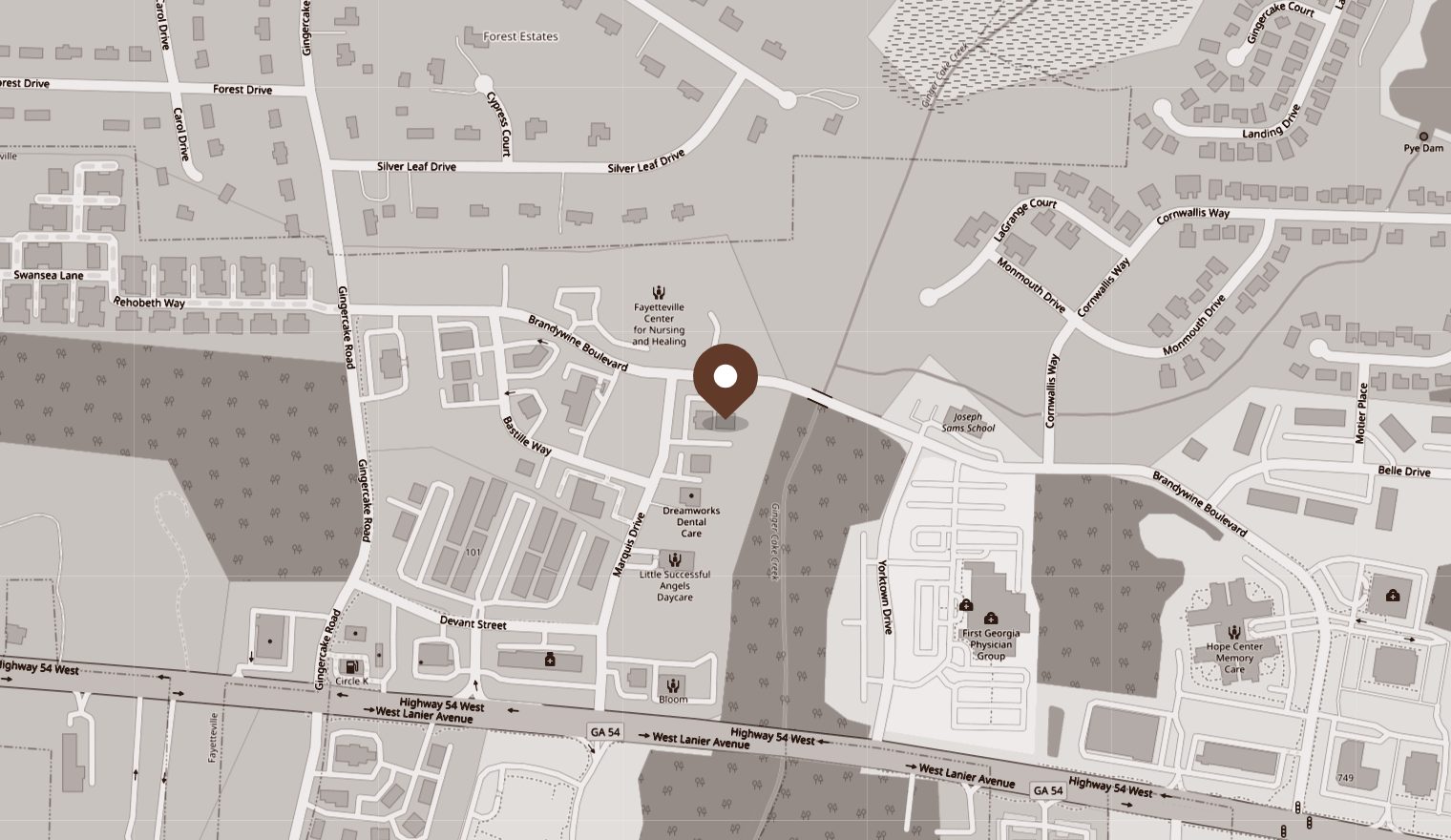
Our practice is in Fayetteville, Georgia, serving Peachtree City, Senoia, Brooks, Tyrone and South Atlanta, with in-person and online sessions. Individual therapy, and you can see the current options on our services and specialties page.

We have sat across from people who were certain they were just tired, or just stressed, or just bad at relaxing. Often the pain cave they were in had a door, and the door was an old event their body had never stopped guarding against.
What we believe is simple. Your nervous system is not your enemy. It learned fast, under pressure, in order to protect you. Our work is to help it learn again, with a person beside you who is not afraid of what you carry.
That is why we pair evidence-based methods such as EMDR with real relationship, and why we shape the pace around your life rather than a template. Cracks are where the light gets in, but nobody should have to find that out alone.
Adam Glendye LPC, CPCS
FAQ
Does trauma permanently damage the brain?
The research does not support that blanket claim. Studies show differences in the amygdala, hippocampus and prefrontal cortex in people with PTSD, but reviewers caution that some differences may reflect vulnerability before the trauma. The brain also keeps learning, which is what trauma therapy builds on.
Can therapy actually change how the brain responds to trauma?
Therapy builds new learning that can inhibit or compete with the old threat response, according to a 2025 American Journal of Psychiatry review. Early imaging research also links treatment to changes in brain activity. No one can promise a specific outcome, but the mechanism is well described.
Is this the same as ADHD or burnout?
They overlap. Trouble concentrating, irritability and exhaustion appear in trauma reactions, and they can also have other causes. Sorting that out takes a proper evaluation with a clinician, not a self-diagnosis from a symptom list.
When should I reach out?
The VA says most people recover naturally after trauma, and advises seeking help when reactions interfere with relationships or work. If you are in crisis or thinking of harming yourself, call or text 988, the Suicide and Crisis Lifeline, right away.
Sources
- Traumatic stress: effects on the brain (2006)
- Amygdala, Medial Prefrontal Cortex, and Hippocampal Function in PTSD (2006)
- Neurobiology and Treatment of Posttraumatic Stress Disorder, American Journal of Psychiatry (2024)
- An Integrated Neuroscience Perspective on Formulation and Treatment Planning for PTSD (2017)
- Biological studies of post-traumatic stress disorder, Nature Reviews Neuroscience (2012)
- Meta-Analysis of 89 Structural MRI Studies in PTSD (2018)
- VA Brain Health: Posttraumatic Stress Disorder
- Common Reactions After Trauma, National Center for PTSD
- Post-Traumatic Stress Disorder, National Institute of Mental Health
- An Update on Psychotherapy for the Treatment of PTSD, American Journal of Psychiatry (2025)
- Overview of Psychotherapy for PTSD, National Center for PTSD
- Stress and Fear Extinction (2015)
- Neural correlates and plasticity of explicit emotion regulation, Frontiers (2025)