


If you have ADHD, the emotional side is often the part nobody warned you about. The irritation that arrives before you can think. The criticism that lingers for days. The excitement that tips into overwhelm. Researchers treat this as a real, well-documented feature of ADHD, not a character flaw, and it responds to the right kind of support. Skills-based therapy such as CBT and DBT-style work, steady routines, and, for some adults, medication or brain-based approaches all have evidence behind them. Below we explain what is happening, what helps, and when it makes sense to bring in a therapist.
This article is education, not assessment. It cannot tell you whether you have ADHD or what is driving your reactions. Only a qualified clinician who gets to know you can do that.
Key Takeaways
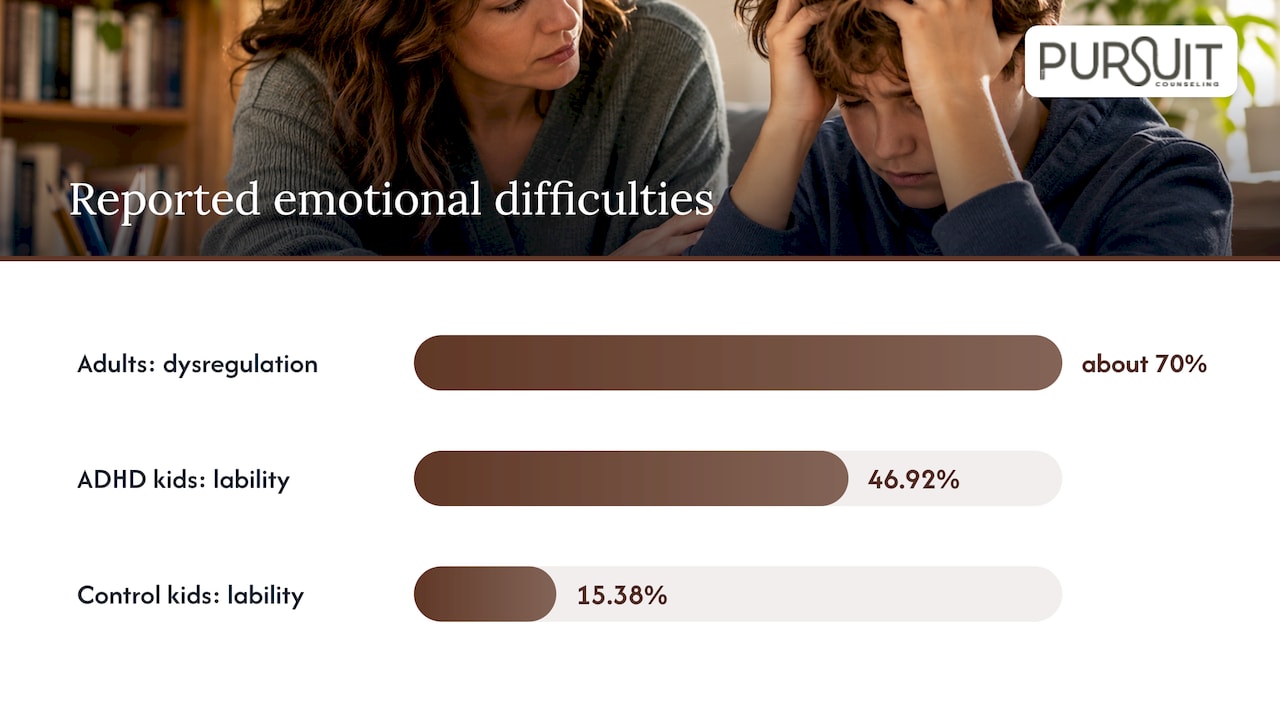
- Emotional dysregulation is common in ADHD: a 2020 meta-analysis found that about 70% of adults with ADHD report it, and it shows up even without another mental health condition.
- It involves both how strongly and how quickly you react, and how well your brain can steer that reaction afterward.
- Sleep, exercise, routine and breaking big tasks into smaller ones are the foundations. Therapy, especially CBT and skills training, adds tools for the moments those foundations miss.
- Unmanaged emotional swings are linked to strained relationships, anxiety and low mood, which is a good reason to get support rather than white-knuckle it.
Table of Contents
- What emotional regulation actually means
- How common is it, and who does it affect?
- What it looks like in daily life
- Why ADHD makes feelings harder to steer
- The cost of leaving it alone
- What helps: the foundations
- What helps: therapy and skills
- A practical reset for the moment it hits
- When to get professional help
- How we work with this at The Pursuit Counseling
- Our perspective
- FAQ
- Sources
What emotional regulation actually means
Emotional regulation is your ability to notice a feeling, let it be the size it should be, and return to steady ground when the moment passes. Everyone loses it sometimes. With ADHD, it slips more often and takes longer to come back.
The American Psychological Association describes two pieces. One is “bottom-up” reactivity: how quickly a feeling crosses the threshold, how intense it gets, and how long it lasts. The other is “top-down” control: the brain’s ability to manage that response once it starts. According to the APA’s 2024 overview, ADHD can affect both.
A peer-reviewed review of the research in children frames dysregulation as an inability to modulate emotional responses. That can look inward (withdrawn, moody, sad) or outward (volatile, argumentative). The same review notes that the brain network linking the amygdala, the striatum and the medial prefrontal cortex is implicated. In plain terms: the alarm system and the part of the brain that talks it down are not coordinating well.
That is why “just calm down” has never worked for you. The skill being asked for is the one that is harder to reach.
How common is it, and who does it affect?
More common than most people realize, and it does not belong to one type of ADHD.
- The 2020 meta-analysis above found about 70% of adults with ADHD report emotion dysregulation or emotional lability (rapid mood shifts).
- The Attention Deficit Disorder Association cites research suggesting somewhere between 34% and 70% of adults with ADHD have difficulty regulating emotions.
- In children, the earlier review found 46.92% of kids with ADHD showed high emotional lability, compared with 15.38% of controls.
- Per the APA, a clinician it quotes says dysregulation occurs in all three ADHD presentations: hyperactive/impulsive, inattentive and combined.
That last point matters for many women and high performers who were never the hyperactive kid in the back of the room. If your ADHD is the quiet, inattentive kind, intense emotion can still be the loudest part of it. You may have been told you were sensitive, dramatic or too much, when you were working harder than anyone knew to keep it together.
The same 2020 analysis identified three dimensions: trouble recognizing emotions, rapid shifts in mood, and strong negative reactions such as irritability and impulsive responses.
What it looks like in daily life
Naming it is the first relief. Here are patterns the ADD Association and the APA describe:
- Anger or frustration that arrives fast and feels out of proportion afterward
- A short fuse with the people closest to you
- Crying in response to many different feelings, not only sadness
- Difficulty pulling your attention away from an emotion once it takes hold
- Mood swings across a single day
- Overexcitement that tips into overwhelm
- Sensitivity to criticism or perceived rejection
- Trouble soothing yourself once you are worked up
For a founder, it can be the email from an investor that wrecks the afternoon. For a pilot, it can be the discipline that holds together in the cockpit and then comes apart at home. For a mom, it can be the snap at a kid that you replay at 2 a.m. For a creative, it can be a critique that feels like a verdict on you as a person.
None of this proves ADHD by itself. Anxiety, trauma, burnout, sleep loss and mood conditions can produce the same picture, and they often travel together with ADHD. That is exactly why an assessment matters, and why we separate it from education.
Why ADHD makes feelings harder to steer
Nobody has a single answer. The National Institute of Mental Health says researchers are not sure what causes ADHD, though genes appear to play a large role, alongside brain development and environmental factors. The American Academy of Family Physicians adds that research does not support sugar, television, parenting or family chaos as causes. You did not create this by being undisciplined.
What the research does show is that adults with ADHD more often reach for unhelpful regulation strategies, and that dysregulation tracks with symptom severity and executive functioning, according to a 2023 systematic review. Executive function is the brain’s management system: planning, pausing, switching tasks, holding a thought. When that system is stretched, emotions get less supervision. Our guide to executive function skills for adults covers that side in practical terms.
The cost of leaving it alone
It is easy to treat emotional swings as the price of being driven or creative. The research suggests the price is real. APA reporting on work by researcher Elizabeth Bodalski found that emotional difficulties help explain depressive symptoms and relationship impairments in adults with ADHD, and may contribute to anxiety and poorer friendship quality.
The Johns Hopkins Psychiatry Guide notes that ADHD is a multifaceted, often lifelong condition in which poor frustration tolerance, irritability and a negative self-image are common. That last piece deserves attention. Years of reacting in ways you regret can quietly build a story that you are the problem. Treatment that only targets focus misses it.
If this is landing in your marriage or partnership, we wrote about it in ADHD and relationships and about how attention can narrow in ADHD hyperfocus in relationships.
What helps: the foundations
Before any technique, the body has to be in reasonable shape. NIMH recommends the following for adults with ADHD:
- Regular exercise and healthy meals
- Seven to nine hours of sleep, with screens off at least an hour before bed
- A consistent daily routine
- Time management and organization tools
- Short breaks during long stretches of sustained attention
- Large tasks broken into smaller steps
- Time with supportive people
The AAFP toolkit echoes structured routines, planners or reminder apps, and support groups or coaching. These sound plain. They matter because a tired, overloaded, under-slept brain has less capacity to regulate anything. If you are the person who handles everything for everyone, protecting sleep is not self-indulgent. It is infrastructure.
Procrastination and deadline stress are frequent emotional triggers, so you may find our pages on an ADHD procrastination reset and struggles with meeting deadlines useful. Seasonal shifts matter too: see ADHD and daylight saving time.
What helps: therapy and skills
NIMH states there is no cure for ADHD, but current treatments can reduce symptoms and improve functioning. Common options are medication, psychotherapy and other behavioral approaches, alone or combined. The CDC’s adult ADHD page adds that effective plans involve close monitoring, follow-ups and adjustments over time.
For emotion specifically, the evidence points in a few directions:
- Cognitive behavioral therapy (CBT). The AAFP calls CBT a well-supported non-medication treatment that helps people practice strategies for organization, planning and emotional regulation, particularly alongside medication. A 2021 meta-analysis of non-drug treatments, discussed in the 2023 review linked here, also points toward mindfulness: a randomized trial found a mindfulness training program improved emotion dysregulation as well as inattention and executive functioning in adults.
- Skills training. DBT-style skills target exactly what this article describes: tolerating distress, naming emotions accurately, and pausing between feeling and action. We lay out how we use them in emotional regulation therapy with DBT skills.
- Medication. The APA notes that stimulants may help control emotional symptoms, though some evidence suggests amphetamines can raise emotional lability in some people. That is a conversation for a prescriber who knows your history, not something to adjust on your own.
- Brain-based approaches. Neurofeedback is a training method that uses real-time feedback on brain activity. The 2021 meta-analysis by Guo and colleagues reported it effective for depressive symptoms in adults with ADHD. Some adults also ask about TMS; here is an overview of TMS for adult ADHD. We explain what the neurofeedback research shows in neurofeedback for ADHD adults.
One more point from that work: cognition-based therapies like CBT seem to take hold mainly in adults, while relationship-based approaches such as parent training work better for children. If you are an adult reading this, skills work was built for you.
A practical reset for the moment it hits
Therapy builds the capacity. In the moment, you need something short. This is a general approach, not a treatment plan:
- Name it. “This is anger” or “This is shame.” Accurate labels reduce the sense of being flooded.
- Buy time. Tell the person you need ten minutes. Leave the room if you can. Do not send the message yet.
- Move your body. A fast walk, stairs, cold water on your face. The point is to burn off the surge.
- Ask what is underneath. Often it is fear of failing, being rejected or being a burden.
- Return and repair. Come back to the conversation. A short, honest repair does more than a perfect response.
If this fails repeatedly, that is information, not failure. It usually means the skill needs coaching and practice with someone, not more willpower.
When to get professional help
Consider reaching out when any of these are true:
- Your reactions are straining your marriage, your parenting, your team or your reputation
- You are anxious, low or exhausted most days
- You have tried routines and apps and still feel at the mercy of your moods
- You suspect ADHD but have never been evaluated, or you were diagnosed years ago and nothing has addressed the emotional side
The Johns Hopkins guide links ADHD to a higher risk of depression, substance use and suicide attempts. If you are having thoughts of harming yourself, call or text 988, the Suicide & Crisis Lifeline, or go to your nearest emergency room. Do not wait for an appointment.
How we work with this at The Pursuit Counseling
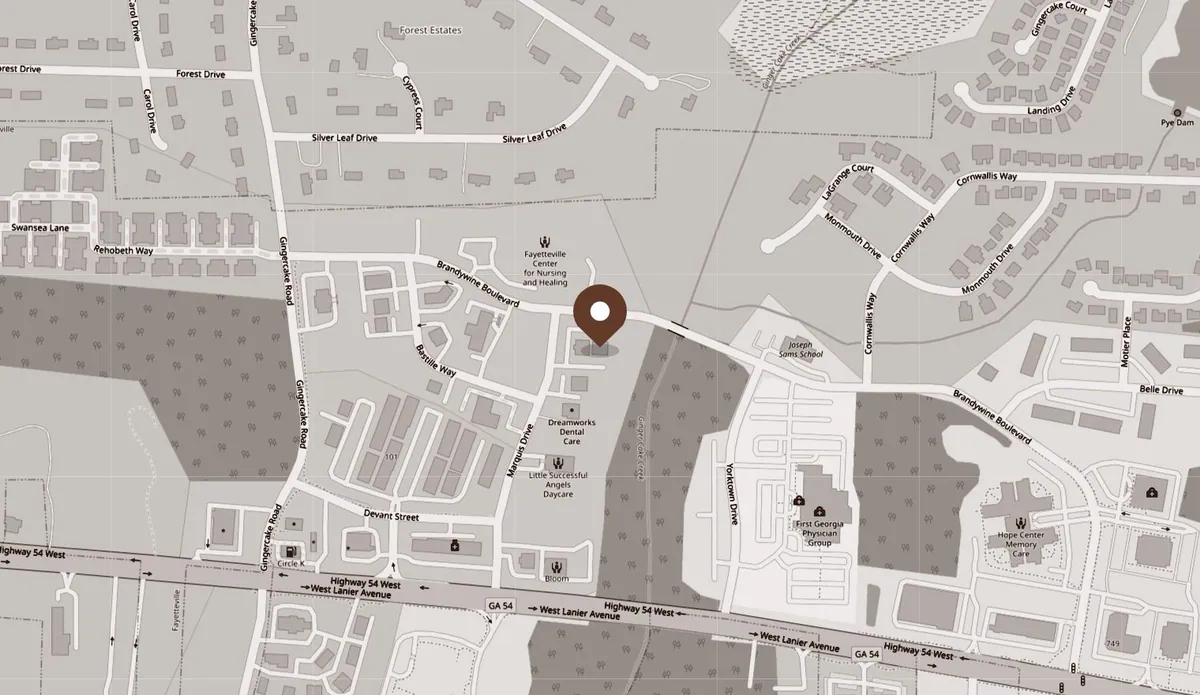
We work with complicated, capable people: executives, pilots, founders, busy moms, creatives and athletes, many of whom have spent years compensating. Our ADHD-focused treatment sits alongside anxiety therapy, DBT skills, EMDR trauma therapy and neurofeedback, in person in Fayetteville, Georgia, or online. We serve Peachtree City, Senoia, Brooks, Tyrone and South Atlanta.
For leaders who want something more concentrated, our Executive Experience Program is $9,950 as a one-time program. Neurofeedback brain mapping is described on our programs page. See everything on our services and specialties page, or start with our ADHD therapy in Fayetteville.

We are private-pay, and we make no promises about outcomes. We do promise a collaborative process where you are an active part of the work.
Our perspective
Most people who come to us with ADHD are not asking how to focus better. They are asking why they feel like too much, and why the people they love keep absorbing the fallout.
We start there. Emotional intensity is not a defect to be corrected. It is a signal system running hot, often in people who have been in the pain cave for years and learned to hide it. The cracks that show up under pressure are information about what has gone unsupported.
That is why we pair education with skills and, where it fits, evidence-based tools such as DBT skills, EMDR and neurofeedback. We keep assessment separate from education, and we do not mass-produce appointments. Each plan adapts to the person in the room, whether they are a CEO, a pilot or a mom who has not had ten quiet minutes in a month.
If your emotions have been running the day, you do not have to keep carrying that alone.
Adam Glendye LPC, CPCS
FAQ
Is emotional dysregulation part of ADHD or a separate problem?
Researchers increasingly treat it as a core feature of ADHD, though it is not part of the formal diagnostic criteria. The 2020 meta-analysis found it in adults with ADHD even without other mental health conditions. It can also come from anxiety, trauma or mood disorders, so an assessment is the way to sort out what is driving yours.
Can ADHD cause mood swings and anger outbursts?
Yes, for many people. The ADD Association lists mood swings, anger outbursts and low frustration tolerance among the common examples. These swings are usually faster and shorter than the mood episodes seen in mood disorders, but only a clinician can tell the difference for you.
What is rejection sensitivity?
It describes an intense emotional reaction to criticism or perceived rejection. The APA names it as one way dysregulation presents in ADHD. It is not a formal diagnosis, but it is a useful label for a real pattern many adults recognize.
Does therapy help with ADHD emotional regulation?
The evidence supports it. NIMH lists psychotherapy among common treatments, and the AAFP describes CBT as well supported for building planning and emotion regulation strategies. Results vary from person to person, so we do not promise a specific outcome.
How do I know if I should be evaluated for ADHD?
If long-standing patterns with attention, impulsivity and intense emotion are affecting work or relationships, a comprehensive evaluation is a reasonable next step. A licensed clinician looks at your history, rules out look-alike conditions and talks with you about options. Education like this article cannot replace that.
Sources
- Emotional dysregulation in children with ADHD (PMC, 2016)
- Emotion dysregulation in adults with ADHD (PMC, 2020)
- Evidence of emotion dysregulation as a core symptom of adult ADHD (PMC, 2023)
- APA: Emotional dysregulation is part of ADHD (2024)
- Attention Deficit Disorder Association: ADHD emotional dysregulation
- Johns Hopkins Psychiatry Guide: ADHD
- NIMH: Attention-Deficit/Hyperactivity Disorder
- AAFP: Adult ADHD Toolkit
- CDC: ADHD in Adults
- TMS for adult ADHD