
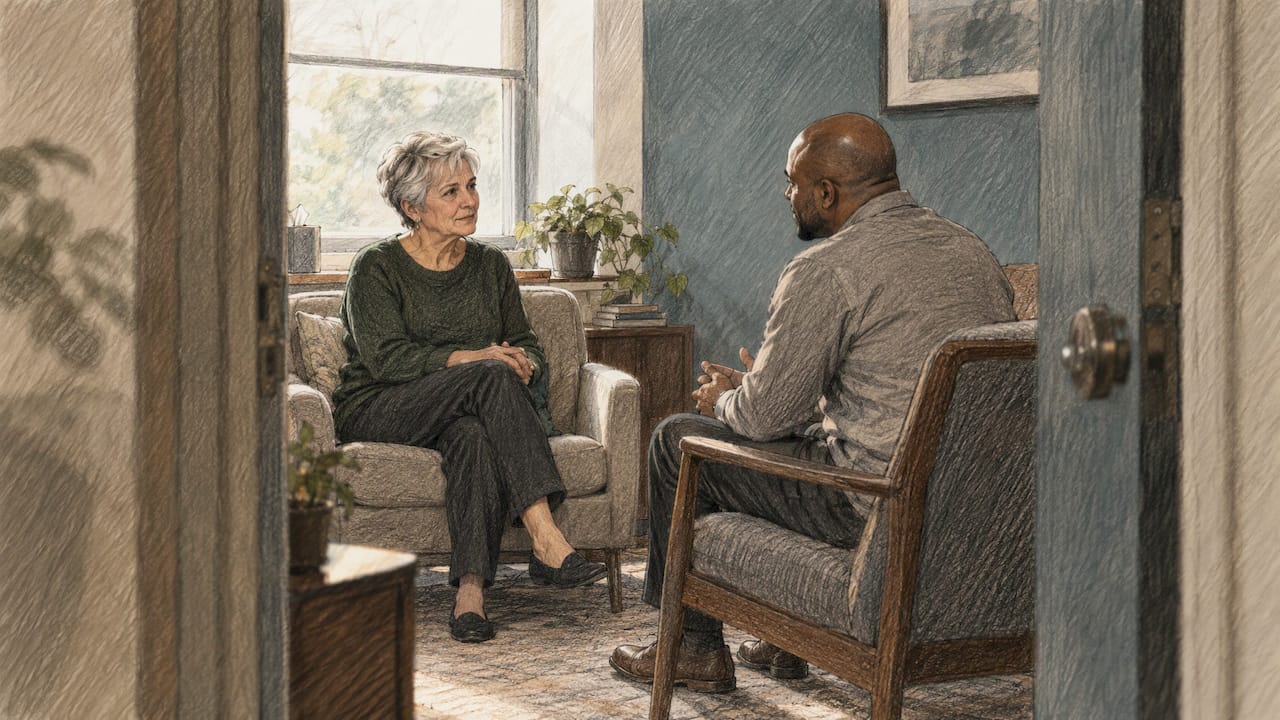
You may be the person everyone else leans on: the one who runs the company, flies the aircraft, keeps the household moving. Then your husband or wife dies, and the competence that carried you everywhere stops working. Therapy after losing a spouse is not about being fixed or sped up. It is working with someone trained in grief who can help you carry the loss, rebuild daily life around it, and notice when the pain has stopped moving. At The Pursuit Counseling in Fayetteville, Georgia, grief and loss counseling is offered in person and online, for people who are tired of performing fine.
Key Takeaways
- Grief is a natural response to loss, not a disorder. Therapy is for the person who is overwhelmed, stuck, or simply wants company in it.
- Grief-focused talk therapy has the strongest research support for intense, lingering grief, and online sessions do not appear to be less effective than in-person ones.
- Widowhood brings practical load as well as emotional pain. A good counselor works with both.
- There is no right way to mourn, so the best fit is a therapist who adapts to you, your culture, and your work life.
- If you are thinking about ending your life, call your doctor, go to the nearest emergency room, or call 911 right away.
Table of Contents
- What Losing a Spouse Actually Does
- Grief Is Not a Disorder, and That Matters
- When It Is Time to Reach Out
- What the Research Says Works
- What Sessions Tend to Look Like
- Grief Is Not the Same for Everyone
- The Practical Side No One Warns You About
- Support Groups, Hospice and Other Support
- What Not to Do
- How We Work With Grief
- Starting With Us
- FAQ
- Sources
What Losing a Spouse Actually Does
People describe it in physical terms. The house sounds different. You reach for the phone to tell them something. You sign a form and hit the line that asks for marital status.
The National Institute on Aging notes that after a spouse dies you may worry about how you will take care of yourself or your home, and that learning new tasks, from chores to repairs to finances, can take time. It also notes that people who are widowed and retired may feel very lonely and become depressed.
If you are a high performer, there is another layer. You may be good at compartmentalizing, and it still works. You can sit in a board meeting or a cockpit briefing and function. Then you get in the car and the floor drops out. That gap between the person people see and the person who drives home is exactly what grief therapy is built to hold.
The same applies if you lost a parent. The relationship is different, but much of what follows here, from what therapy involves to when to reach out, applies to you too.
Grief Is Not a Disorder, and That Matters
A federal guidance document for clinicians, produced for SAMHSA, states that grief is a natural response to loss rather than a mental disorder. It adds that grief is often mistaken for depression or PTSD, which can lead to misdiagnosis.
This is the line between education and assessment. Reading about grief teaches you what is common. A clinical assessment looks at you: how long it has been, what you are carrying, what is getting in the way of your life. Nothing in an article like this can tell you which of those you are in. A counselor can.
It also means you do not need a diagnosis to walk in. You need a reason, and “I can’t get through the day the way I used to” is one.
When It Is Time to Reach Out
The National Institute on Aging says it is especially important to get help if you feel overwhelmed or very depressed by your loss, and to talk with your doctor if sadness keeps you from carrying on with day-to-day life.
The American Psychological Association says people with severe or complicated grief can benefit from a licensed mental health professional who specializes in grief, particularly when the grief is intense and daily activities feel out of reach.
Some signs worth taking seriously:
- You cannot sleep, eat, or work the way you need to, and it is not easing.
- You feel numb, or cut off from people you care about.
- You are preoccupied with the person who died to the point that little else registers.
- You are avoiding anything that reminds you of them, including rooms in your own house.
- Your drinking, overworking, or other coping habits have quietly escalated.
There is also a clinical threshold. The American Cancer Society says that spouses and parents of the person who died are most at risk for complicated, or unresolved, grief. Other risk factors include several losses in a short time, a history of anxiety, and past trouble coping with loss. It encourages anyone with these signs to talk with a healthcare or mental health provider, because treatment can help.
For prolonged grief disorder, the formal diagnosis, the DSM-5-TR criteria as summarized in a 2025 clinical review require that the death occurred at least 12 months ago. They also require intense yearning or preoccupation nearly every day for at least a month, several additional symptoms such as identity disruption, disbelief, emotional numbness or a sense that life is meaningless, and significant impairment in daily functioning. A diagnosis is a clinician’s call. You do not have to wait a year to ask for support, and many people reach out in the first weeks or months.
If the pain reaches the point where you are thinking about suicide, the American Cancer Society’s guidance is direct: call a doctor, go to the nearest emergency room or urgent care, or call 911. Do not wait for an appointment.
If you are looking for professional help with grief from another country, this psychological help for grief page shows how some practices frame it. In Georgia, the practical route is a licensed counselor you can see in person or online.
What the Research Says Works
You are an intelligent adult, so here is the evidence plainly.
A 2024 peer-reviewed review in PMC concluded that grief-focused, CBT-based therapies currently have the strongest evidence for prolonged grief disorder. CBT, or cognitive behavioral therapy, is structured talk therapy that works with the thoughts, behaviors and emotions that keep you stuck. The same review found that web-based therapies do not appear to be less effective than in-person ones.
The 2023 HHS report to Congress on bereavement services reports that CBT Grief-Help was more effective than control conditions at reducing prolonged grief symptom severity at 3, 6 and 12 months.
The American Psychiatric Association describes Prolonged Grief Therapy as focused on two things: accepting the reality of the loss and restoration, meaning working toward goals and a sense of satisfaction in a world without the person. It also notes that there are currently no medications to treat specific symptoms of grief.
The National Institute on Aging puts the aim simply: regular talk therapy with a grief counselor or therapist can help people learn to accept a death and, in time, start a new life.
No therapist can promise you an outcome, and we won’t. What the evidence supports is that structured, grief-specific work is a sound place to put your effort.

What Sessions Tend to Look Like
Research on grief-specific therapy describes weekly sessions with work between them. In the treatment design of Shear and colleagues, key therapeutic work happens in sessions and in homework completed between them, and the treatment addresses both the loss itself and the tasks of restoring a life.
In practice, that means two movements that trade places over time.
Turning toward the loss. Telling the story of the death, the illness or the phone call. Saying what you did not get to say. Letting the yearning be there without rushing it. The NIA advises not ignoring your grief and notes that many people find it helpful to talk directly about their loss.
Turning toward the life. Who are you now, outside the role of spouse? What do you want your evenings to look like? What does work mean now? The restoration side is practical and sometimes surprising: learning to cook for one, deciding what to do with their side of the closet, figuring out holidays.

Expect to be asked about your history, your support, your sleep, your drinking, and how you cope. That is not an interrogation. It is how a counselor separates ordinary, brutal grief from grief that has locked up, and how they decide what to do first.
Grief Is Not the Same for Everyone
The NIA is clear that there is no right or wrong way to mourn. Some people cry daily. Some go quiet and work eighteen-hour days. Some feel relief after a long illness and then guilt about the relief. Some are angry at the person for dying.
The SAMHSA-commissioned guidance also says assessment should consider a person’s culture, religion, family and social identities, and that bereavement rituals should be acknowledged and honored. It is almost always most helpful when you work with someone who understands these parts of your world.
This is why fit matters. A pilot who has spent a career in checklists and controlled environments grieves differently from a mom in Peachtree City who has three kids watching how she handles it. A founder who cannot show weakness to investors grieves differently from a creative whose work now reads differently. A counselor who understands your world does not have to be taught it in session one.
The Practical Side No One Warns You About
Grief after a spouse’s death is also logistical. The NIA lists getting your legal and financial paperwork in order among the tasks that come with loss, and suggests reaching out to friends and family nearby to help manage tasks right after the death. If you do not have loved ones close, it points to local organizations, including those connected through the Administration for Community Living.
Therapy does not replace those people. It gives you one hour a week where you do not have to manage anyone else’s feelings about your loss, including your children’s, your colleagues’ and your in-laws’.
For some, the weight sits on top of something older. If you already live with anxiety, or if the death was sudden or traumatic, the grief can come tangled with trauma responses: flashbacks, hypervigilance, images you cannot shut off. We offer trauma therapy with EMDR, a structured approach to processing distressing memories, for people in that situation. If you are carrying depression that hides behind a functional life, our page on high-functioning depression describes what that can look like.
Support Groups, Hospice and Other Support
Therapy sits alongside other support. The American Psychiatric Association notes that bereavement support groups and peer support can help people feel less alone and avoid the isolation that could raise the risk of prolonged grief disorder. Many widows and widowers find that sitting with others who have lived it says what no friend can.
The NIA also says hospice professionals can provide bereavement support to the family of someone under their care, and you can ask hospice workers for bereavement support even if hospice was not used before the death. If your spouse died under hospice care, that is worth a phone call.
The NIA also lists ways to lower the cost of care: asking providers about sliding-fee scales or payment plans, finding a health center that offers free or low-cost care, and contacting your state mental health agency if you do not have insurance.
What Not to Do
People search for what to avoid, so here is the short, honest list.
- Do not ignore it. Staying busy is a valid pause. It is a poor plan.
- Do not wait for a crisis. Reaching out when you are overwhelmed is a good reason, and reaching out before that is too.
- Do not measure yourself against stages. Grief rarely moves in a line, and backtracking is part of how it goes.
- Do not go it alone. The loneliness of widowhood is one of the things the NIA specifically flags.
- Do not make large, irreversible decisions on your worst days. Selling the house or quitting the job can often wait for a clearer week.
How We Work With Grief
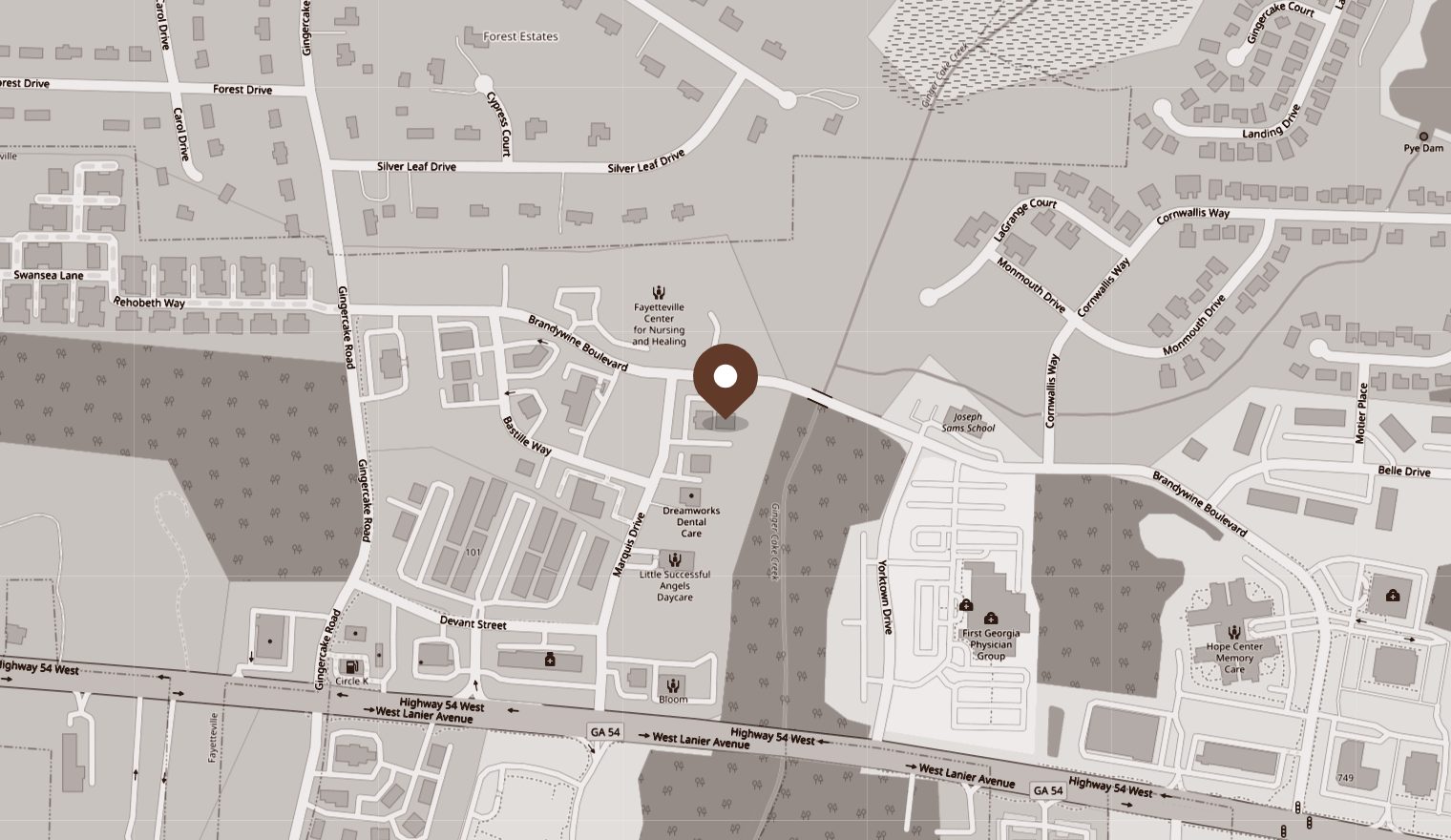
We are a private-practice counseling team in Fayetteville, serving Peachtree City, Senoia, Tyrone, Brooks and the rest of South Atlanta, with in-person and online sessions. Our approach is built on personal connection and evidence-based methods that adapt to the person in the room, not a script. Our grief counseling page for Fayetteville lays out what that looks like.
We do not promise that grief resolves, and we do not hand out diagnoses over a blog post. What we do is sit with the full weight of what happened, and help you work out the next right step.
If your life is shaped by travel, shifts or long hours, online sessions mean the appointment does not have to depend on your schedule being clear. Our page on private online therapy for executives describes how that works for busy professionals.
We have sat with people who were the strongest person in every room, and who could not say their spouse’s name without their voice changing.
What we have learned is that pain is not a verdict on you. It is the shape of what you loved. We call the hard places the pain cave, and the cracks. You do not have to pretend they are not there, and you do not have to go into them by yourself.
Our job is not to hurry you out of grief. It is to know the terrain, to stay beside you, and to help you rebuild a life that can hold both the loss and the love. We pay attention to who you were, who you are in the wreckage, and what matters now. That takes someone who sees you as a complicated person, not a case.
If you are someone who can solve everything except this, that is not a failure of strength. It is a sign you need a different kind of support.
Adam Glendye LPC, CPCS
Starting With Us
Individual therapy at The Pursuit Counseling is published at 125 to 500 USD per hour, and our trauma therapy with EMDR is 275 USD per hour. Our services and specialties page has the current list. We are private-pay.

If you are in Fayette County or South Atlanta and want to talk with someone about the loss of your spouse, you can start with our Fayetteville grief counselor page. Tell us what happened, what is hardest, and how you want to be met. We will take it from there.
FAQ
How do I know if I need therapy or if this is normal grief?
Both can be true. Intense grief is a normal response, and therapy can still help. The National Institute on Aging says to get help if you feel overwhelmed or very depressed, and to talk with your doctor if sadness keeps you from daily life. If you are unsure, a first session is a reasonable way to find out.
Is online grief therapy as effective as in-person?
A 2024 review in PMC found that web-based therapies do not appear to be less effective than in-person therapies for prolonged grief. That gives you real flexibility if you travel, work irregular hours or would rather grieve at home. We offer both in-person and online sessions.
Does therapy after losing a parent work the same way?
The core work is similar: turning toward the loss and then toward your life as it is now. The relationship and its roles are different, and so are the family dynamics. The American Cancer Society names both spouses and parents as most at risk for complicated grief, so the signs to watch for are the same.
Can medication treat grief?
The American Psychiatric Association states that there are currently no medications to treat specific symptoms of grief, though research is underway. If you also have depression or anxiety, talk with your doctor about what is right for you.
Sources
- Mourning the Death of a Spouse, National Institute on Aging
- Coping With Grief and Loss, National Institute on Aging
- Grief: Coping with the loss of your loved one, American Psychological Association
- Coping With the Loss of a Loved One, American Cancer Society
- Prolonged Grief Disorder, American Psychiatric Association
- State of the Science: Psychotherapeutic Interventions for Prolonged Grief Disorder, PMC
- Overview of Bereavement and Grief Services in the United States, HHS/ASPE
- Prolonged Grief Disorder: Diagnostic, Assessment, and Treatment, American Journal of Psychiatry feature
- Prolonged grief disorder, 2025 clinical review
- A Systems-Based Approach to Supporting Individuals Who Have Experienced Grief and Loss, NASMHPD
- Sorg, Psykolog Louisa Madsen