


Yes: the Gottman Method is an evidence-based approach to couples therapy with outcome studies behind it, and for many Georgia couples it delivers real change. Certified providers often charge more per session, but the method’s structured format can mean fewer total sessions to reach a turning point. Below, we walk through the research, what sessions actually look like, how to vet a provider’s training, and what the cost-to-outcome math tends to reveal.
TL;DR:
- Certified Gottman therapists tend to charge higher rates, but their sessions often resolve core relationship issues faster than non-certified providers.
- Evidence shows the method improves trust, intimacy, and conflict handling, especially in difficult cases like infidelity and same-sex couples, with large effect sizes reported.
- Proper assessment includes standardized questionnaires and a structured Connect evaluation, with progress measured by real behavioral changes, not just feelings.
- To ensure effective treatment, ask providers about certification status, treatment structure, and how they track progress at three months; vague answers indicate lower training levels.
- Costs typically range from 0 to 0 per session in Georgia, but higher rates may reflect more certified expertise; overall expense depends on session frequency and resolution speed.
Table of Contents
- What the research shows about outcomes for the Gottman Method
- How Gottman Method sessions and assessment typically unfold
- Vetting a Gottman-trained provider: training levels and the right questions
- Georgia pricing context and how to think about total cost-to-outcome
- Local credentials behind this guide
- When Gottman fits and when it doesn’t
- How The Pursuit Counseling supports Georgia couples doing this work
- Sources
- FAQ
What the research shows about outcomes for the Gottman Method
Couples considering therapy deserve more than a brand name backed by good marketing. The Gottman Method has something most approaches don’t: a documented history of outcome research. A pilot randomized control trial at Nova Southeastern University found that Gottman Method Couples Therapy outperformed treatment-as-usual for couples recovering from infidelity, with measurable gains in trust, conflict management, and relational satisfaction. That matters because affair recovery is one of the hardest presenting issues in couples work, and generic talk therapy often stalls there.
A separate study indexed on PubMed found that Gottman couple therapy improved marital adjustment and intimacy after a course of treatment, reinforcing that the gains aren’t limited to one sample or one type of relationship distress. The Gottman Institute itself maintains a public record of these outcome studies and ongoing randomized trials, which is unusual in a field where “evidence-based” often means “we assume it works.”
One study in same-sex couple samples reported strong effect sizes well above 1.0, according to Academia. In plain terms, an effect size above 1.0 is considered large. It suggests the difference between couples who did this work and those who didn’t wasn’t subtle.
None of this means the evidence is airtight:
- Many outcome studies come from university-affiliated research clinics, where conditions differ from a private practice office.
- Couples in research samples are sometimes recruited and screened differently than couples who walk into therapy on their own.
- The field still needs more large-scale randomized trials outside of pilot studies.
Real evidence with real limits still beats no evidence at all, which is where a lot of therapy modalities sit.
How Gottman Method sessions and assessment typically unfold
Before any repair work starts, most Gottman-trained clinicians run a structured assessment, often called a Gottman Connect assessment. It typically includes individual interviews, an oral history interview about the relationship, and standardized questionnaires that map conflict patterns, friendship quality, and shared meaning. This isn’t a formal diagnostic tool, and it isn’t a substitute for a full clinical evaluation. It’s a way to see the relationship’s actual architecture before deciding where to intervene.
From there, sessions generally run:
- An initial 60 to 90 minute joint session, followed by individual sessions for each partner.
- A feedback session where the therapist shares patterns identified in the assessment.
- Ongoing weekly sessions, or a condensed intensive format over one to several days, focused on specific interventions.
- Skill practice between sessions, since the method leans on repair techniques couples use at home, not just insight gained in the room.
Interventions draw on building friendship and fondness, teaching repair attempts during conflict, and helping couples construct shared meaning. Progress is tracked through how couples handle actual disagreements, not just how they describe feeling.
Pro Tip: Ask your therapist how they measure progress between sessions, not just whether you “feel better,” since felt improvement and behavioral change don’t always move together.
Vetting a Gottman-trained provider: training levels and the right questions
Here’s what a lot of people miss: saying you “use Gottman techniques” and being a Certified Gottman Therapist are not the same claim. The Gottman Institute is explicit that plenty of clinicians attend a workshop and incorporate concepts, while full certification requires supervised case consultation and video-reviewed sessions. Fully certified therapists are genuinely uncommon, which is part of why their rates tend to sit higher.
Before booking, ask directly:
- Are you a Certified Gottman Therapist, or have you completed Gottman training levels without full certification?
- How many couples have you treated using this specific model, and for what kinds of concerns?
- Do you run the full Gottman Connect assessment, or an abbreviated version?
- How do you structure a course of treatment, weekly sessions versus an intensive format?
- What does progress look like at the three-month mark for a couple like us?
- How do you handle sessions if one partner disengages or one issue (an affair, betrayal, chronic conflict) dominates?
Vague answers are the red flag to watch for. “I use a Gottman-informed approach” without a clear certification answer usually means workshop-level training, not full certification. That’s not disqualifying, but you deserve to know which you’re paying for.
Georgia pricing context and how to think about total cost-to-outcome
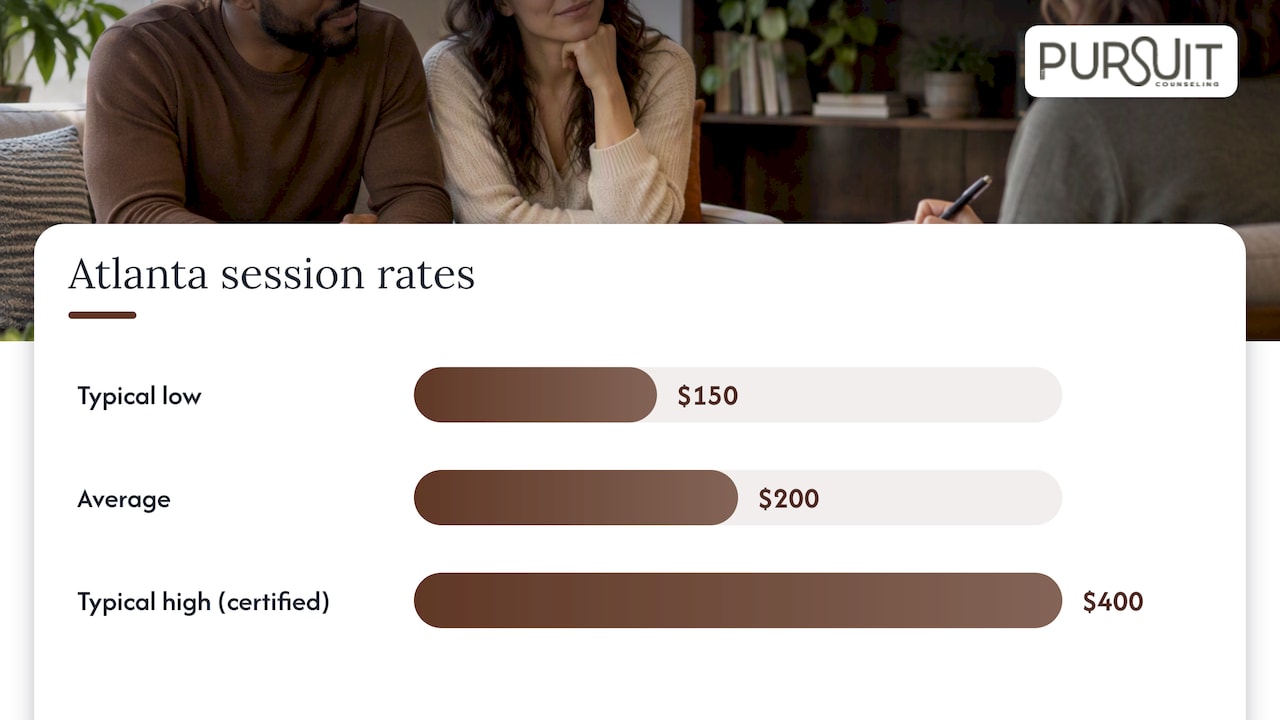
Local pricing guides put typical couples therapy sessions in the Atlanta area between 0 and 0, with averages closer to 0. Certified Gottman and EFT-trained clinicians tend to land at the higher end of that range, largely because full certification is rare and because assessment materials are often folded into the fee.
The math worth doing before you commit:
- A therapist charging more per session but resolving core patterns in 10 sessions can cost less overall than a lower rate stretched across 20.
- Intensive formats front-load the assessment and intervention work, which for issues like affair recovery can shorten the total timeline.
- HSA or FSA funds, sliding-scale slots, and superbills for out-of-network reimbursement can offset private-pay costs meaningfully; our guide to couples therapy insurance coverage in Georgia walks through the details.
Price per session tells you almost nothing on its own. Price per outcome is the number that actually matters.
Local credentials behind this guide
This article was written by Adam Glendye, LPC, CPCS, a licensed professional counselor and certified clinical supervisor. That distinction matters in couples work specifically: supervising other clinicians requires a depth of case exposure that shapes how assessment and treatment planning get handled.
The Pursuit Counseling, based in Fayetteville, Georgia, serves Peachtree City, Senoia, Brooks, Tyrone, and the broader South Atlanta area, with both in-person and online sessions.
- Couples intensives are available for concentrated, multi-hour work rather than only weekly sessions.
- Sessions run both in-person and online, which matters for couples juggling demanding schedules.
- Readers can request a consult or pricing details directly before committing to a course of treatment.
When Gottman fits and when it doesn’t
Gottman tends to work best for communication breakdown, affair recovery, and couples who’ve drifted apart but still want to rebuild shared meaning. It’s not the right starting point for active safety concerns, untreated substance use, or trauma that needs individual work first. Ask about assessment, your provider’s actual training level, and whether a short trial block of sessions makes sense before committing further.
— Adam Glendye LPC, CPCS
How The Pursuit Counseling supports Georgia couples doing this work

If you’re weighing whether structured, evidence-informed couples work is worth the investment, effectiveness matters more than the sticker price. The Pursuit Counseling offers Couples Intensives built around focused, multi-hour blocks rather than months of uncertainty, alongside standard weekly sessions for couples who prefer a slower pace. Both formats are available in-person in Fayetteville or online for couples anywhere in South Atlanta.
- Couples Intensive sessions run as focused 3-hour blocks, priced at ,500 per intensive according to current pricing.
- Sessions are available both in-person and online for flexible scheduling.
- Assessment-driven treatment planning applies whether you choose weekly sessions or an intensive format.
| Format | Structure | Best for |
|---|---|---|
| Couples Intensive | 3-hour focused block, ,500 | Couples wanting concentrated progress in a short window |
| Weekly individual/couples sessions | Ongoing, 5-0 per hour depending on service | Couples building change gradually over months |
Explore the Couples Intensive page for logistics and booking, or review the full services and specialties overview to see how couples work fits alongside individual and trauma-focused care. If you’re ready to talk through fit before booking, reach out and ask about scheduling a consult.
Sources
- The Effectiveness of the Gottman Method – Research | The Gottman Institute
- A Pilot Study Examining the Effectiveness of Gottman Method Couples Therapy Over Treatment-as-Usual Approaches for Treating Couples Dealing with Infidelity – Nova Southeastern University
- Examining the Effectiveness of Gottman Couple Therapy on Improving Marital Adjustment and Couples’ Intimacy (PubMed)
- Couples Therapy Cost in Atlanta: 0–0 (2026) | OpenMyPro
FAQ
Is the Gottman method worth it?
For couples dealing with communication breakdown or affair recovery, research from Nova Southeastern University and other outcome studies supports meaningful gains in trust and satisfaction. Worth depends on your provider’s actual training level and your specific concerns, not the label alone.
How much does marriage counseling cost in Georgia?
Local pricing guides report Atlanta-area couples therapy sessions typically range from 0 to 0, with averages closer to 0. Rates climb with certification level, session length, and format, so a higher hourly rate doesn’t always mean a higher total cost.
Is there a free Gottman training available?
The Gottman Institute publishes research summaries and educational material about the method’s foundations at no cost, but full clinician certification requires paid training and supervised case review. Free resources can help you understand the approach, though they aren’t a substitute for working with a trained provider.
What is the 5-5-5 rule for couples therapy?
This isn’t a term used in Gottman Method literature or the outcome studies behind it, so definitions online vary widely and aren’t standardized. If you’ve seen it referenced elsewhere, ask a prospective therapist directly how it relates, if at all, to the approach they practice.
How do I know if a therapist is actually Gottman certified?
Ask directly whether they hold full Gottman certification, which requires video-reviewed sessions and case consultation, or whether they’ve only attended workshop-level trainings. The Gottman Institute confirms this distinction matters for treatment fidelity.