

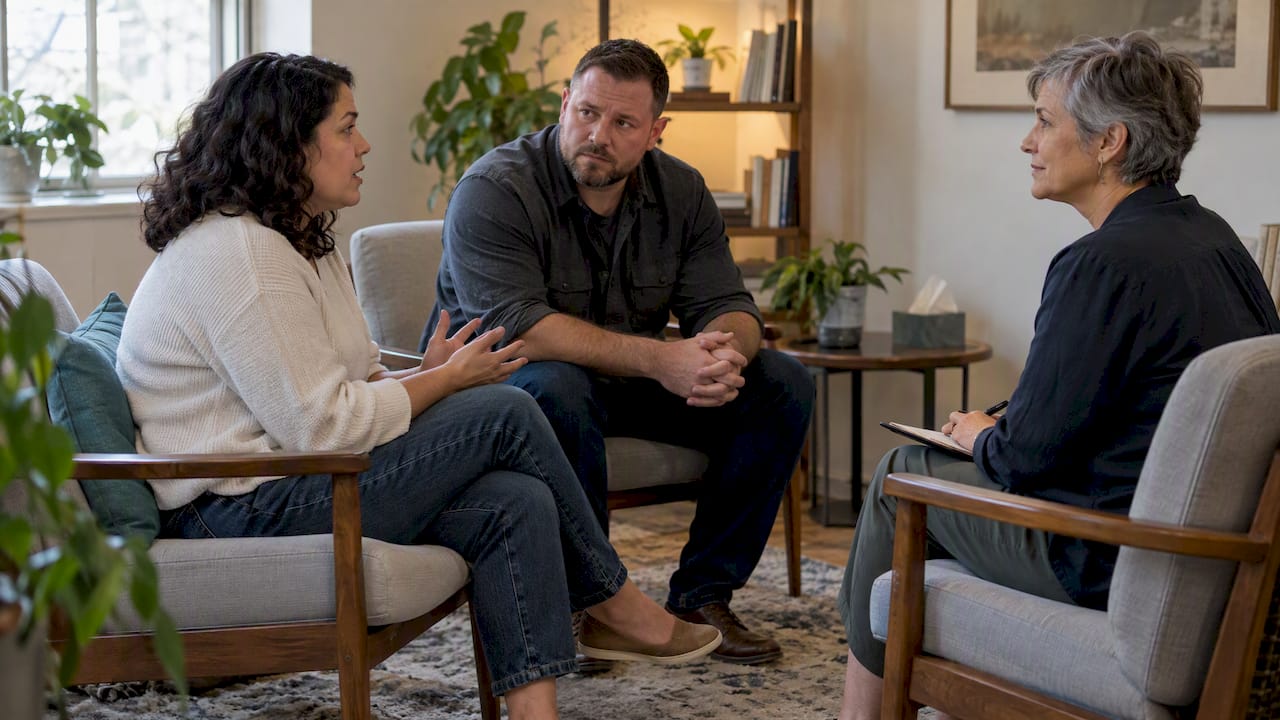
It’s late. The house is quiet in that heavy way it gets after a fight, or after weeks of not fighting because nobody has the energy anymore. Maybe there’s a duffel bag on the bed. Maybe you’ve already looked at apartments. And somewhere between “I can’t keep doing this” and “I’m not ready to give up,” you pick up your phone and type four words:
Emergency couples counseling.
If that’s you, or if that was you last night, this post is for you.
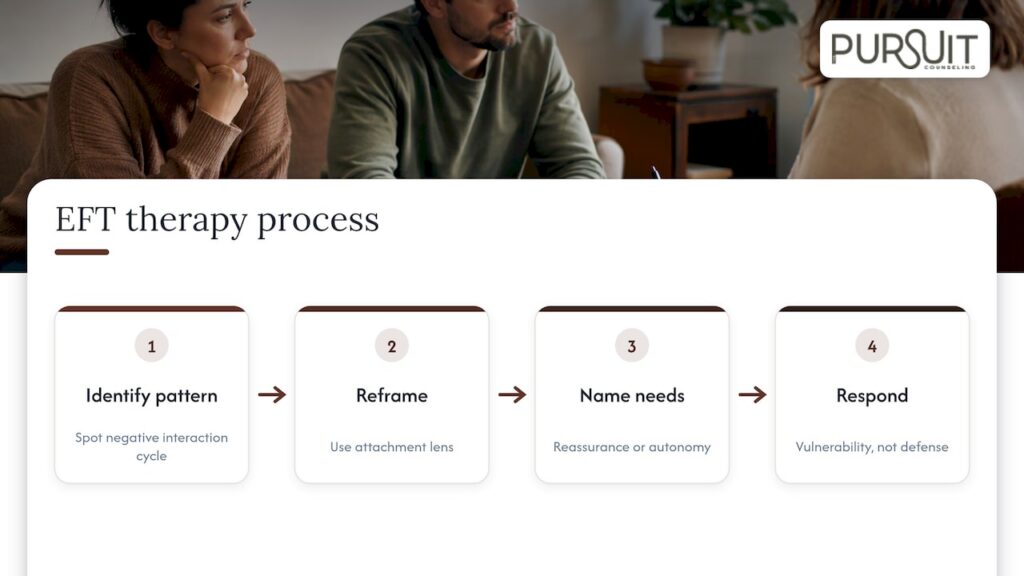
What That Search Actually Feels Like
Nobody types “emergency couples counseling” casually. It’s not a curiosity search. It’s what people type when they’ve run out of other ideas.
Here’s what we hear, over and over, from couples who walk through our door after that search:
Exhaustion
You’ve had the same argument so many times you could write both parts of the script. You’re not even angry anymore. You’re tired.
Fear on Both Sides of the Door
The one packing is scared of staying in something that hurts. The one being left is scared of losing everything. Often both partners feel both fears.
Shame
“We should be able to figure this out.” “Other couples don’t need this much help.” “What does it say about us that it got this bad?”
A Strange, Quiet Hope
If you were truly done, you wouldn’t be searching. Part of you is still reaching. That part matters.
Urgency
Weekly therapy with a three-week waitlist feels like being told to take a number while the house is on fire.
All of that makes sense. None of it means you’re broken, dramatic, or too far gone. It means you’ve reached the point where small adjustments won’t hold anymore, and some part of you knows it.
Why “Just Try Counseling” Often Isn’t Enough at This Stage
You may have heard the often-repeated claim that couples wait about six years before getting help. The Gottman Institute has cited that number for years.
More recent research suggests the wait is shorter. A study in the Journal of Marital and Family Therapy found an average of about 2.7 years between serious problems starting and couples entering therapy, and its authors concluded therapists have little reason to be pessimistic about whether those couples’ problems can be resolved.
That’s good news. But two-plus years is still a long time to practice the same painful patterns.
By the time you’re Googling at 2 a.m., three things are usually true:
1. The Pattern Is Deeply Grooved
You both know exactly how the fight goes, and you can slide into it in seconds.
2. Each of You Is Carrying Your Own Stuff
Old wounds, family history, stress, grief, anxiety, maybe drinking. Some of it started long before this relationship.
3. Your Nervous Systems Are Worn Out
This one gets overlooked the most, and it may matter the most.
A 50-minute session once a week can be great care. But when a relationship is in crisis, one hour a week can feel like bailing out a boat with a coffee cup.
Your Body Is in This Fight Too
Dr. John Gottman’s research describes something called flooding.
When your heart rate goes above roughly 100 beats per minute during conflict, your ability to truly listen can become seriously impaired.
As the Gottman Institute puts it, flooded partners “can’t hear repair attempts” and default to fight, flight, or freeze, “not because they don’t care, but because their body has decided… that they are under threat.”
In The Seven Principles for Making Marriage Work, Gottman writes that once you’re past that threshold, “you won’t be able to hear what your spouse is trying to tell you no matter how hard you try.”
Read that again.
No matter how hard you try.
Why Communication Skills Sometimes Fall Apart During Conflict
That’s why so many couples say, “We know what we’re supposed to do. We just can’t do it in the moment.”
That isn’t necessarily a character flaw or a lack of love. Your nervous system may have been on high alert for so long that it now treats your partner’s tone of voice as a threat.
This is where some relationship help stops short. It teaches you what to say, but it doesn’t always help your brain and body get calm enough to say it.
Where Neurofeedback Fits
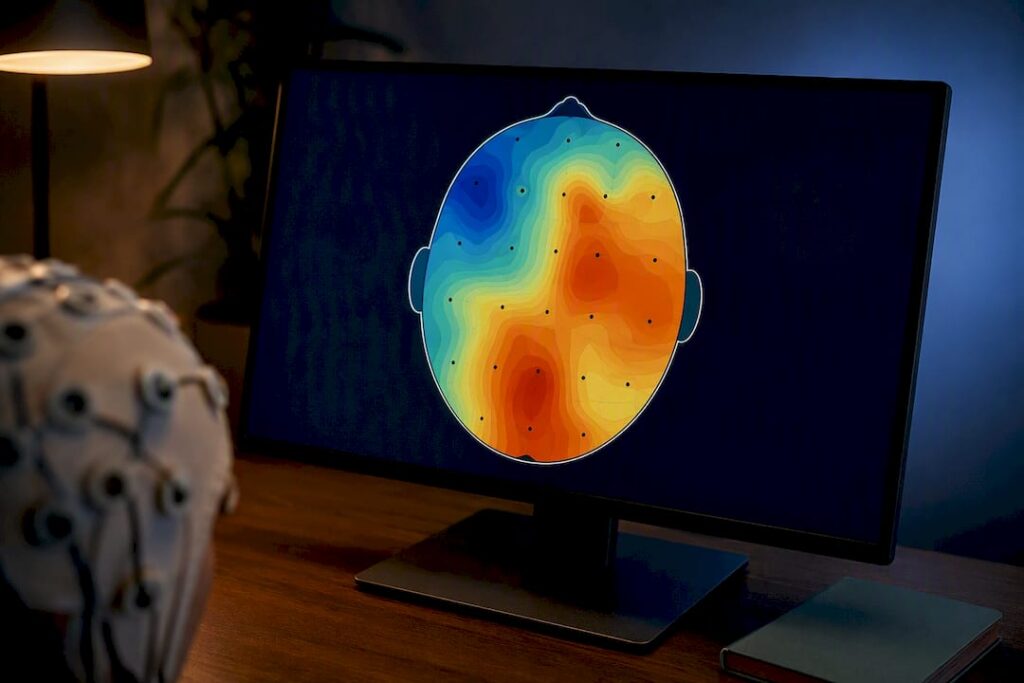
Neurofeedback is a form of brain training.
It starts with a brain map (a qEEG), a painless recording of your brain’s electrical activity. The map measures electrical activity patterns that a trained clinician can evaluate alongside symptoms and clinical history.
Training sessions then give your brain real-time feedback, with the goal of helping it develop steadier, more flexible patterns over time.
What Does the Research Say About Neurofeedback?
The research is promising in some areas, especially for symptoms of anxiety and stress that can contribute to relationship conflict:
- A 2022 meta-analysis in the Journal of Counseling & Development looked at 26 studies and found neurofeedback reduced self-reported anxiety symptoms by nearly one standard deviation, which is a meaningful effect.
- A meta-analysis of randomized controlled trials in the European Journal of Psychotraumatology found beneficial effects on PTSD symptoms, with positive effects on depression and anxiety as well. The authors also noted that the studies were mostly small and the certainty of evidence was low.
How Neurofeedback and Couples Counseling Can Work Together
Neurofeedback is not a magic fix, and it doesn’t replace therapy. Evidence for neurofeedback as a direct treatment for relationship distress is still limited.
Think of the potential combination this way:
Therapy helps you understand the pattern and decide what you want to do differently. Neurofeedback may help address some of the stress and regulation difficulties that make those changes harder to practice.
For a couple in crisis, addressing both the relationship patterns and each person’s individual challenges can provide a more comprehensive path forward.
Why a Comprehensive Approach Makes Sense
When a relationship is one step from ending, the problem is rarely just one thing. So the help shouldn’t be just one thing either.
That’s the thinking behind The Full Pursuit, our comprehensive program for couples who are close to calling it quits.
It brings everything together at once, pointed in the same direction.
The Couples Intensive: Nine Hours to Understand the Relationship
The Couples Intensive with Adam Glendye, LPC, CPCS provides nine focused hours across three 3-hour sessions.
The work is built on the Four P’s:
- Pattern: Understanding the cycles keeping you stuck.
- Presence: Learning how to show up differently with each other.
- Purpose: Clarifying what you want for your relationship.
- Plan: Creating a practical path forward.
You leave with a written plan made for the two of you.
The Next Chapter Intensive: Individual Work for Each Partner
The Next Chapter Intensive gives each partner nine hours with their own clinician.
This is your space to be fully honest about what you’re carrying and what you want, and to prepare for whatever comes next.
Individual work helps each person explore their own history, emotional patterns, fears, and responsibilities without making every conversation about the relationship itself.
Neurofeedback Brain Mapping and Training
Through The Pursuit Neurofeedback, brain mapping and neurofeedback training may be incorporated when clinically appropriate.
For partners dealing with significant stress, anxiety, or emotional regulation challenges, neurofeedback may be considered as an additional tool alongside counseling.
Alcohol Monitoring and Accountability
When drinking has worn away trust, alcohol monitoring may be included as part of a mutually understood accountability plan.
The hurt partner gets something more concrete than another promise, and the partner who is changing gets a way to demonstrate consistency.
Why These Services Work Together
Each piece is designed to support the others.
The individual work helps keep the couples work from turning into two people defending themselves.
Brain training may support individual regulation goals.
And accountability, where it’s needed, creates opportunities to rebuild trust with evidence instead of promises.
Let’s Talk About the Money
Here’s the part people are often afraid to ask about, so let’s say it plainly.
A comprehensive program like this is a real investment.
What Does The Full Pursuit Cost?
The core of The Full Pursuit, which includes the Couples Intensive plus a Next Chapter Intensive for each partner, is ,500 if everyone completes all of the intensives.
With neurofeedback for both partners and six months of alcohol monitoring, the complete program is ,720.
That’s a lot of money. It’s okay to feel a jolt when you read it.
Now put it next to the alternative many couples in this situation are already weighing.
What Does Divorce Cost in Georgia?
- A 2026 report covered by the Ledger-Enquirer ranked Georgia the 8th most expensive state for amicable divorce, with an estimated total cost of about ,900.
- Contested divorces in Georgia can run ,000 to ,000 per spouse in attorney fees alone.
- When custody is disputed, guardian ad litem fees, custody evaluations, and expert witnesses can add significant expenses.
Actual costs vary considerably based on the circumstances.
Those numbers don’t include a second rent or mortgage, a second set of furniture, splitting retirement accounts, or the emotional impact on your kids, your health, your work, and your sense of who you are.
Divorce can be expensive in every sense of the word, and much of that cost never gets refunded.
Investing in Your Relationship Before Making a Final Decision
People spend this kind of money on things they believe in all the time: a kitchen renovation, a new car, a wedding.
Many couples spent more on one day of celebrating their relationship than they’ve ever spent on keeping it healthy.
So if you’re searching at 2 a.m., here’s the reframe we offer:
This is the “un-f* my life” investment.**
It’s the moment you stop patching and start dealing with the whole thing, together and individually, mind and body.
And here’s what matters just as much: even if the two of you ultimately decide to separate, this work isn’t wasted.
You’ll each have the opportunity to understand yourselves better, communicate with more clarity and less damage, and, if you share children, develop healthier ways to co-parent.
A relationship can end without being destroyed in the process.
The goal is not to guarantee that a marriage survives. It’s to help both people make thoughtful decisions and move forward with greater clarity.
You Don’t Have to Know the Answer Yet
You don’t need to walk in certain you want to stay.
You don’t need to have forgiven anything.
You don’t need to be “ready.”
You just need to be willing to look at it honestly, with real support, before the bags make it to the car.
Choosing a program like this is not a sign your relationship is failing.
It’s a sign you’re serious about it.
Take the First Step: Emergency Couples Counseling in Fayetteville, GA
If you’re reading this with one foot out the door, start with a free 15-minute fit call.
At The Pursuit Counseling in Fayetteville, Georgia, we’ll listen, ask a few questions, and recommend which pieces of The Full Pursuit fit your situation, whether that’s the full program or just the core.
You don’t have to figure everything out before reaching out.
Call: 404.666.6721
Email: info@thepursuitcounseling.com
Location: The Pursuit Counseling
205 Brandywine Blvd, Suite A
Fayetteville, GA 30214
Your relationship deserves more than another 2 a.m. argument. Take the first step toward understanding what’s happening and what comes next.