


Somatic grounding techniques bring your attention out of racing thoughts and into physical sensation: your feet on the floor, your hands, your breath, the weight of your body in the chair. They work because they speak to the nervous system directly, not through argument. If you have ever tried to think your way out of a spike of panic and watched it fail, this is the other door.
Below are nine practices, how to use them, what usually goes wrong, and how to tell when a technique is enough and when you need a person in the room with you. This is education, not assessment. It can’t tell you what is happening in your body or why.
Key takeaways
- Somatic grounding is bottom-up. It uses sensation to change your physiological state, which is why it can work when reasoning doesn’t.
- Start with neutral sensations, such as the chair under you or your hands, before you go anywhere near discomfort.
- It is a skill, not a mood. It gets more reliable with practice on ordinary days, not only in a crisis.
- Grounding stabilizes the present. It does not process the past, and it does not replace trauma therapy.
- If grounding keeps being the only thing between you and a bad day, that is useful information, and worth bringing to a clinician.
Table of Contents
- What somatic grounding actually is
- Why thinking your way out often fails
- Nine somatic grounding techniques
- The order that protects you
- A worked example
- What grounding can’t do
- Our perspective at The Pursuit
- When it is time to talk to someone
- Working with us
- FAQ
- Sources
What somatic grounding actually is
Grounding, in trauma-informed care, means helping a person reconnect with the present when they are overwhelmed. The federal Trauma-Informed Care in Behavioral Health Services guide lists grounding techniques as basic skills for anyone who works with people who have been through trauma. The somatic version leans on the body instead of on thoughts: touch, pressure, temperature, movement, breath.
Two terms matter here. Interoception is your sense of what is happening inside you: heartbeat, tight jaw, hollow stomach. Proprioception is your sense of where your body is and how it is supported. A paper on Somatic Experiencing describes trauma therapy that guides attention to these internal and kinesthetic experiences, and argues that this awareness is central to working with chronic stress and trauma.
The practical difference from ordinary relaxation is this. Relaxation tries to make you feel calm. Grounding tries to make you feel present and functional. Calm may follow, or it may not, and that is fine. Many people judge a technique a failure because they did not feel serene afterward. The better question is whether you are a little more able to think, speak and choose.
Why thinking your way out often fails
When your system is flooded, the part of you that reasons is working with a handicap. Telling yourself “this is irrational” can add a second layer of stress: now you are anxious and also frustrated that you are anxious.
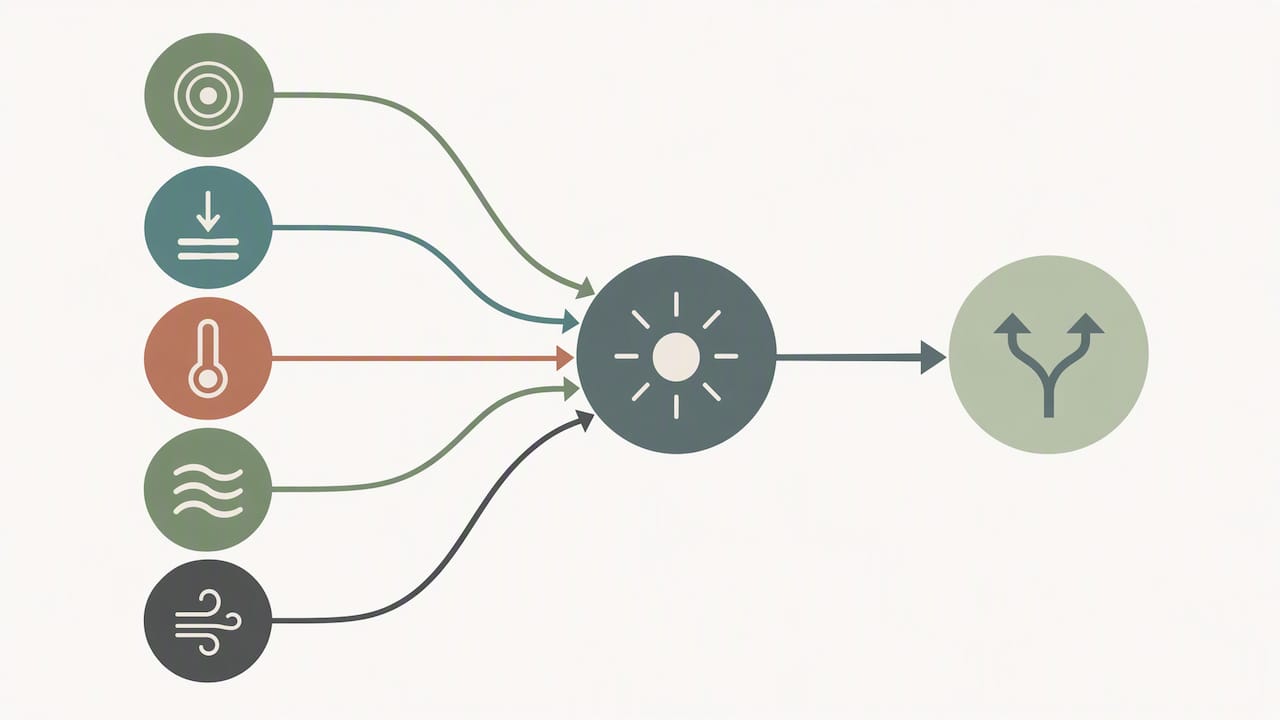
Somatic methods are called bottom-up because they begin with sensation and let that information travel upward. The Somatic Experiencing paper above frames this as a contrast with approaches that rely only on cognition. Polyvagal-informed clinicians describe a similar aim: help the body register cues of safety so that higher-level function can come back online. The theory has its critics, and a recent review of Polyvagal Theory’s status and clinical applications is a good place to see where it stands. You do not need to accept every part of the theory to benefit from the practices.
For people who spend their lives pushing through, this can feel strange. If you are a pilot, an executive, a founder or an endurance athlete, your training says to override the signal and keep going. Grounding asks you to do the opposite for ninety seconds: stop doing and start noticing. That resistance is common and it is not a character flaw.
Nine somatic grounding techniques
Try each one on an ordinary day first. Skill built at 2 p.m. on a quiet Tuesday is what you will have at 11 p.m. when the dread arrives.
1. Feet and floor
Place both feet flat. Press down gently, then ease off. Notice the contact points: heels, balls of the feet, the outer edges. Shift your weight slowly left, then right, then settle in the middle.
This is the simplest anchor there is. It works in a meeting, at a gate, in a parked car. Slow movement matters more than force.
2. Support under you
Notice what is holding you up: the seat, the backrest, the ground. Let a little more of your weight go into it. Silently name three places where you are being supported.
Clinicians who work with people conditioned to push through often start here, because the sensation of support is neutral or pleasant. It builds the habit of noticing without asking you to face anything difficult.
3. Hands: press, hold, release
Rub your palms together until they warm. Or press your hands against each other, or against your thighs, for a few seconds, and let go. Notice temperature, pressure, tingling.
A second version is clenching and releasing your fists. Squeeze hard for five seconds, then open slowly and track what changes. Your hands are always available and no one in the room needs to know.
4. The 5-4-3-2-1 sequence, done through the body
Most people know it as a mental game: five things you see, four you hear, and so on. The standard order runs through sight, touch, sound, smell and taste, and the VA’s PTSD Coach tools describe the same idea of focusing on actual sensations of touch and sound to feel more stable.
To make it more somatic, weight the middle. Spend extra time on the touch step: fabric on your forearms, the temperature of the air on your face, the weight of your phone in your hand. Say the answers out loud under your breath if you can. Speaking adds a physical layer.
5. Temperature
Hold a cold glass. Run cool water over your wrists. Press a cool cloth to the back of your neck. Strong, clean sensory input is hard to argue with, and it gives your attention something specific to land on.
Use comfortable cold, not painful cold. If anything about the technique makes you feel worse, stop.
6. Orienting
Turn your head slowly and look around the room. Let your eyes rest on whatever they are drawn to. Notice color, edges, light. Let your neck move without hurrying.
This tells your system, in the plainest way, that you are here and the room is what it is. It is especially useful after a startle, a hard email or a near miss, when your attention is still back in the event.
7. Long exhale
Breathe in through your nose, then out through your mouth, a little more slowly than you breathed in. Do six rounds. Keep the shoulders loose.
Notice that breathwork is on the list but not at the top. For some people, especially those with trauma histories or panic, deliberately watching the breath makes things worse. If that is you, skip this and use something external like feet, hands or temperature.
8. Tracking
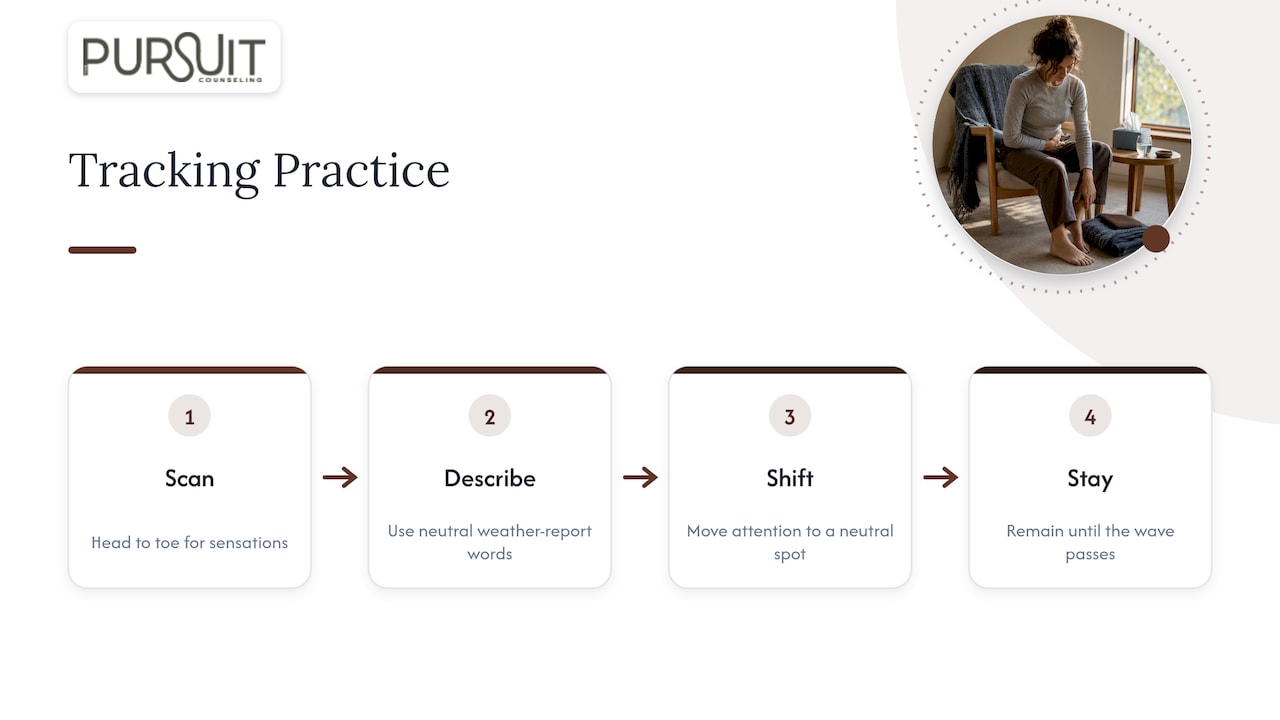
Scan slowly from head to toe. Where is there tension, warmth, pressure, numbness? Describe it in neutral words, like a weather report, without trying to change it. If a spot feels too intense, move your attention to somewhere neutral and stay there.
The skills in one somatic self-care model described in a 2025 paper include tracking, resourcing, grounding, gesturing, a “help now” set of tools, and a skill called shift and stay. That is a useful map: tracking is noticing, resourcing is finding something steadying, and shift and stay is the discipline of moving toward a neutral spot and remaining there until the wave passes.
9. Gesture and movement
Push your palms against a wall. Roll your shoulders. Stretch your arms overhead and let them drop. Walk slowly and feel each heel strike.
When you feel frozen, small deliberate movement can interrupt the freeze. When you feel wired, slow movement gives that energy somewhere to go.
If you want more ideas for acute stress, this collection of calming sensory interventions shows how sensory input can bring attention back to the immediate environment.
The order that protects you
One principle matters more than any single technique: begin neutral, then approach difficulty in small doses.
- Find something neutral or pleasant. Chair, hands, floor, a warm mug.
- Stay with it for three or four breaths. Notice whether anything shifts, even slightly.
- Only then, if you choose, glance toward the uncomfortable sensation. Tight chest, knotted stomach.
- Return to neutral whenever it gets loud. Going back is not failing. It is how the skill works.
A review of sensorimotor psychotherapy in trauma treatment is one entry point to the research on why pacing like this matters in body-based work. The short version: go too fast toward discomfort and you can flood yourself, which teaches your system the opposite of what you want.
A worked example
Imagine a founder reading a message from an investor at 9:40 p.m. Her jaw locks, her stomach drops, and her mind starts producing worst cases. Reasoning is not available.
She puts both feet on the floor and presses. She notices the chair holding her back. She presses her palms into her thighs for five seconds and lets go. She looks around the room, slowly, and names what she sees. Six long exhales. None of this fixes the investor problem. It gets her from flooded to functional, so she can decide whether to answer tonight or tomorrow.
That is the realistic promise: a better decision point, not a clean slate.
What grounding can’t do
Grounding is a tool for the moment. It is not treatment for the thing underneath. The trauma-informed care guide above treats it as a skill for stabilizing, not for processing. If the same triggers keep firing, or you find yourself grounding several times a day just to function, the techniques are doing their job and also telling you something.
A few honest cautions:
- If focusing on your body feels frightening, that is common after trauma. Use external anchors (objects, the room, temperature) and consider working with a trauma-trained therapist who can pace this with you.
- If you are dissociating often, meaning losing time, feeling unreal or detached, talk to a licensed clinician. Do not rely on articles.
- If you are thinking about harming yourself, call or text 988, the Suicide and Crisis Lifeline, or go to the nearest emergency room.
- If you use alcohol or drugs to come down, the National Institute of Mental Health advises avoiding them as a way to cope after a traumatic event, and a physician or therapist can help you find alternatives.
Our perspective at The Pursuit
We work with people who are very good at carrying weight: pilots, executives, business owners, moms who run the whole household, athletes who have learned to live in the pain cave. Most of them did not come to us because they couldn’t cope. They came because coping had started to cost too much.
What we see again and again is that high performers treat grounding like a task to be mastered in one try. They do it once, feel nothing dramatic, and conclude it doesn’t work. We ask for something smaller and stranger: ninety seconds of noticing, repeated on ordinary days, until the body learns the route back.
We also hold a firm line between a skill and a treatment. A grounding technique can take the edge off a Tuesday. It will not resolve what taught your nervous system to brace in the first place. That work happens in the room with a clinician, at a pace you can tolerate, and we never promise what it will produce.
The cracks are not the enemy. Pressing on them harder is. Learning to steady yourself so you can look at them is where we start.
— Adam Glendye LPC, CPCS
When it is time to talk to someone
Consider reaching out if any of these sound familiar:
- Grounding helps for a few minutes, then the same spike returns the same day.
- You feel numb, disconnected or on high alert most of the week.
- Particular memories, sounds or situations set off a reaction that feels bigger than the moment.
- You are exhausted by managing yourself and no longer sure what is stress and what is something else.
Our trauma therapy page explains how we approach this, and our guides on how to manage trauma responses in daily life and identifying trauma triggers go further on the day-to-day side. If racing thoughts and tension are the main thing, see our anxiety counseling page.
Working with us
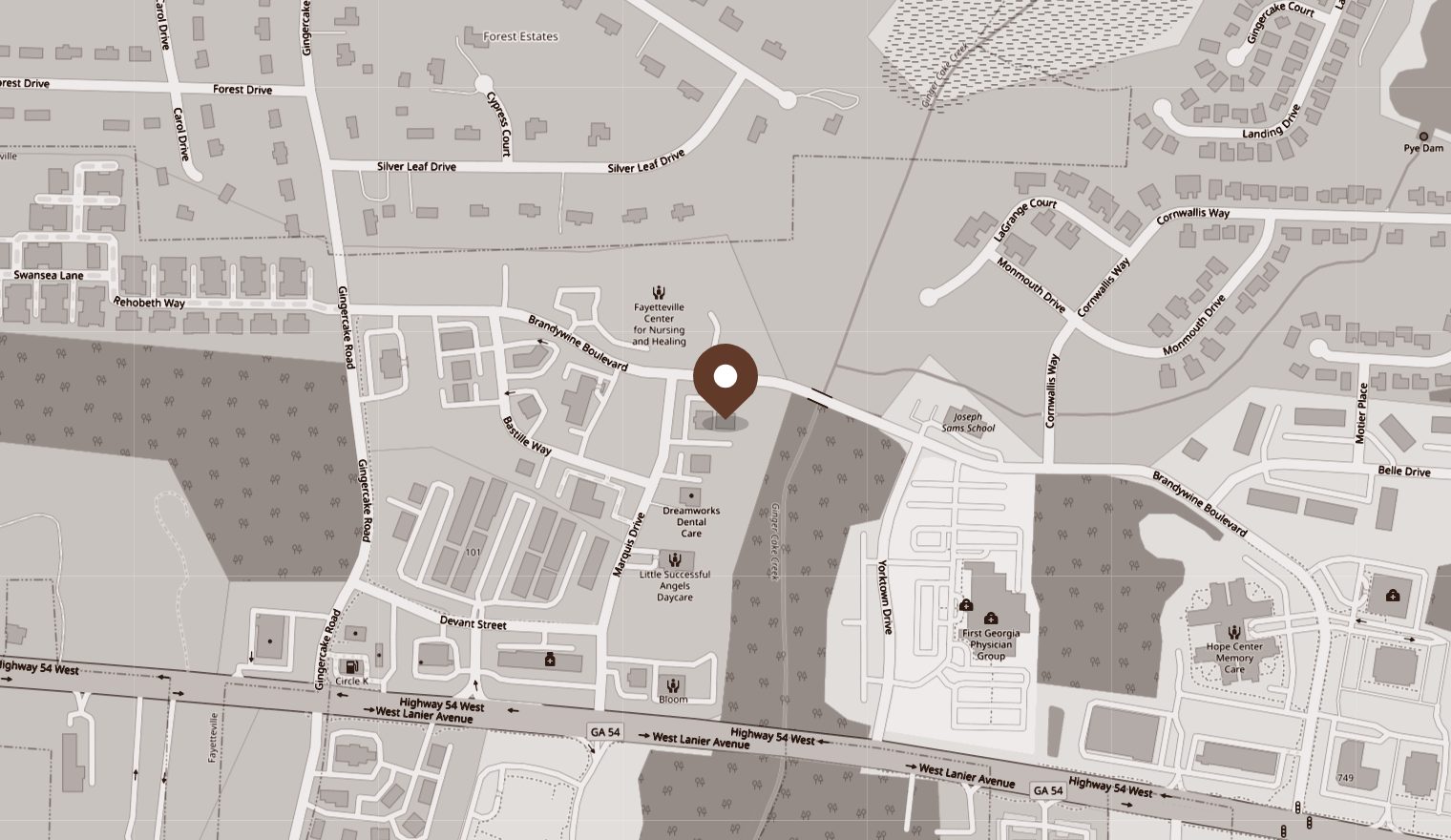
The Pursuit Counseling is in Fayetteville, Georgia, and we serve Peachtree City, Senoia, Brooks, Tyrone and the rest of South Atlanta, in person and online. Sessions are private pay. Anxiety therapy is 5 per hour and trauma therapy with EMDR is 5 per hour, as published on our services and specialties page. Individual therapy ranges from 5 to 0 per hour.
We would rather you arrive as a complicated person than as an appointment slot. Tell us what you have already tried, including the grounding that did and did not work, and we will start from there.
FAQ
What is the 5-4-3-2-1 technique?
It is a sensory counting exercise: name five things you can see, four you can touch, three you can hear, two you can smell and one you can taste. It pulls attention to the present through your senses. It works best when you slow down on the touch step and let yourself actually feel each item.
What are the three most popular somatic exercises?
In most guides, they are slow breathing, body scanning and pressing the feet into the floor. We would add hand work, such as pressing palms together, because it is discreet and nearly always available. If breathing makes you more anxious, start with feet and hands instead.
Can grounding make anxiety worse?
Sometimes, yes. Focusing on internal sensations can feel threatening, especially after trauma or during panic. Begin with neutral anchors like the chair or an object in your hand, keep sessions short, and stop if you feel more overwhelmed. A trauma-trained therapist can help you pace this.
Is somatic grounding the same as somatic therapy?
No. Grounding is a short skill for steadying yourself in the moment. Somatic therapy, such as Somatic Experiencing or sensorimotor psychotherapy, is a full treatment approach delivered by a trained clinician over time. Grounding can be one part of it.
Sources
- Exhibit 1.4-1, Grounding Techniques, NCBI Bookshelf
- Somatic experiencing: using interoception and proprioception as core elements of trauma therapy, PMC
- Polyvagal theory: current status, clinical applications, and future directions, APA PsycNet
- PTSD Coach Online: Be in the moment, U.S. Department of Veterans Affairs
- The Body Can Balance the Score, PMC
- Sensorimotor psychotherapy in the treatment of trauma, APA PsycNet
- Coping With Traumatic Events, National Institute of Mental Health