


If you’re a Florida attorney reading this at midnight before a hearing, you already know the weight you’re carrying. Therapy for lawyers is confidential, specialized mental health support designed for the specific pressures of legal practice, and the fastest first step is a phone call. Florida Bar members can reach the Florida Lawyers Helpline at 833-351-9355, available around the clock, at no cost, with up to five free counseling sessions per year included in your membership.
You don’t need to be in crisis to call. You need to be honest with yourself that the pressure is real.
Before you call or book an intake, have these ready:
- Your bar membership number (for member-benefit programs)
- A general sense of what’s been hardest lately (burnout, sleep, anxiety, a specific event)
- Two or three time windows when you’re genuinely available
- Any prior therapy history or current medications, if relevant
The confidentiality is real. Most lawyer helplines and state bar programs are 100% confidential and can be anonymous. Calling does not create a disciplinary record.
Table of Contents
- What lawyer-specific helplines and bar programs actually offer
- Why lawyers face mental health challenges at higher rates
- What to look for in a therapist who treats lawyers
- Costs, payment options, and realistic timeline
- Which therapy approaches work best for lawyers
- How to start therapy: step by step
- Key Takeaways
- What I’ve seen working with lawyers in therapy
- The Pursuit Counseling works with lawyers who are ready to do the real work
- Useful sources and next steps
What lawyer-specific helplines and bar programs actually offer
Florida Bar members have direct access to structured, profession-aware support, not a generic employee assistance hotline. The Florida Lawyers Helpline provides free, confidential counseling with a limited number of sessions per year, accessible by phone, web portal, or app. That’s triage-level care, enough to stabilize and get a referral, but not a substitute for ongoing therapy.
For attorneys outside Florida or those who want an additional layer of peer support, the ABA Lawyer Assistance Programs index lists state-by-state resources. Pennsylvania’s Lawyers Concerned for Lawyers runs a 24/7 anonymous helpline at 888-999-1941, a useful model for what peer-support lines look like nationally.
How helplines differ from private therapy:
- Helplines offer triage, short-term counseling (typically 5–12 sessions), and referrals
- Private clinicians provide ongoing, relationship-based care tailored to your specific history
- Member-benefit programs are free but limited in scope and session count
- A private therapist who specializes in high performers can integrate modalities like EMDR or neurofeedback that helplines don’t offer
Use your bar benefit first if cost is a barrier. Then move to a private clinician for sustained work.
Why lawyers face mental health challenges at higher rates
Legal work is structurally designed to produce chronic stress. The adversarial culture rewards aggression and penalizes vulnerability. Perfectionism isn’t just a personality trait in law; it’s a professional survival skill that becomes a liability outside the courtroom. Long hours, exposure to clients’ trauma, and the constant threat of malpractice create a pressure environment few other professions match.
Burnout among attorneys is now recognized by legal leadership experts as an occupational hazard with measurable professional consequences, not a personal failing. The most common issues lawyers bring to therapy include:
- Burnout and emotional exhaustion from sustained high-stakes work
- Anxiety and perfectionism that bleeds from work into personal relationships
- Depression, often masked by productivity and professional identity
- Hazardous alcohol use, which surveys consistently show is elevated in the legal profession
- Sleep disruption tied to rumination and after-hours technology use
- Vicarious trauma from repeated exposure to clients’ worst moments
Many lawyers are also reluctant to acknowledge anxiety because high-functioning performance masks the symptoms. The work still gets done. The cracks show up elsewhere: in relationships, in sleep, in that third drink.
What to look for in a therapist who treats lawyers
Not every licensed clinician is equipped for this work. You want someone who understands legal culture, not just clinical theory.
Credentials and experience to prioritize:
- Licensed clinician: LPC, LCSW, LMFT, PsyD, or PhD
- Documented experience with lawyers, executives, or high-performing professionals
- Familiarity with legal culture (adversarial dynamics, perfectionism, confidentiality concerns)
- Training in evidence-based modalities: CBT, EMDR, neurofeedback, or mindfulness-based approaches
Stacey Dougan is one example of a clinician whose background in law informs her clinical work with legal professionals, bringing direct understanding of the profession’s demands into the therapy room. That kind of dual-lens perspective matters when you don’t want to spend three sessions explaining why a deposition is stressful.
Practical fit questions:
- Can they accommodate short-notice rescheduling around court dates?
- Do they offer telehealth for travel weeks or early-morning slots?
- Is private pay clearly explained upfront, with no pressure to commit to long packages?
On confidentiality: ask directly whether session notes could be subpoenaed, how records are stored, and what the limits of confidentiality are in your state. A good clinician will answer without hesitation. Finding a therapist who genuinely understands high-pressure professions takes more than a directory search; it takes a focused intake conversation.
Pro Tip: When you start therapy, create an explicit “Do Not Do” list alongside your goals. Lawyers default to adding more. Identifying what to stop doing, such as checking email after 9 PM or skipping lunch, gives your nervous system a concrete boundary to work with and counteracts the perfectionism that keeps the pressure dial turned up.

Costs, payment options, and realistic timeline
| Payment path | What it covers | Typical cost to you |
|---|---|---|
| Florida Lawyers Helpline | Up to 5 sessions/year, triage and referral | Free (member benefit) |
| EAP through employer | Typically 6–12 sessions, limited provider choice | Free or low copay |
| Private pay, individual therapy | Ongoing care, full clinician choice | Varies; not publicly listed for all providers |
| Intensive programs | Concentrated multi-day or multi-week work | Varies by program |
Ask at intake about cancellation policies, whether a sliding scale exists, and whether intensive formats are available if your schedule makes weekly sessions difficult.
On timeline: short-term skills-based work (CBT, mindfulness techniques, boundary-setting) often produces noticeable relief within 6–10 sessions. Deeper work on trauma, perfectionism, or long-standing anxiety patterns typically takes longer. For attorneys with court-heavy schedules, stress management built into a biweekly cadence is often more sustainable than weekly sessions that get canceled.
Telehealth has made access far more realistic for practicing attorneys. Evening and early-morning slots exist; you just have to ask for them.
Which therapy approaches work best for lawyers
Different modalities target different problems. The most effective clinicians for lawyers tend to integrate approaches rather than rely on a single method.
| Modality | What it targets | Best fit for lawyers when… |
|---|---|---|
| CBT | Anxious thinking patterns, perfectionism | Rumination, catastrophizing about cases |
| EMDR | Trauma processing, emotional reactivity | Vicarious trauma, high-stress events |
| Neurofeedback | Attention, regulation, chronic arousal | Chronic anxiety, focus issues, sleep disruption |
| Mindfulness-based | Reactivity, present-moment awareness | Emotional flooding, work-life boundary collapse |
| Executive coaching integration | Performance, leadership, stress systems | Career transitions, leadership stress, burnout prevention |
EMDR is particularly useful for attorneys who have accumulated repeated exposure to traumatic client material, courtroom confrontations, or high-stakes losses. It processes the emotional residue that talk therapy alone can miss. Neurofeedback works as an adjunct for lawyers dealing with chronic physiological arousal, attention difficulties, or anxiety that doesn’t fully respond to talk-based approaches.
The Pursuit Counseling’s executive therapy approach integrates neuroscience-informed methods, including EMDR and neurofeedback, specifically for high performers who need more than a conversation about feelings.
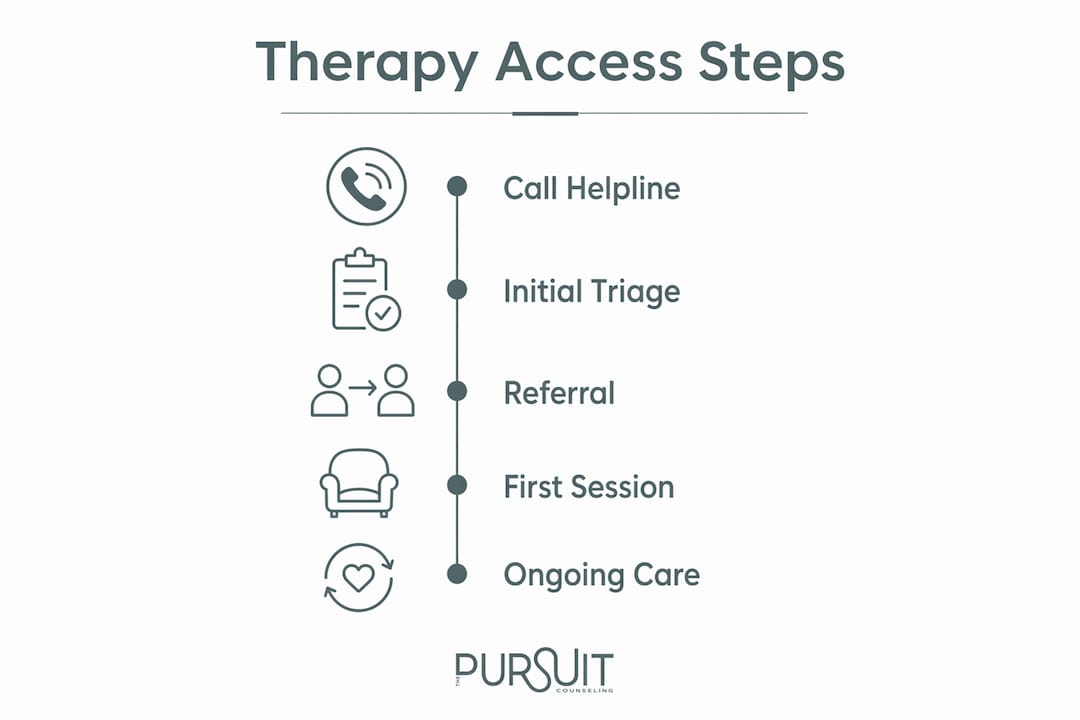
How to start therapy: step by step
Step 1. Call the Florida Lawyers Helpline (833-351-9355) or your EAP for an immediate triage session and referral if cost is a concern.
Step 2. Schedule an initial intake with a private clinician. Treat this like a consultation, not a commitment.
Step 3. In the intake, ask these questions:
- What experience do you have working with lawyers or high-performing professionals?
- How do you handle confidentiality and record-keeping?
- What does your cancellation policy look like for court conflicts?
- What outcomes should I expect in the first 8–10 sessions?
- What’s your plan if I’m in acute distress between sessions?
Step 4. Watch for red flags: evasiveness about confidentiality, pressure to commit to long-term packages without clinical rationale, or inability to explain their licensure clearly. These are disqualifying.
Step 5. After the first session, set one concrete behavioral goal and one item for your “Do Not Do” list. Don’t wait for insight to arrive. Build the structure first.
Practical guidance on discussing therapy with colleagues or a supervising partner is also worth reading before you start, especially if you’re navigating a firm culture that still treats mental health as a liability.
Key Takeaways
Lawyers who seek confidential, specialized therapy early protect both their wellbeing and their professional longevity, and the resources to do so are available right now.
| Point | Details |
|---|---|
| Call first, decide later | Florida Bar members can call 833-351-9355 for free, confidential triage before committing to ongoing therapy. |
| Confidentiality is protected | Lawyer helplines and licensed clinicians operate under strict confidentiality; calling creates no disciplinary record. |
| Match the clinician to the culture | Prioritize therapists with documented experience treating lawyers or high performers, not just a general license. |
| Timeline is realistic | Skills-based relief often comes within 6–10 sessions; deeper work on trauma or perfectionism takes longer. |
| The Pursuit Counseling | Offers EMDR, neurofeedback, and executive therapy for high-performing legal professionals, with telehealth availability. |
What I’ve seen working with lawyers in therapy
Lawyers are trained to argue against their own vulnerability. That skill keeps them sharp in a deposition and stuck in a therapist’s office. The most common thing I see in early sessions isn’t resistance to therapy; it’s a lawyer trying to solve their emotional life the same way they’d prepare a brief. Organized, analytical, and completely disconnected from what they’re actually feeling.
The work that moves the needle isn’t the insight. It’s the structure. When a lawyer builds an explicit “Do Not Do” list, limits after-hours technology as clinicians recommend, and treats their recovery time as non-negotiable, the anxiety starts to lose its grip. Not because they’ve solved the problem intellectually, but because the nervous system finally gets a break.
Seeking therapy isn’t a sign that the pressure broke you. It’s a sign that you’re managing your most important professional asset: your capacity to think clearly under pressure. Burnout addressed early is a leadership decision. Burnout ignored is a liability.
The Pursuit Counseling works with lawyers who are ready to do the real work
High-performing attorneys don’t need generic therapy. They need a clinician who understands the culture, respects the confidentiality demands, and uses approaches that actually work for people who live inside their heads for a living.

The Pursuit Counseling offers leadership-focused counseling built specifically for high performers, including lawyers, executives, and professionals who carry significant responsibility. Services include EMDR for trauma processing, neurofeedback for anxiety and focus, intensive programs for attorneys who can’t commit to weekly sessions, and telehealth for schedules that don’t fit a standard 9-to-5 clinic. Scheduling accommodates court calendars. Confidentiality is handled with the seriousness your profession demands.
If you’re ready to book an intake or want to learn more about working with an executive therapist who understands what you’re carrying, reach out to The Pursuit Counseling today.
Useful sources and next steps
Immediate helplines:
- Florida Lawyers Helpline: floridabar.org/helpline | 833-351-9355 (free, confidential, up to 5 sessions/year)
- ABA Lawyer Assistance Programs by state: americanbar.org
- 988 Suicide and Crisis Lifeline: call or text 988 (24/7, national)
Next steps after reading:
- Call the Florida Lawyers Helpline today, even if you’re not sure you need it
- Prepare your intake questions before your first session (see the list above)
- Use your member benefit for initial sessions, then transition to a private clinician for ongoing care
- Book a consultation with The Pursuit Counseling if you want a clinician experienced with high performers
This article is general information, not professional advice. Confirm current program details and eligibility with the Florida Bar or your state’s Lawyer Assistance Program, and consult a licensed clinician for guidance specific to your situation.
Recommended
- How To Find A Therapist Who Understands High-Achieving Professionals In Fayetteville, Georgia – The Pursuit Counseling
- How to Talk About Therapy Without Sounding Clinical – The Pursuit Counseling
- Therapy for High-Performing Men in Peachtree City, Fayetteville, and Across Georgia – The Pursuit Counseling
- Depression Therapy For High-Achieving Professionals In Georgia – The Pursuit Counseling