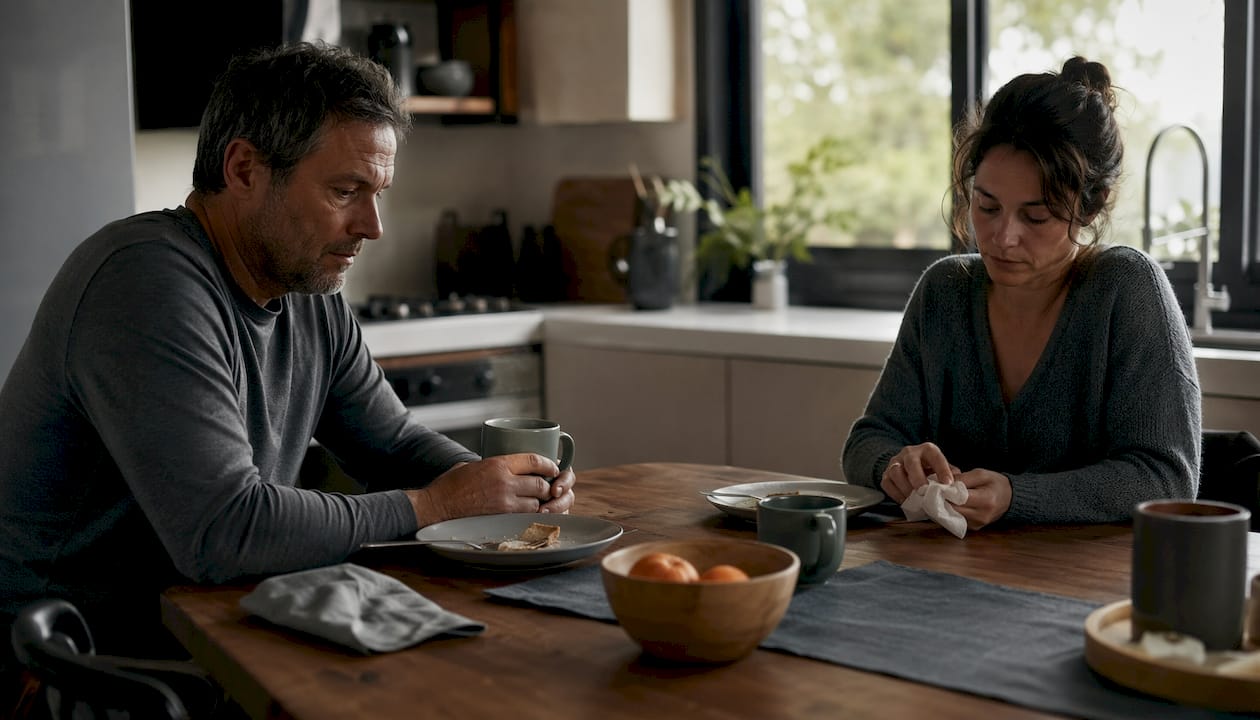
Roommate syndrome marriage is defined as spouses functioning primarily as household co-managers while emotional and physical intimacy quietly disappears. You still share a home, split the bills, and coordinate the kids’ schedules. But somewhere between the grocery runs and the work deadlines, you stopped being partners and started being logistics managers. The clinical term for this pattern is relational drift, and it is far more common than most couples admit. The Gottman Institute describes it as a gradual loss of curiosity about your partner, where logistics replace emotional exchange. The good news is this: roommate syndrome is a season, not a sentence.
What are the main signs of roommate syndrome in marriage?

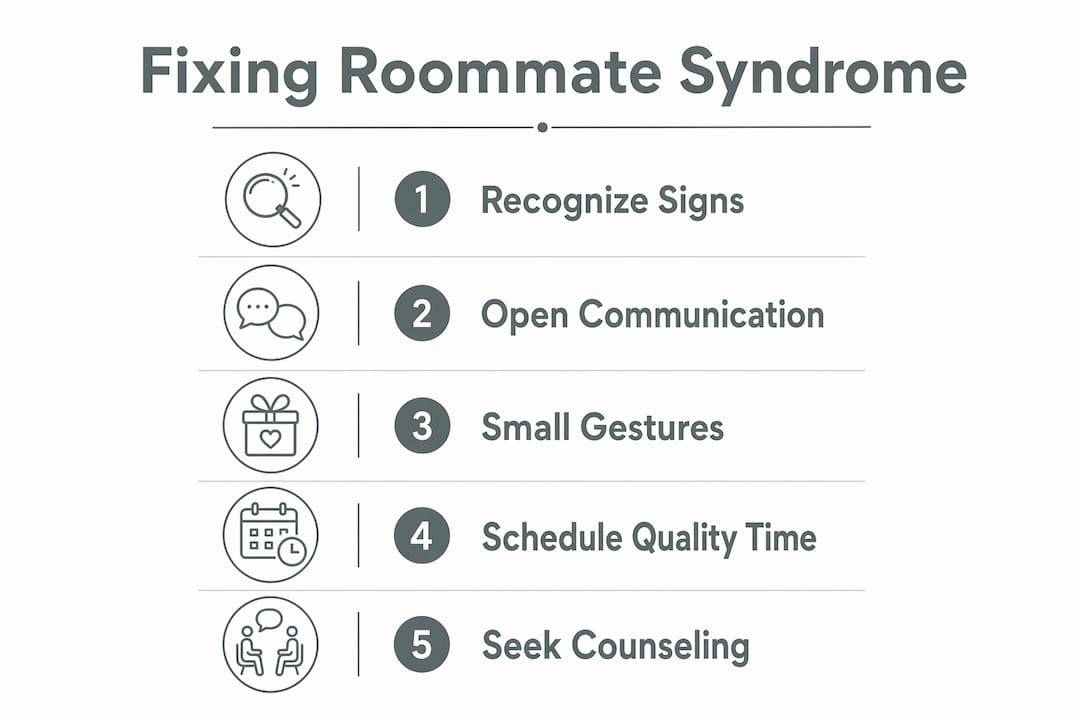
Feeling like roommates in marriage rarely arrives all at once. It builds slowly, one skipped conversation at a time. Recognizing the signs early gives you the best chance to reverse the pattern before it calcifies.
The clearest indicators include:
- Conversations stay logistical. You talk about who picks up the kids, what’s for dinner, and which bill is due. You rarely ask how your partner is actually doing.
- Physical affection has faded. Hugs, kisses, and non-sexual touch have become rare or feel mechanical.
- You live parallel lives. You share a roof but maintain separate routines, hobbies, and social circles with little overlap.
- You feel lonely in your own home. Emotional disconnection creates a specific kind of loneliness, one that is harder to name because your partner is right there.
- Curiosity about your partner has stopped. You no longer wonder what they are thinking, dreaming about, or struggling with.
Pro Tip: Ask yourself one question tonight: “When did I last ask my partner something I genuinely did not know the answer to?” If you cannot remember, that gap is worth paying attention to.
The most dangerous aspect of this pattern is the mutual, unspoken agreement to stop asking each other deep questions. Neither partner decides to disconnect. It just becomes the default.
What causes roommate syndrome in marriage?
Understanding the root causes matters because the fix depends on what created the distance in the first place. Several forces tend to work together, each one chipping away at connection.
-
Parenting and the postpartum period. New parenthood reshapes every dynamic in a marriage. Up to 50% of postpartum mothers experience irritability, resentment, and anger linked to mental load and partner disconnection. That anger in motherhood is often misread as relationship dissatisfaction when it is actually a physiological stress response. Rage in motherhood signals that the nervous system is overwhelmed, not that love is gone.
-
Career pressure and chronic stress. High-performing couples in Florida and across the country face relentless professional demands. When work exhaustion fills every available hour, emotional availability shrinks. The relationship gets whatever energy is left over, which is often nothing.
-
Mental load as an invisible barrier. Mental load is not just about chores. It is the emotional labor of tracking every appointment, anticipating every need, and managing the household’s invisible infrastructure. When one partner carries most of that weight, resentment builds quietly and steadily.
-
Avoidance of vulnerability. Couples often stop sharing fears, dreams, and insecurities because it feels risky. Over time, avoiding vulnerability becomes a habit. The relationship stays surface-level because depth feels too exposed.
-
Gradual erosion of small bids for connection. The Gottman Method identifies “bids” as small positive interactions that sustain emotional closeness. Missing these bids consistently leads to the emotional distance that defines marriage roommate issues. A bid ignored is a small crack. Enough cracks, and the foundation shifts.
The roommate-like dynamic commonly emerges after 15 or more years of marriage, but it can appear much earlier when life stressors hit hard. Parenting young children, career transitions, and health challenges all accelerate the process.
How does roommate syndrome affect intimacy in marriage?
The emotional and physical effects of couples feeling like roommates run deeper than most people expect. This is where the real cost shows up.
Love is often still present under roommate syndrome. The issue is not the absence of love but the unspoken neglect of small moments that keep love alive. When curiosity stops and bids go unanswered, intimacy does not disappear overnight. It quietly starves.
Emotional disconnection manifests as anxiety, resentment, numbness, or withdrawal. These are not character flaws. They are predictable responses to unmet attachment needs. Physical intimacy after kids often declines not because desire disappears but because emotional safety has eroded. Most people cannot be physically vulnerable with someone they feel emotionally distant from.
Postpartum rage is a specific example worth naming directly. It is a physiological response caused by stress, isolation, and lack of partner support. Mom anger help is not about managing emotions better. It is about addressing the relational and neurological conditions that produce the anger in the first place.
| Effect | What it looks like in daily life |
|---|---|
| Emotional loneliness | Feeling unseen despite being physically present with your partner |
| Resentment buildup | Small frustrations accumulate because they are never addressed |
| Physical distance | Touch becomes rare, and sexual intimacy declines significantly |
| Anxiety and numbness | Partners oscillate between hypervigilance and emotional shutdown |
| Risk of deeper alienation | Untreated distance can lead to emotional affairs or relationship dissolution |
Intimacy issues in marriage tied to roommate syndrome are not a sign that you chose the wrong person. They are a sign that the relationship needs attention, the same way a neglected garden needs water.
What practical steps can couples take to fix roommate syndrome?
Reconnection does not require a grand gesture or a week-long vacation. Simple, consistent acts of turning toward one another rebuild trust faster than any single dramatic event. The key word is consistent.
Here are the steps that actually work:
- Schedule intentional time together. Put it on the calendar the same way you schedule a work meeting. Thirty minutes of focused, phone-free attention matters more than a weekend trip you never take.
- Rebuild appreciation as a daily habit. Name one specific thing you appreciate about your partner each day. Specificity matters. “I noticed you handled that call so I could rest” lands differently than “thanks for everything.”
- Reintroduce non-sexual touch. A hand on the shoulder, a longer hug, sitting close on the couch. Physical warmth rebuilds emotional safety before words can.
- Ask one real question per day. Not “how was your day?” Ask something that requires a real answer. “What has been weighing on you this week?” opens a door that logistics never will.
- Address the mental load directly. Have an honest conversation about who carries what. Redistributing invisible labor is not just fair. It removes a major source of resentment that blocks intimacy.
- Bring back play. Shared laughter and low-stakes fun are underrated tools for reconnection. Cook a new recipe together, take a walk somewhere new, or revisit something you both loved early in the relationship.
Pro Tip: The Gottman Method calls these small moments “bids for connection.” Responding to your partner’s bid, even with a brief acknowledgment, is one of the most powerful things you can do for your marriage today.
Knowing when to seek professional support is also part of this list. If you have tried reconnecting on your own and the distance persists, that is not failure. That is information. A trained therapist can help you identify the cycle underneath the distance and give you tools that self-help cannot.
How can professional counseling support couples with roommate syndrome?
Therapy is not a last resort. For many couples, it is the most direct path back to each other. Emotionally Focused Therapy addresses the relational cycles and attachment needs that sit beneath the surface of roommate syndrome. It helps partners uncover the vulnerable emotions hiding behind anger or withdrawal.
Professional counseling offers several specific benefits for couples experiencing this pattern:
- Breaking negative cycles. A therapist identifies the pursue-withdraw or criticize-defend patterns that keep couples stuck, then helps them interrupt those cycles with new responses.
- Creating emotional safety. Many couples have stopped being honest because honesty has felt too risky. Therapy rebuilds the conditions where vulnerability becomes possible again.
- Addressing postpartum-related challenges. Postpartum counseling addresses the nervous system dysregulation that drives mom anger and rage in motherhood, which directly affects the marital relationship.
- Gottman Method tools. The Gottman Method gives couples concrete skills for building friendship, managing conflict, and creating shared meaning. These are not abstract concepts. They are practiced behaviors.
- Destigmatizing the ask for help. Seeking counseling is a sign of investment in the relationship, not evidence that it is broken. The couples who wait until crisis hits have a harder road than those who come in early.
Thepursuitcounseling uses evidence-based approaches including the Gottman Method, EMDR, and Neurofeedback to address the full picture of what creates and sustains relational distance. Couples experiencing toxic relationship patterns that reinforce roommate syndrome often find that individual and couples work together produces the fastest results.
Key Takeaways
Roommate syndrome is a reversible relational pattern, and consistent small acts of curiosity, appreciation, and emotional presence are the most effective tools to rebuild intimacy.
| Point | Details |
|---|---|
| Roommate syndrome defined | Spouses function as co-managers with declining emotional and physical intimacy, not a failed marriage. |
| Mental load drives distance | Invisible emotional labor creates resentment that blocks connection if left unaddressed. |
| Small bids rebuild trust | Daily acts of appreciation, touch, and curiosity reconstruct emotional safety faster than grand gestures. |
| Postpartum anger is physiological | Mom rage often signals nervous system overload, not relationship failure, and responds well to targeted therapy. |
| Therapy accelerates reconnection | Emotionally Focused Therapy and Gottman Method tools address the cycles beneath roommate syndrome directly. |
What I have learned about roommate syndrome after years in the room with couples
The couples I work with who are deepest in roommate syndrome share one thing in common. They are not angry at each other. They are grieving. They miss the person they married, and they are not sure how to find them again without it feeling awkward or forced.
Here is what I have found to be true: the love is almost always still there. It is just buried under years of unspoken needs, missed bids, and the sheer weight of adult life. The reconnection often begins not with a big conversation but with a small, brave moment of curiosity. One question asked with genuine interest. One moment of reaching out instead of pulling back.
The misconception I push back on hardest is the idea that roommate syndrome means you have grown apart permanently. That framing lets people off the hook too easily. What I see clinically is that most couples have not grown apart. They have grown busy, exhausted, and afraid. Those are solvable problems.
Release the shame around being here. You did not fail. You got tired. Now you get to choose what happens next.
— Adam
Couples counseling at Thepursuitcounseling
If you recognize your marriage in this article, you are not alone, and you are not out of options.
Thepursuitcounseling works with couples across Florida using the Gottman Method, EMDR, and Neurofeedback to address the emotional cycles, mental load, and attachment wounds that create relational distance. Whether you are just starting to notice the drift or have been living it for years, couples and relationship counseling gives you a structured, evidence-based path back to each other. For couples who need faster, more intensive work, the couples intensive program offers concentrated support designed for high-performing people with limited time and high stakes.
FAQ
What is roommate syndrome in marriage?
Roommate syndrome in marriage is when spouses primarily function as household co-managers with a significant decline in emotional and physical intimacy. The Gottman Institute describes it as a gradual loss of curiosity about one’s partner, where logistics replace emotional connection.
Is roommate syndrome a sign that the marriage is over?
Therapists characterize roommate syndrome as a common, non-hostile season rather than a sign of relationship failure. Reconnection begins with gentle, curious attention and small consistent bids for engagement.
How does parenting contribute to feeling like roommates in marriage?
Parenting increases mental load and exhaustion, which crowds out emotional availability. Up to 50% of postpartum mothers experience irritability and resentment linked to mental load, which is frequently mistaken for relationship dissatisfaction rather than recognized as a stress response.
What therapy works best for roommate syndrome?
Emotionally Focused Therapy and the Gottman Method are the most well-supported approaches. Both address the attachment needs and negative cycles beneath the surface of relational distance, helping couples rebuild emotional safety and physical intimacy.
How long does it take to recover from roommate syndrome?
Recovery time varies based on how long the distance has been present and whether both partners are engaged in the process. Couples who begin with small daily acts of connection and add professional support typically see meaningful shifts within weeks, not years.