

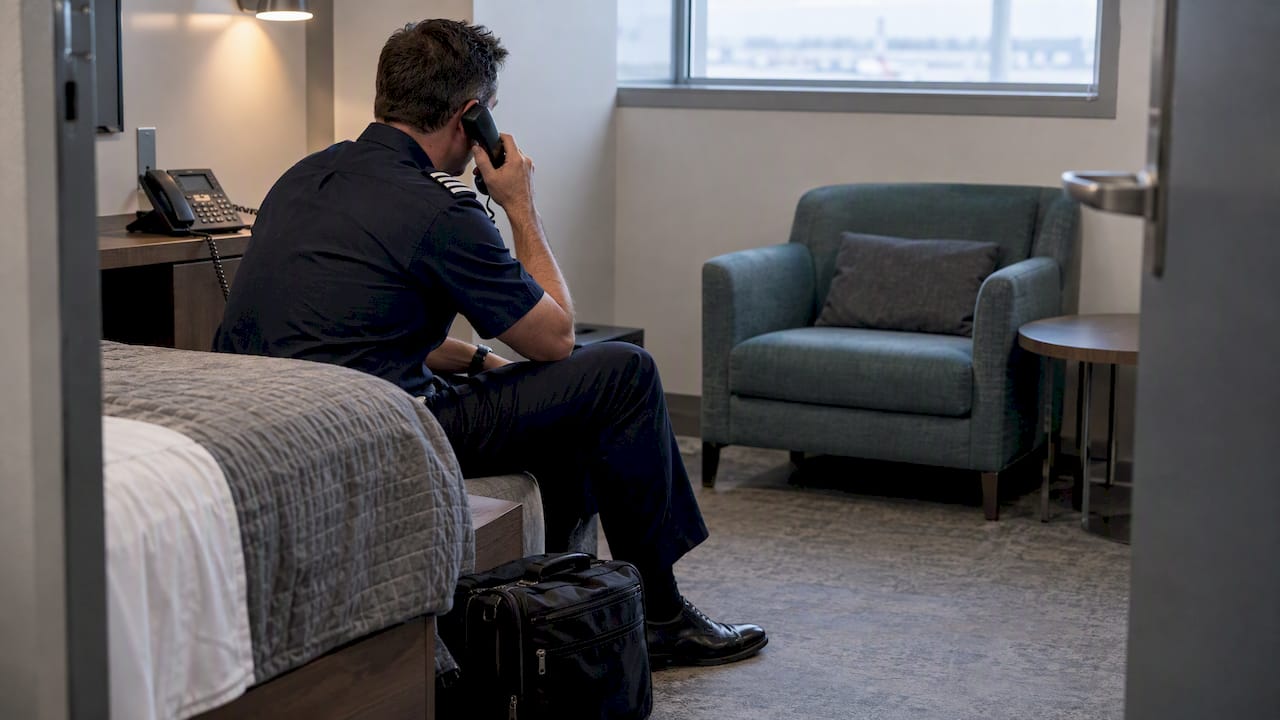
If you’re a pilot noticing exhaustion that doesn’t lift with rest, a creeping numbness about flying you used to love, slower reactions, foggy concentration, or disrupted sleep that won’t resolve, these are the core pilot burnout symptoms worth taking seriously. If any of them affect your cockpit performance, the right move is to consider self-grounding and talk to your AME or a clinician before your next flight.
Key Takeaways
Pilot burnout manifests through emotional, cognitive, behavioral, and physical symptoms that compromise cockpit safety and require timely recognition and action.
| Point | Details |
|---|---|
| Early signs of burnout | Persistent fatigue, irritability, and detachment from flying are key early indicators to monitor. |
| Distinction between fatigue and burnout | Fatigue improves with rest, but burnout involves emotional exhaustion, cynicism, and inefficacy that persist despite recovery. |
| Operational risks of burnout | Slowed reactions and attention lapses increase risks during critical flight phases, making prompt assessment vital. |
| Immediate self-grounding triggers | Severe mood disturbances, thoughts of self-harm, panic, or impairing symptoms require prompt cessation of flying. |
| The Pursuit Counseling approach | We provide confidential, specialized therapy and neurofeedback tailored for pilots to address burnout and fatigue. |
Table of Contents
- Recognizing the Full Range of Pilot Burnout Symptoms
- Is It Fatigue or Burnout? Understanding the FAA’s Fatigue Categories
- How Burnout and Fatigue Erode Performance in the Cockpit
- Knowing When to Self-Ground and What FAA Guidance Says
- Building a Recovery Plan: Sleep, Schedule, and Daily Habits
- What Therapy for Pilot Burnout Actually Involves
- What Pilots Actually Say in the Room
- Getting Confidential Support Built Around Aviation Careers
- FAQ
- Sources
Recognizing the Full Range of Pilot Burnout Symptoms
Burnout rarely announces itself with one dramatic moment. It builds in layers, and for pilots those layers show up differently depending on where you look: how you feel, how you think, how you act, and how your body holds up under the weight of irregular schedules and constant vigilance.
Emotionally, burnout often looks like a persistent sense of being drained no matter how much you sleep. Some pilots describe irritability that surfaces faster than it used to, a short fuse with crew or family. Others notice something quieter: a flattened affect, a detachment from flying itself, where the job that once felt like a calling now feels mechanical. You might still show up and perform the checklist, but something that used to feel present has gone missing.
Cognitively, the signs tend to be subtle at first. Decision-making slows. You catch yourself rereading the same line of a chart twice. Attention lapses creep in during briefings or taxi, and prioritizing competing tasks during a busy approach starts to feel harder than it should. Memory slips, the kind where you forget whether you already completed a step, are a common early flag.
Behaviorally, burnout shows up in patterns rather than single incidents. Checklist omissions, rushing or skipping briefings, withdrawing from crew communication, or a shift in how you use alcohol or sleep aids are all worth noticing. None of these in isolation proves burnout, but a cluster forming over weeks is a different story than a single rough day.
Physically, the symptoms often mirror what workplace burnout research describes broadly: persistent sleep problems, low baseline energy, tension headaches, and appetite changes that don’t track with your schedule.
In the cockpit, these symptoms can translate into specific, documented risks:
- An unstable approach that isn’t corrected early because attention has narrowed.
- A missed callout during a sterile cockpit phase because focus has drifted.
- A delayed response to an alert that would normally trigger immediate action.
- A checklist item skipped because the routine has become automatic rather than deliberate.
Recognizing these patterns early, in yourself or a colleague, is the first practical step toward addressing burnout before it reaches the flight deck. For more on the specific pressures pilots carry day to day, our piece on the challenges of a pilot’s life lays out the occupational context behind these symptoms.
Is It Fatigue or Burnout? Understanding the FAA’s Fatigue Categories
Fatigue and burnout overlap, but they are not the same thing, and the distinction matters for how you respond. Fatigue is a sleep-related decline in performance that typically resolves with adequate rest. Burnout, as the American Psychological Association defines it, is an occupational syndrome built from three dimensions: persistent emotional exhaustion, growing cynicism or mental distance from the work, and a reduced sense of effectiveness that doesn’t lift with a day off.
FAA Advisory Circular AC 117-3 breaks fatigue into three operational categories that help clarify where you might be:
- Transient fatigue: acute, short-term fatigue from one night of inadequate sleep or an unusually long duty day, generally resolved with a single good rest period.
- Cumulative fatigue: fatigue that builds across several days of restricted sleep or back-to-back duty periods, requiring more than one night of recovery sleep to reverse.
- Circadian fatigue: fatigue tied to flying against your body’s internal clock, including red-eyes, early report times, and rapid time zone changes.
Cumulative and circadian fatigue are the categories most likely to tip into something closer to burnout. When cumulative sleep debt never fully resolves between trips, or when your schedule keeps forcing you awake during your body’s low point, the exhaustion stops being a sleep problem and starts becoming a pattern of depletion, cynicism, and reduced confidence in your own performance. That shift, not the number of hours you slept last night, is the practical signal that you’re dealing with something beyond ordinary fatigue.
A useful gut check: if a few consecutive nights of real sleep bring you back to baseline, you’re likely looking at recoverable fatigue. If you’ve had adequate sleep opportunities and still feel the same flattened, cynical exhaustion week after week, that’s a different problem and deserves a different response.
How Burnout and Fatigue Erode Performance in the Cockpit
The performance costs of fatigue and burnout are not abstract. AC 117-3 ties fatigue directly to specific, measurable degradations:
- Slower reaction time to alerts, callouts, and changing conditions.
- Lapses in attention during critical phases of flight.
- Reduced situational awareness, particularly during high-workload segments like approach and landing.
- Impaired decision-making, including a narrowed ability to weigh competing options under pressure.
A survey of U.S. commercial pilots during the COVID-19 period found that average workday sleep dropped to roughly 6.9 hours in late 2020, and in-flight sleepiness was reported by 54% of pilots surveyed during that same period, according to the PubMed fatigue and sleepiness study. That combination, shortened sleep paired with a majority of pilots reporting sleepiness while actively flying, illustrates how quickly schedule disruption translates into real operational risk rather than just subjective tiredness.
One in roughly two pilots surveyed reported in-flight sleepiness during a period of schedule disruption, according to the PubMed study, a figure that underscores how closely fatigue tracks with the conditions pilots fly under rather than individual toughness or discipline.
The operational examples line up with the symptom list: a wrong runway alignment, an unstable approach flown through rather than corrected, a missed radio call. None of these require a catastrophic failure of skill. They require only a brain that is running on insufficient rest or sustained occupational depletion, which is precisely why the FAA treats fatigue as a safety issue rather than a personal shortcoming.
Knowing When to Self-Ground and What FAA Guidance Says
Some symptoms call for an immediate decision, not a wait-and-see approach. Consider self-grounding without delay if you’re experiencing any of the following:
- Severe mood disturbance that doesn’t lift, including persistent hopelessness.
- Any thoughts of suicide or self-harm.
- Panic symptoms that could surface during flight.
- Any symptom, physical or psychological, that you know is impairing your cockpit function right now.
Self-grounding is a professional safety decision, not a career-ending admission. FAA guidance on therapy and counseling for pilots explains that pilots are not required to report that they’ve started therapy until their next medical application, and that seeking care does not automatically disqualify you. Aviation Medical Examiners evaluate fitness for duty based on insight, stability, and documentation, not the mere fact that treatment occurred. Our breakdown of FAA mental health rules walks through the specific reporting timelines in more detail.
Practically, self-grounding responsibly means notifying your chief pilot or scheduling desk through the normal fatigue-call process, keeping a simple record of your symptoms and when they started, and scheduling an appointment with an AME or a clinician familiar with aviation before returning to the line.
Pro Tip: Bring the FAA’s “Information for Psychotherapists Treating Pilots and ATCS” guidance to your first clinical appointment. It helps your clinician document your case in the format an AME will expect to review.
Building a Recovery Plan: Sleep, Schedule, and Daily Habits
Recovery from fatigue and burnout works on two tracks at once: protecting your sleep and changing the habits that quietly drain you between trips.
On sleep, total sleep time matters more than perfect timing. Harvard Medical School’s sleep health program notes that within limits, shortened nighttime sleep supplemented by a nap can be nearly as restorative as one consolidated block, while fragmented sleep undercuts the benefit either way. For pilots working against the window of circadian low (the WOCL), that means prioritizing a solid nap before a red-eye rather than hoping a few hours of poor-quality sleep at the wrong time of day will be enough. AC 117-3 also flags commuting as an underestimated risk: a long drive or early rideshare before report time can push your total wakefulness well past safe limits before you’ve even started the duty day.
Behavioral tools matter too. Cognitive behavioral techniques for insomnia, brief mindfulness practice between legs, and basic movement and nutrition habits all support both sleep quality and mood regulation, and none require giving up your schedule’s unpredictability to be useful. A short list worth keeping on hand:
- Protect a consistent wind-down routine even when report times shift.
- Use short naps strategically before known circadian low points rather than relying on willpower.
- Keep alcohol and sleep aid use honest with yourself and track any increase.
- Use fatigue-reporting systems when a trip genuinely pushes past safe limits, without treating the call as a failure.
On the operational side, peer support programs and fatigue reporting exist precisely because individual willpower isn’t a reliable safety system. If your airline has a peer support contact or a fatigue risk management channel, use it before you’re in crisis, not after.
Pro Tip: Keep a simple daily log of sleep hours, mood, and concentration for two weeks. Patterns that are invisible day to day often become obvious once they’re written down, and that log becomes useful information for a clinician if symptoms persist.

When these steps don’t bring you back to a stable baseline within a few weeks, or when the emotional flattening and cynicism persist even with adequate rest, that’s the signal that self-help has reached its limit and professional support is the next right step. Our article on recovering from high-functioning burnout while still showing up every day addresses this exact gap between coping and treatment.
What Therapy for Pilot Burnout Actually Involves
Therapy for burnout and related symptoms typically draws on a few well-established approaches: cognitive behavioral therapy for mood and insomnia, EMDR where trauma is part of the picture, and neurofeedback as an adjunct tool some pilots use to support attention and sleep regulation. None of these require stepping away from your career to pursue.
The FAA’s own guidance is clear that therapy is compatible with maintaining or restoring medical certification in most cases, and that AMEs are primarily evaluating your insight, your stability, and the quality of your documentation rather than the fact that you sought help at all.
When choosing a clinician, a few things matter more than others:
- A clinical license (LPC or equivalent) and relevant experience.
- Familiarity with how AME evaluations work and what documentation they expect.
- Experience treating aviators specifically, not just high performers in general.
- Scheduling flexibility that accommodates irregular trip patterns.
Adam Glendye, LPC, CPCS, works from this exact intersection: clinical licensure paired with an understanding of what aviation professionals need from treatment and documentation. Our page on confidential therapy for pilots outlines how that specialty work is structured.
What Pilots Actually Say in the Room
In sessions, the pattern we hear most often isn’t dramatic. It’s a pilot who is still flying every leg competently, still passing every check, who says some version of “I’m just not feeling it anymore.” High-functioning burnout hides well because the performance holds even as the internal experience erodes.
The hesitation to seek care is rarely about the therapy itself. It’s about certification fear, a worry that asking for help will cost a career built over decades. Self-grounding and seeking treatment are professional decisions, not confessions of weakness. If that description sounds familiar, the next right step is a confidential consult with a clinician who understands aviation before symptoms narrow your options further.
— Adam Glendye LPC, CPCS
Getting Confidential Support Built Around Aviation Careers
We work with pilots specifically because the stakes and the stigma around this job are different from most professions, and generic therapy often misses both.

We provide services relevant to burnout and fatigue such as individual therapy, trauma-focused EMDR, and neurofeedback as a tool to support attention and sleep regulation, available through flexible online or in-person sessions that work around trip schedules rather than against them.
- Individual therapy and trauma/EMDR services priced from 5 to 0 per hour depending on specialty.
- Neurofeedback Brain Map sessions as an adjunct option for attention and sleep support.
- Pilot-specific counseling for those based in or near Fayetteville and Peachtree City, Georgia.
This article is general information, not a substitute for advice from a qualified doctor. Consult a qualified healthcare professional about your own circumstances before acting on anything here.
FAQ
How can I tell if I’m burned out?
Burnout typically combines three things that persist despite rest: emotional exhaustion, a growing sense of cynicism or detachment from your work, and a drop in your confidence in your own effectiveness, as described by the American Psychological Association. If a few nights of good sleep don’t resolve the exhaustion and the detachment lingers, that pattern points toward burnout rather than simple fatigue.
What is the 42% rule for burnout?
If you’ve encountered this figure elsewhere, treat it cautiously and rely instead on the documented symptom criteria from the APA and FAA fatigue categories described above.
How common is pilot fatigue?
A survey of U.S. commercial pilots found that 54% reported increased in-flight sleepiness during a period of schedule disruption in late 2020, with average workday sleep around 6.9 hours, according to the PubMed study. That data reflects one surveyed period rather than a constant rate, but it shows fatigue is a frequently reported experience among working pilots rather than a rare occurrence.
How long does burnout last?
Burnout duration varies by person and by how quickly the underlying occupational stressors are addressed, and no single source in this article specifies a fixed timeline. Transient fatigue often resolves within a day of adequate rest, while cumulative fatigue and burnout-level exhaustion can take considerably longer and may require professional treatment rather than time alone, per FAA fatigue guidance.
Sources
- Workplace burnout
- AC 117-3
- Fatigue, schedules, sleep, and sleepiness in U.S. commercial pilots during COVID-19
- Harvard Medical School — Sleep health education