How to Talk About Therapy Without Sounding Clinical
From the blog · For referral partners
You notice something. Maybe it’s a patient who’s been quieter than usual, an employee who’s stopped seeming like themselves, a student who used to raise their hand and doesn’t anymore. You want to say something. And then you freeze — because everything that comes to mind sounds like a diagnosis, or a formality, or an accusation dressed up as concern.
This is the moment most referrals die. Not because the person referring didn’t care — because they couldn’t find language that felt like them, saying something true, instead of a script that sounded like a form letter.
Clinical language creates distance, not clarity
There’s a reason “have you considered seeking professional help” lands so badly, even when it’s well-intentioned. It’s not wrong — it’s just cold. It sounds like something you’d say to close a conversation, not open one. It puts the other person on the other side of a desk from you, even if you’re standing in a hallway or sitting across a kitchen table.
The goal isn’t to sound like you know what’s wrong with them. It’s to sound like you noticed something, and you care enough to say so.
Name it. Don’t diagnose it.
You don’t need clinical language, and you shouldn’t reach for it even if you have some. “I think it might help to talk to someone” does more work than any attempt to name a specific condition — because naming a condition implies you’re sure, and you’re not a professional who gets to be sure. Naming what you’ve observed, instead, keeps you honest and keeps them from feeling boxed in by a label they didn’t ask for.
“I’ve noticed you seem like you’re carrying more than usual lately. I don’t need to know what it is — I just wanted to say I’ve noticed, and that there’s no shame in getting some support with it.”
— A version that works from almost any relationship

Normalize it before you hand it off
People remember how something felt far longer than they remember the specific words. A referral that’s handed over abruptly — even correctly — often lands as a verdict. A referral that’s framed first, even briefly, lands as care.
This is really just permission-giving. You’re not telling them they need therapy. You’re telling them it would be a completely normal, unremarkable thing to try — the same way you’d mention a good dentist, except the stakes feel higher, so the framing matters more.
The exact words matter less than you think. What actually differs by relationship isn’t the core idea — it’s the framing. A doctor might lead with “adding support alongside what we’re doing here.” A coach might lead with “I’ve noticed you’re carrying a lot, on top of everything we’re working on.” A friend might just ask permission first: “Would it be okay if I gave you a name?
Give them something concrete
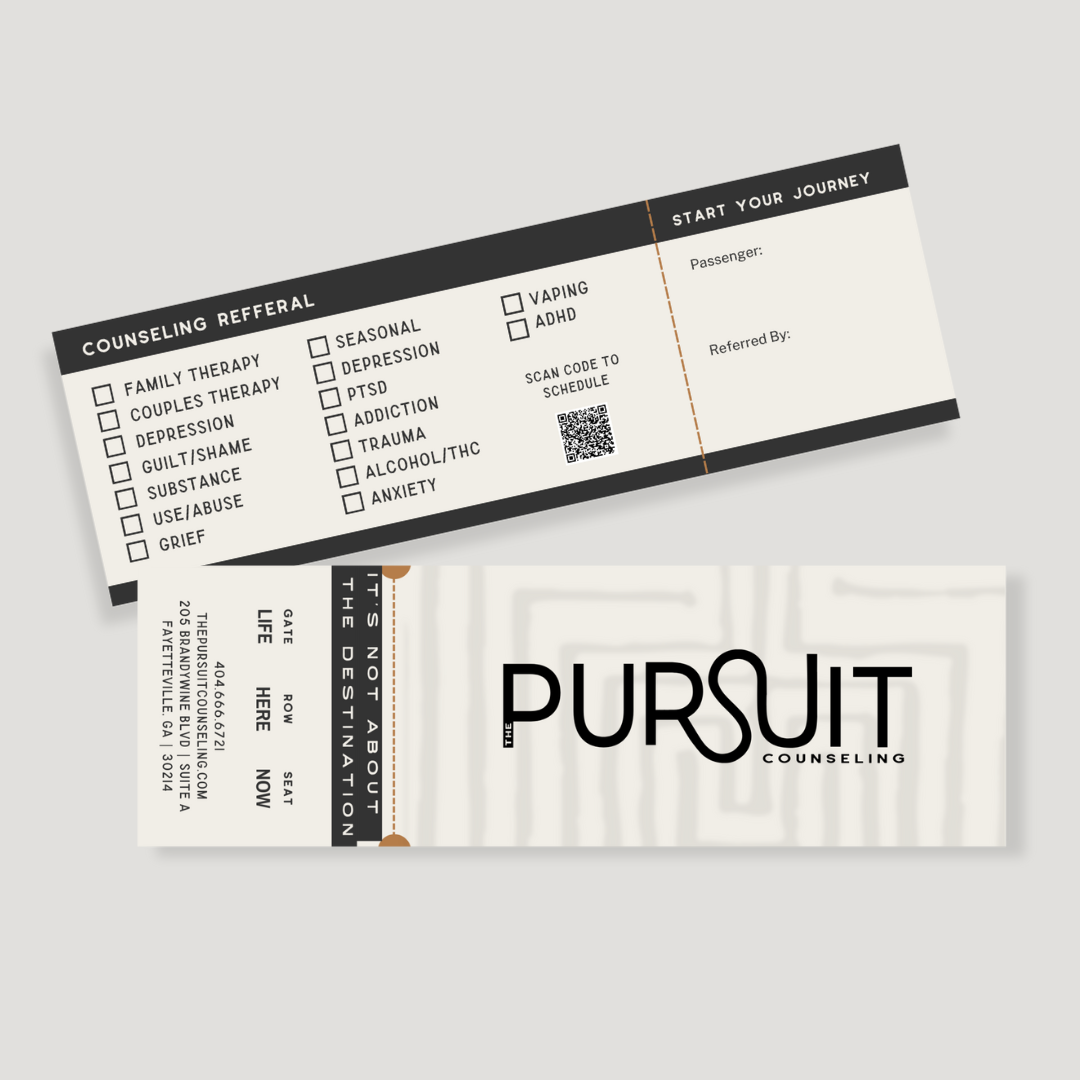
“You should look into therapy” is advice with nowhere to go. It requires the other person to do research, make a decision, and take initiative, all while already depleted — which is usually exactly why they haven’t done it yet. A name, a card, a QR code, a direct link removes several steps between “someone cares” and “someone acted.”
This is the whole logic behind physical referral materials in the first place — not because a card is magic, but because concrete beats abstract every time someone is already overwhelmed.
Let go of the outcome
This is the part people skip, and it’s the part that makes referring sustainable instead of draining. You did your job the moment you named what you noticed and pointed toward something real. Whether they follow through, when they follow through, or whether they ever mention it again — none of that is a verdict on how well you referred them.
Good referrals plant something. They don’t always get to watch it grow into anything, and that’s not a failure. It’s just not yours to carry past the moment you handed it over.