


Equine-assisted learning gives leaders immediate, nonverbal feedback that reveals how they actually show up in a room, and that feedback helps develop presence, trust, and emotional intelligence in ways a conference room rarely can. The approach works best for senior leaders and teams wrestling with communication or trust breakdowns. The evidence is promising but still early, so it belongs alongside licensed clinical care and certified facilitators, not in place of them.
TL;DR:
- Equine-assisted learning produces measurable improvements in self-awareness, emotional intelligence, and trust, especially when combined with follow-up coaching and integration work.
- Programs vary from single-day retreats to multi-day intensives and typically cost between and 0 per session, with longer or group formats costing more.
- Reputable programs should have certified facilitators, clear safety and horse welfare protocols, and provide measurable goals; observing a session can help verify quality before committing.
- Lasting change depends heavily on post-session reflection, coaching, and deliberate application of insights to workplace behaviors over weeks or months.
- Equine work is best suited for leaders needing to rebuild trust or presence, but it is not a substitute for clinical treatment of trauma or burnout.
Table of Contents
- What Is Equine Therapy for Executives, and How Does It Work?
- Does Equine Therapy Actually Improve Leadership Skills?
- How Much Does Equine Therapy Cost, and What Does a Program Look Like?
- How Do You Choose a Reputable Equine Program for Executives?
- How Do You Turn Equine Insights Into Real Workplace Change?
- Who’s Behind This Approach: Clinical Grounding at The Pursuit Counseling
- When Is Equine Work the Right Move for a Leader?
- Ready to Explore an Equine-Informed Executive Program?
- Sources
- FAQ
What Is Equine Therapy for Executives, and How Does It Work?
The term “equine therapy for executives” gets used loosely, but three distinct modalities hide underneath it. Equine-assisted learning (EAL) is the leadership-focused version: experiential, coaching-oriented, and built around ground exercises rather than clinical treatment. Equine-assisted psychotherapy (EAP) pairs a licensed mental health clinician with a horse specialist to treat specific psychological conditions. Hippotherapy is a physical therapy discipline using horse movement for motor and sensory rehabilitation, and therapeutic riding focuses on riding skills for people with disabilities. For a leadership audience, EAL is the relevant modality.
The mechanism is simpler than the language suggests. Horses are prey animals wired to read posture, breathing, and energy in the humans around them, which makes them sensitive, immediate mirrors of incongruence between what a leader says and what their body communicates. A horse will not respond to a title or a rehearsed pitch. It responds to whether you are actually calm, actually confident, actually present.
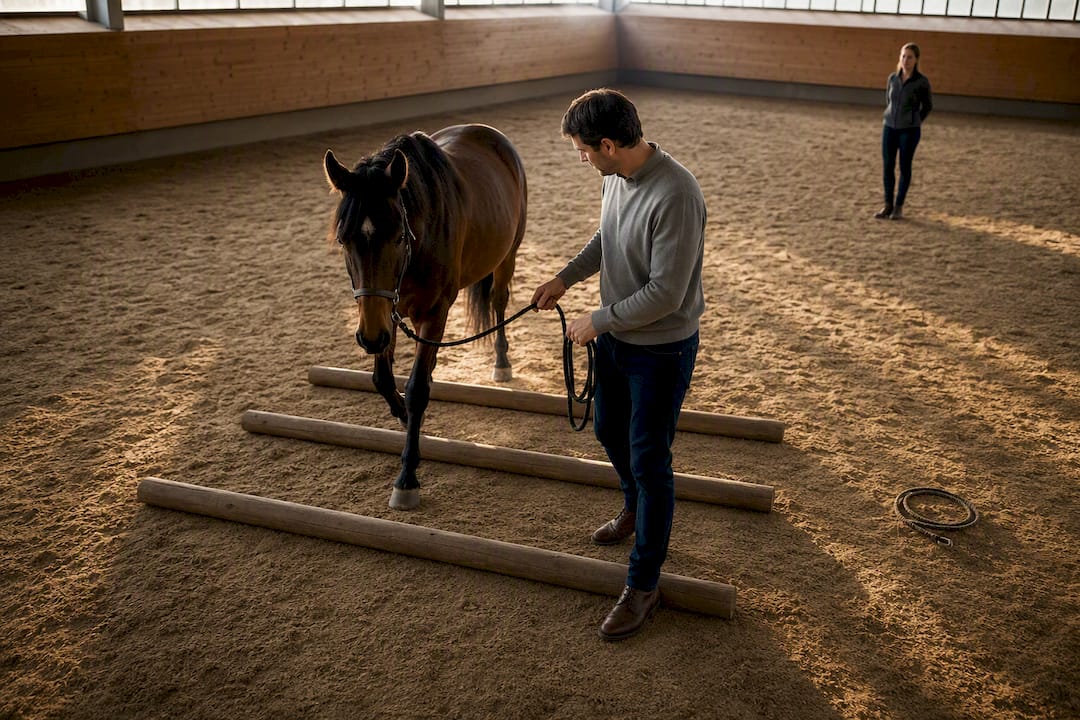
Sessions typically stay on the ground: leading a horse through an obstacle without a halter, working as a team to move a horse into a pen (a classic “join-up” exercise), or simply standing near a horse and noticing what shifts in its behavior when your own state changes. Riding is optional and rarely central. None of this replaces therapy for diagnosed conditions. It is an experiential complement to executive coaching, not a substitute for clinical treatment when clinical treatment is what’s needed.
Does Equine Therapy Actually Improve Leadership Skills?
The research points in a consistent direction, though it is narrower than marketing copy often implies. A 2025 literature review found that EAL interventions produce measurable gains in self-awareness, emotional intelligence, nonverbal communication, trust building, and adaptability among leaders, while explicitly framing EAL as complementary to traditional leadership development rather than a replacement for it.
A separate qualitative study followed eight leaders through a five-day equine-assisted leadership development program and found something worth pausing on: participants reported embodied self-awareness and workplace behavioral changes that held for up to 12 months after the program ended. That is a longer follow-up window than most experiential leadership interventions bother to track.
One finding leaders should sit with: the same study links durable change not to the horse encounter itself, but to what happens afterward, meaning the debrief, the coaching, and the deliberate transfer of insight back into daily decisions at work.
The limitations matter too. Sample sizes in this field remain small. Comparisons against standard coaching or therapy are thin, and a 2019 clinical evidence review found that outcomes in equine-assisted psychotherapy trials were mixed when measured against standard treatment in controlled studies. That review concerned clinical populations, not executive development, but it’s a useful caution against overselling what any single intervention can promise.
The realistic takeaway: expect a genuine, often surprising jolt of self-awareness in the first session, and expect lasting change only if you follow through with integration work afterward.
How Much Does Equine Therapy Cost, and What Does a Program Look Like?
Formats vary more than most executives expect walking in. Options include:
- Single-day corporate retreats built around a specific leadership theme (trust, decision-making under pressure, giving feedback).
- Multi-day intensives, often three to five days, combining multiple ground exercises with structured reflection.
- Cohort programs for intact leadership teams working on collective dynamics rather than individual insight.
- One-on-one equine-facilitated coaching, usually recurring, paired with an executive coach or therapist.
A typical session opens with a grounding conversation about the leader’s current challenge, moves into one or two structured horse exercises, and closes with a debrief connecting what happened with the horse to a real pattern at work. Session costs generally run in the to 0 range depending on format, location, and whether a licensed clinician is part of the facilitation team. Multi-day intensives and executive cohort programs cost more, reflecting facilitator time, horse care, and group size.
Expect immediate insight in the first session. Expect actual workplace change to take longer, usually weeks to months of integration work. Equine-assisted services in the US are private-pay; insurance rarely covers EAL, and even clinical EAP is inconsistently reimbursed. Hippotherapy, because it’s delivered by licensed physical or occupational therapists, sometimes qualifies for insurance coverage in a way leadership-focused EAL does not.
How Do You Choose a Reputable Equine Program for Executives?
There is no single US regulator overseeing equine-assisted services, which means the burden of vetting falls on you. Facilitator credentials and documented safety protocols are the strongest signals of quality currently available, since no national licensing body fills that gap.
Ask a prospective program these questions before booking:
- What specific leadership outcomes does this program target, and how do you measure them?
- Are your facilitators certified through a recognized body such as EAGALA, and is a licensed clinician involved if therapeutic claims are made?
- What are your horse welfare practices, and can you describe how horses are selected and rested between sessions?
- What does post-program integration look like, and do you offer follow-up coaching?
- Can you share a sample agenda and references from past corporate clients?
Watch for red flags: vague promises of “transformation” with no measurable goals, no licensed clinician on staff despite therapeutic language in the marketing, or reluctance to discuss how horses are cared for. A program confident in its work will show you both.
Pro Tip: Ask to observe a live session, or request a short corporate showcase before committing your full leadership team to a multi-day program. A twenty-minute observation tells you more about facilitator skill and horse welfare than any brochure.
How Do You Turn Equine Insights Into Real Workplace Change?
Insight without follow-through fades fast. The leaders who see lasting change treat the equine session as the starting point, not the finish line, pairing it with structured coaching conversations and a concrete action plan tied to specific behaviors they noticed in the round pen.
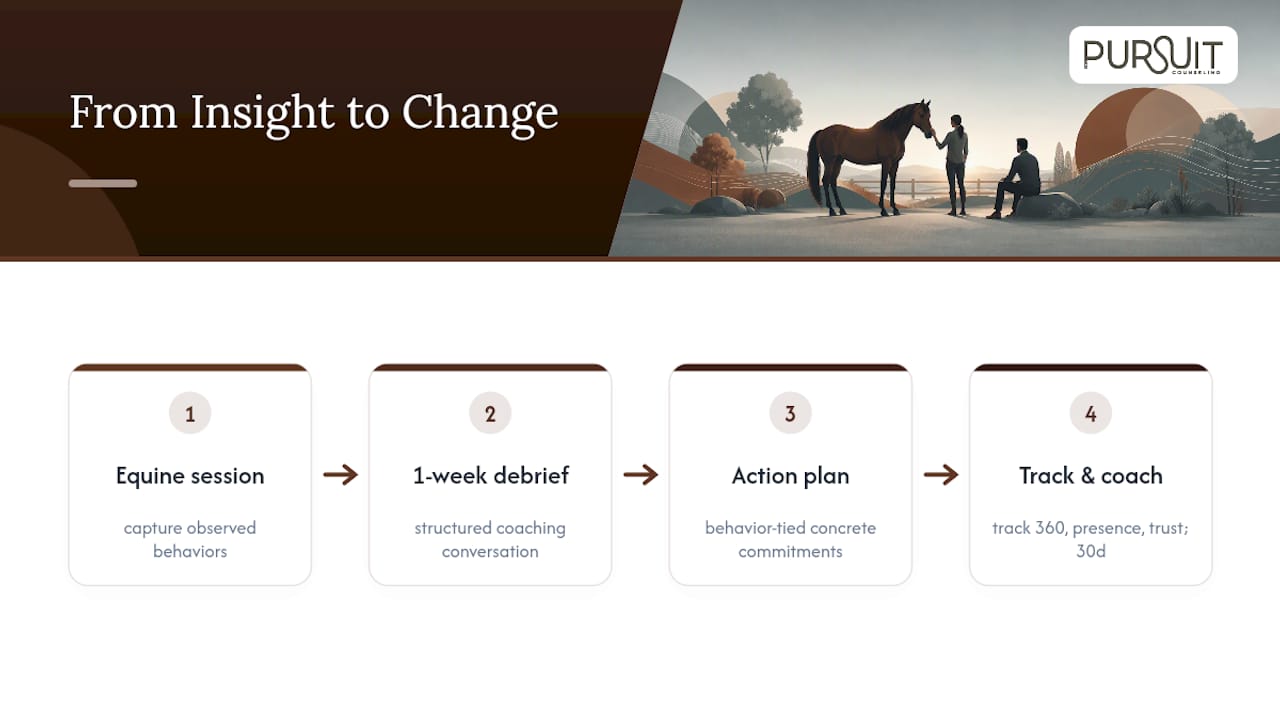
Useful metrics to track afterward include 360-degree feedback scores, self-rated presence or stress levels before and after key meetings, and qualitative trust ratings from direct reports. A sensible cadence is a follow-up conversation within a week of the session, then another around the 30-day mark, with leadership-focused coaching continuing as needed to reinforce what surfaced with the horses. Skip this step, and the insight tends to stay a nice story from an offsite rather than a shift in how you actually lead.
Who’s Behind This Approach: Clinical Grounding at The Pursuit Counseling
Equine-informed leadership work carries more weight when it’s built on clinical training, not just an afternoon with horses. Adam Glendye, executive therapist at The Pursuit Counseling, works specifically with CEOs, founders, and high performers navigating the pressure that comes with leading under scrutiny.
Executives don’t need another motivational exercise. They need an accurate mirror and a clinician who knows what to do with what that mirror shows.
The Pursuit Counseling integrates equine-informed work with neuroscience-based approaches including EMDR and neurofeedback, so insights from a session with horses connect to a broader clinical picture rather than standing alone. Executives working with a clinician-integrated program can expect confidentiality standards consistent with licensed therapy, clinical oversight when trauma or diagnosable conditions surface, and structured coaching to carry insights back into daily leadership.
When Is Equine Work the Right Move for a Leader?
Equine-assisted learning earns its place when a leader needs to rebuild trust with a team, steady their composure under real stakes, or finally see the gap between their intended presence and their actual impact. It is not a standalone fix for anxiety, trauma, or clinical burnout. One executive we’ve seen this pattern with: sharp strategist, but every direct report described him as unreadable. A single session with a horse made that unreadability physical and undeniable, in a way no performance review ever had.
— Adam
Ready to Explore an Equine-Informed Executive Program?
If you’ve read this far, you already understand the gap between a motivational offsite and an equine program grounded in clinical expertise. The Pursuit Counseling is the option for executives who want horses used purposefully, integrated with real therapeutic training, not as a novelty add-on to a retreat agenda. That’s the sharpest difference between what’s available generally and what you get here: clinical oversight from a therapist who also does executive work, not a coach borrowing therapeutic language.
An intake typically starts with a conversation about what’s actually driving you to consider this, whether that’s a trust breakdown on your leadership team, chronic stress you can’t shake, or a pattern your 360 feedback keeps flagging. From there, Adam and the team map a program that may include equine-informed sessions alongside coaching and counseling built for leaders. If you’re ready to talk specifics, the next step is simple: get started with an initial consultation and find out whether this approach fits where you actually are right now.
Sources
- Equine-assisted learning and leadership transformation: an exploratory qualitative study of workplace behavior (Frontiers)
- Equine-assisted experiential learning: A literature review of embodied leadership development in organizational behavior (MDPI, 2025)
- Clinical effectiveness of animal-assisted interventions: summary and appraisal (NCBI/Canadian report, 2019)
FAQ
How much does equine therapy cost per hour?
Individual sessions generally run to 0 depending on format and whether a licensed clinician facilitates, with multi-day executive intensives priced higher to reflect group size and facilitator time.
What is the 20 rule for horse riding?
This riding-safety guideline isn’t standard in equine-assisted leadership programs, which are ground-based rather than riding-focused; ask any program directly how they define safe riding practices if riding is included.
What smell calms horses?
Horses respond more to human posture, breathing, and energy than scent, which is exactly why they work as feedback tools for leadership presence rather than relaxation alone.
How much do equine therapists make?
Compensation varies widely by certification, region, and whether the practitioner is a licensed clinician (as in equine-assisted psychotherapy) or a certified facilitator running experiential leadership programs; published, verified national salary figures for this specific niche are not publicly available.
Is equine therapy covered by insurance for executives?
Equine-assisted leadership programs are almost always private-pay, since insurance rarely covers experiential leadership development, unlike hippotherapy, which licensed physical therapists sometimes bill through medical insurance.