


A bid for connection is any small attempt to get your partner’s attention, affection, support or shared joy, and the way you answer it, even briefly, quietly shapes how safe and close you feel together. A glance, a comment about the weather, a shoulder tap: each one asks, “Are you with me?” A warm, timely response says yes. Even a short acknowledgment counts.
Key Takeaways
Responding consistently to small bids for connection fosters intimacy, trust, and emotional well-being in relationships, and developing awareness and response strategies can improve relational closeness.
| Point | Details |
|---|---|
| Bids for connection | Bids are small gestures or comments that ask for attention, support, or affection, and noticing them builds emotional closeness. |
| Types of bids | Bids can be verbal or nonverbal, direct or indirect, and simple or complex, each requiring different levels of awareness. |
| Responses to bids | Turning toward involves engaging positively with a bid, turning away ignores it, and turning against responds with hostility or criticism. |
| Impact on well-being | Consistently turning toward bids increases trust, emotional health, daily intimacy, and physical affection over time. |
| The Pursuit Counseling approach | We recommend practicing small, regular responses to bids and seeking professional support if patterns of disconnection persist. |
Table of Contents
- What is a bid for connection, and what types are there?
- What do everyday bids actually look like?
- How should you respond: turn toward, turn away, or turn against?
- Why do bids matter for intimacy, well-being, and health?
- Why do bids get missed, and how can you repair the pattern?
- How can you practice turning toward in seven days?
- A therapist’s note: what realistic change looks like
- When you want guided support, we’re here for couples
- FAQ
- Sources
What is a bid for connection, and what types are there?
The term comes from the Gottman Method, which looks closely at ordinary moments between partners. A bid is the reach: a question, a gesture, a sigh, a joke, a hand on your arm. The response is what happens next. Most of the time, neither person is aware that anything significant just happened.
Bids come in several shapes, and learning to sort them makes them easier to spot.
Verbal or nonverbal. “Come look at this” is verbal. A deep exhale at the kitchen table, a lingering look, or a hand resting near yours is nonverbal. Nonverbal bids are the ones most easily missed, because they ask you to notice rather than listen.
Direct or indirect. “Can you sit with me for a minute?” is direct. “Long day,” said to the room, is indirect. Many of us learned to ask for closeness sideways, because asking outright felt risky. If you grew up that way, your partner’s indirect bids may sound like small talk until you learn to hear what sits under them.
Simple or complex. A simple bid asks for a moment of attention: “Did you see that bird?” A complex bid carries more weight, such as “I’m nervous about Thursday’s meeting,” which is really a request for steadiness.
Most bids also fall into a handful of categories:
- Attention: “Look at this.”
- Affection: a hug, a hand squeeze, a kiss on the head.
- Support: “I’m dreading tomorrow.”
- Shared activity: “Want to walk after dinner?”
- Affirmation: “Do I look okay?” or “I think I handled that well.”
Here is the reassuring part. Missing a bid now and then is normal, and Gottman’s own guidance points out that the real concern is a steady pattern of turning away, not an occasional lapse. You are not being graded on every moment. You are building a pattern, one small exchange at a time.
What do everyday bids actually look like?
Bids hide in plain sight, which is why they are so easy to walk past. Here are examples from the settings where couples tend to live most of their lives:
- At dinner: “My boss was weird today.” The surface content is trivial. The bid is “ask me about it.”
- With kids around: Your partner catches your eye over a child’s dramatic story and smirks. That look says “we’re in this together.”
- By text: “You will not believe what the dog did,” followed by a photo. The photo is an invitation to share a laugh.
- In digital spaces: A meme sent at 2 PM, a reaction emoji on your story, a link to an article with no comment. These are small, low-risk ways of saying “I thought of you.”
- Around chores: “Can you help me fold this?” can be a logistics request or a wish to stand next to you for ten minutes. Context tells you which.
- Through humor: A teasing remark, an inside joke, an impression of your mother. Playfulness is often how one person tests whether the door to closeness is open.
- Through touch and sex: A hand on your lower back, leaning into you on the couch, or a lingering kiss goodbye. Physical bids are also a gentle way to ask for affection without a conversation about it.
- Subtle ones: A comment on the weather, a long sigh while scrolling, a passing glance as you cross the room.
Context matters enormously. The same sigh could mean “I’m tired,” “I’m sad,” or “please notice me.” The same meme could be a joke or a message that says “I’m stressed and don’t know how to say it.” You don’t need to decode perfectly. You can simply respond with curiosity: “That sounded heavy. Want to tell me about it?” A guess that lands slightly off still communicates attention.
If you tend to be on the receiving end of a lot of indirect bids, you may feel tired or hypervigilant. If you tend to make bids that go unanswered, you may have stopped making them. Both experiences are common, and both are workable.

How should you respond: turn toward, turn away, or turn against?
Gottman describes three ways of answering a bid.
Turning toward means engaging, even a little. Your partner says, “Look at that sunset,” and you glance up: “Wow, that’s beautiful.”
Turning away means missing or ignoring the bid, often without meaning to. Your partner says, “Look at that sunset,” and you keep scrolling. It usually isn’t hostile. It’s distraction.
Turning against means answering with irritation, criticism or contempt: “Can you not interrupt me?” This one stings the most. Gottman’s commentary on turning against bids notes that repeated turning away or against builds resentment and isolation over time.
You do not need to be enthusiastic to turn toward. A clear, positive acknowledgment is enough to register as a helpful deposit. Here is how that can sound in practice:
- Low-energy acknowledgment (one line). “Mm, that’s great, love.” Look up for a second. Say it warmly. That’s it.
- A little more (two lines). “Oh nice. Tell me the funny part when I’m done with this.” You’ve acknowledged the bid and promised to return.
- Enthusiastic engagement (three lines). Put the phone down. “Wait, show me. That’s amazing. What did they say after that?”
- When you truly can’t engage. “I can’t give you my full attention right now, and I do want to hear this. Can we talk at eight?”
- Following through. At eight, say, “Okay, I’m all yours. What was the story?” Keeping the promise is what makes the deferral count as turning toward rather than turning away.
- When the bid is emotional. “That sounds really hard. I’m here. Do you want me to just listen, or help you think it through?”
The fallback script in step four matters more than it looks. Naming your limit honestly, with warmth and a time, is a form of connection. Silence, or a vague “later,” is not.
You may notice your own resistance as you read these. If you’re thinking “this feels scripted,” that’s fair. Scripts are training wheels. Over time they dissolve into your own words. What matters is the direction of your attention, not the exact phrasing.
Pro Tip: Small, consistent deposits beat occasional grand gestures. Brief, warm acknowledgments build a baseline of responsiveness that your partner can lean on when something harder comes along.
Why do bids matter for intimacy, well-being, and health?
The most cited finding comes from Gottman’s research on couples in daily, non-conflict moments. In his team’s observations, relationship “masters” turned toward their partner’s bids about 20 times more often than couples in distress. The difference wasn’t in grand romantic gestures. It was in the thousands of small moments between them.
In follow-up commentary, Gottman reports that newlyweds who stayed married turned toward more often than those who later divorced. Those figures describe one set of couples, not a prediction for yours, but they show how much steady, ordinary responsiveness can carry.
Researchers who study the broader idea, called perceived partner responsiveness (the sense that your partner understands, values and cares for you), have found links well beyond romance:
- Well-being. A 10-year longitudinal study of more than 2,000 married adults found that perceiving your partner as responsive predicted increases in eudaimonic well-being, the sense of purpose and meaning in life, a decade later.
- Daily intimacy. A daily-diary study found that self-disclosure and partner disclosure both contributed to daily intimacy, and that perceived partner responsiveness partly explained the effect. In plain terms, sharing matters, and feeling heard in response is what makes it land.
- Physical affection. Pooled daily studies showed that perceived responsiveness forecasts affectionate touch, and that increases in touch predicted the partner seeing the toucher as more responsive the next day. Closeness and responsiveness feed each other.
- Health. A study of couples where one partner had knee osteoarthritis found that greater daily empathic responsiveness from a spouse predicted better physical function across 18 months.
A 20-year longitudinal study reported that changes in perceived partner responsiveness over 10 years predicted how strongly people reacted emotionally to daily stressors, which in some models was linked to mortality risk a decade later. This is correlational research, so it doesn’t prove that responsiveness alone changes anyone’s health. It does suggest that feeling met by a partner is part of how bodies handle stress.
Here is the practical idea underneath all of this: a responsiveness baseline. When your partner has answered most of your reaching over time, an occasional distracted moment reads as “they’re tired.” When the baseline is thin, the same moment reads as “they don’t care.” Gottman calls the accumulation an Emotional Bank Account, where positive responses are deposits that buffer a relationship against stress and support trust. Consistency changes how every future moment is interpreted, including the hard ones.
Why do bids get missed, and how can you repair the pattern?
Most missed bids are not about love. They are about capacity. Here are the common reasons they slip by:
- Overload. After a day of decisions, emails and other people’s needs, your attention is spent before you walk in the door.
- Emotional numbing. If you’ve been through prolonged stress or hard experiences, feeling less can become a way of coping. Partners often read that numbness as indifference.
- Attachment histories. If asking for closeness was met with dismissal or unpredictability when you were young, you may under-send bids or struggle to receive them without bracing.
- Conflict avoidance. Some people deflect a bid because answering it might open a topic they fear. Staying quiet feels safer than getting it wrong.
- Distraction. Phones, screens and a mind rehearsing tomorrow’s schedule take up the space where noticing would happen. We write more about what blocks connection in couples if you want to look at the deeper patterns.
If you recognize yourself here, you are not broken. You are a person with a nervous system doing its best. The repair doesn’t require an overhaul. It starts small:
- Notice. Watch for bids without trying to fix anything. Awareness comes first.
- Name the pattern, briefly and without blame. “I think I’ve been missing a lot of your little moments lately, and I don’t want to.” That one sentence can ease a lot of silent hurt.
- Offer a small repair action. Put your phone in another room at dinner. Look up when your partner enters. Say “tell me more” regularly.
- Set a simple practice. Pick one habit you can keep for a week, not a dozen you’ll drop by Wednesday.
When you’re the one whose bids go unanswered, the repair works from your side too. Try making a direct bid instead of an indirect one: “I’d love ten minutes of your attention after dinner.” Direct requests can make it easier for your partner to understand what you need.
Some patterns are tangled up with grief, past betrayal or years of unspoken resentment, and a self-guided routine may not reach them. That is a legitimate reason to consider help. Couples who want trauma-informed approaches can find useful context in this article from Alvarado Therapy. Structured support, whether ongoing therapy or a concentrated intensive, can provide a space where the practice is guided and the hard conversations have a container.
How can you practice turning toward in seven days?
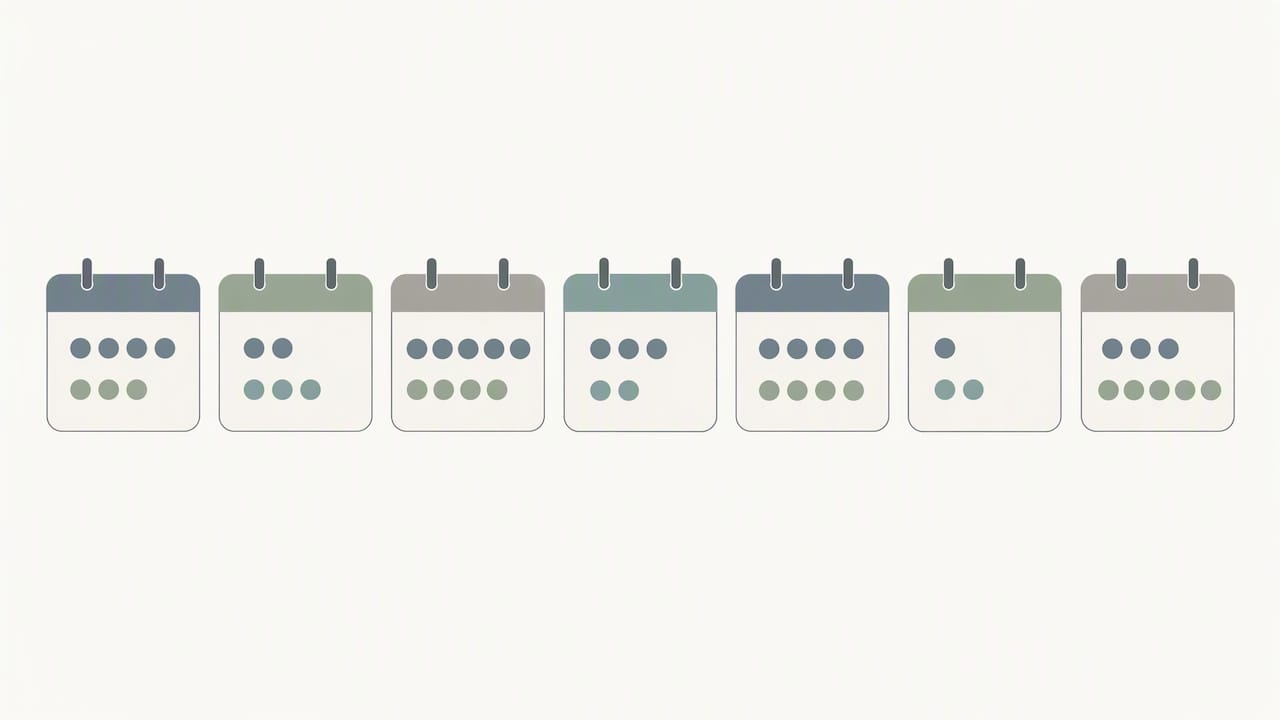
A routine works best when it is small enough to survive a busy week. Start with regular micro-checks, then try the practice plan.
The micro-check. Ask yourself: “What did my partner reach for today?” and “Did I notice?” You don’t need to journal. A quick mental review is enough. Set an intention to look up when they speak, and notice bids you turned toward or missed without scolding yourself.
A practice plan:
- Observe. Spot bids. Count them if it helps. Say nothing yet.
- Eye contact. When your partner speaks, look at them as they begin.
- Offer an acknowledgment. Use a low-energy script: “Mm, that’s great.”
- Send a bid. Make a small, direct request: “Can you sit with me for a while?”
- Try the fallback. If you’re busy, say “I can’t right now, and I want to hear this. Can we talk later?” Then follow through.
- Connect. Put away screens. Ask, “What was the best and hardest part of your day?” Listen without fixing.
- Review together. Share what each of you noticed. Keep it warm and curious.
A short partner exercise. Sit together for a while. Each person names a bid they made recently and how it was received, and a bid they noticed from the other person. Use “I noticed” and “I wished” rather than “you never.” The goal is shared language, not a scorecard.
Tracking progress without judgment. Keep a simple tally on your phone: bids noticed and bids answered. Look at patterns over time, not single days. If the number is low, treat that as information rather than a verdict. Some weeks will be thin, and that is normal.
Pro Tip: Tie the practice to something you already do, such as coffee, the commute home or brushing your teeth. Habits stick when they borrow an existing cue.
A therapist’s note: what realistic change looks like
I rarely see couples transform in a week, and I’d be wary of anyone who promised that. What I see is quieter. In the first weeks of practicing bids, many people feel awkward, even a bit self-conscious. That is a sign you are paying attention, not that it isn’t working. Expect uneven days. Expect your partner to be unsure how to respond to the new effort. Change comes gradually. If you do only one thing, try the practice plan above. If it stirs up more than you can hold alone, reaching out for a consult is a sensible next step, not a failure.
— Adam Glendye LPC, CPCS
When you want guided support, we’re here for couples
Some patterns are easier to shift with a guide beside you. At The Pursuit Counseling, we offer couples and relationship counseling and intensives where you can practice these skills, work through repair and stay accountable to the changes you want, without any promise of a particular outcome. If you’d like to talk it through, see our services and reach out.

This article is general information, not a substitute for advice from a qualified doctor. Consult a qualified healthcare professional about your own circumstances before acting on anything here.
FAQ
What are examples of bids for connection?
Bids can be as simple as “Look at this,” a hand on your arm, a shared meme or a sigh at the end of a long day. They can be verbal or nonverbal, direct or indirect, and each one asks for attention, affection, support or shared joy.
What are “bids for connection” in the Gottman Method?
In the Gottman Method, a bid is any attempt to get a partner’s attention, affection or support, and partners answer by turning toward, away from or against it. Gottman’s commentary describes stable couples as turning toward bids more often than couples in distress.
What is the 3-3-3 rule for intimacy?
We aren’t aware of a research-backed “3-3-3 rule” for intimacy, and definitions online vary, so we wouldn’t treat it as established. What the evidence does support is simpler: steady, everyday responsiveness, like the practices in our seven-day routine, builds closeness.
What is the intimacy rule sometimes described online?
We can’t point to a research-backed intimacy rule of this kind, and versions of it differ from source to source. A more reliable approach is to respond warmly to small bids rather than waiting to schedule closeness.
Sources
- An Introduction to Emotional Bids and Trust
- Pubmed
- Perceived Partner Responsiveness, Daily Negative Affect Reactivity, and All-Cause Mortality: A 20-Year Longitudinal Study – PMC
- Perceived Partner Responsiveness Forecasts Behavioral Intimacy as Measured by Affectionate Touch – PMC
- The interpersonal process model of intimacy in marriage: a daily-diary and multilevel modeling approach