


Short-term physical, emotional, or cognitive reactions after EMDR are common and usually transient. You might notice a headache, vivid dreams, or a wave of sadness or irritability in the hours or days after a session. Red flags that warrant urgent attention include chest pain, severe dissociation, or persistent thoughts of suicide. With a therapist who monitors your responses and builds in aftercare, most reactions fade on their own.
Key Takeaways
Most side effects of EMDR are short-term, manageable, and fade within days when monitored properly and supported by a skilled clinician.
| Point | Details |
|---|---|
| Physical reactions | Headaches, dizziness, fatigue, muscle tension, and nausea often occur during or shortly after sessions. |
| Emotional swings | Clients may experience mood swings, sadness, or anger waves that typically pass within minutes to a day or two. |
| Cognitive effects | Brief confusion, concentration issues, or mild dissociation can happen, usually resolving within a few days. |
| In-session vs. after-effects | In-session reactions are managed with containment techniques, while lingering effects follow the session and are eased with aftercare. |
| The Pursuit Counseling approach | We tailor pacing and provide thorough stabilization, closely monitoring responses to ensure safe EMDR treatment. |
Table of Contents
- Short-term side effects you might experience: physical, emotional, and cognitive
- In-session reactions vs. after-session side effects
- How long side effects last and what changes the timeline
- When to contact your therapist and urgent red flags
- Practical aftercare: grounding, sleep, pacing, and medication coordination
- What the evidence says about adverse effects and reporting gaps
- Differences in side effects based on patient demographics or conditions
- Comparison of EMDR side effects with those of alternative therapies
- Tips for minimizing side effects before and during therapy sessions
- Clinician perspective on safety and setting expectations
- How we can help if side effects are weighing on you
- FAQ
- Sources
Short-term side effects you might experience: physical, emotional, and cognitive
EMDR asks your nervous system to revisit painful material while staying anchored in the present. That combination can stir up reactions that feel surprising if nobody warned you about them, but most fall into predictable categories.
Physical reactions tend to show up first, often within the session itself or in the hours right after:
- Headache or a sense of pressure behind the eyes
- Dizziness or lightheadedness
- Fatigue that feels heavier than normal tiredness
- Muscle tension, especially in the jaw, shoulders, or neck
- Mild nausea
- Tingling or other unusual body sensations during the reprocessing sets
Emotional reactions can arrive in waves rather than a steady climb. You might feel a spike in sadness, anger, or anxiety that passes within minutes, or notice your mood swinging more than usual for a day or two afterward. Some clients describe a new insight about an old memory that feels destabilizing before it feels clarifying, which is part of why pacing matters so much in this work.
Cognitive reactions are less talked about but just as real: brief confusion, trouble concentrating, patchy memory for parts of the session, or short dissociative moments where you feel distant from your surroundings. Severity ranges widely. Many people describe these as mild and over within a day; a smaller number feel them more intensely for several days.
The Department of Veterans Affairs describes the discomfort that comes with focusing on trauma as usually brief, noting that most people feel better as they continue treatment and that clinicians are expected to monitor responses and build safety plans around them. That framing matters: a hard session is not evidence that EMDR is failing you.
Pro Tip: Keep a simple log of what you felt and when it faded. Patterns across sessions give your therapist real data to adjust pacing, rather than a vague sense that “it was rough.”
In-session reactions vs. after-session side effects
Not every reaction belongs to the same clock. What happens while you are actively reprocessing a memory is different from what lingers once you leave the room, and your therapist responds to each differently.
- In-session processing often includes brief waves of distress, tears, or physical sensations like a tight chest or racing heart as the memory network activates. A skilled clinician slows the sets, checks in verbally, and uses containment techniques to keep you from getting stuck in the material.
- After-session effects show up once the formal reprocessing has ended: fatigue, vivid or unusual dreams that night, or a mood shift that lingers into the next day.
- Closure and containment, which make up Phase 7 of the EMDR protocol, are built specifically to reduce that carryover. Your therapist guides you back to a calmer state before you leave, using imagery or grounding so the session does not just end abruptly mid-memory.
- When a reaction signals a plan change, in-session reactions that are unusually intense or that do not settle with standard containment often mean the pacing needs adjusting: shorter sets, more stabilization work, or a different target sequence.

How long side effects last and what changes the timeline
Most physical symptoms, like headache or fatigue, resolve within hours to a few days. Emotional shifts and vivid dreams can stretch longer, sometimes lingering for several days as your mind continues processing material between sessions.
A few factors tend to stretch that timeline:
- Co-occurring conditions such as depression, chronic anxiety, or a dissociative disorder
- Recent changes in psychiatric medication
- Sessions that move faster or dig deeper than your current stabilization skills support
- Limited grounding or containment practice between sessions
Practical scheduling helps more than people expect. Avoid booking an intense session right before a demanding meeting, a flight, or a day that requires sharp focus. Give yourself room afterward: a lighter evening, a walk, something that lets your nervous system settle rather than sprint into the next task.
If side effects consistently stretch past a few days or intensify rather than ease, that is worth a direct conversation with your therapist about pacing. EMDR is not meant to leave you depleted for a week at a time.
When to contact your therapist and urgent red flags
Most reactions after EMDR are manageable at home with rest and grounding. A smaller set of signs need faster attention.
- Chest pain or shortness of breath that does not resolve with calming techniques warrants a medical evaluation, since trauma-related symptoms can sometimes mimic or mask physical issues.
- Loss of consciousness or seizure activity requires immediate medical care.
- Severe or prolonged dissociation, where you feel detached from your body or surroundings for an extended period and standard grounding does not bring you back, should be reported right away.
- Active suicidal intent, as opposed to passing thoughts, calls for urgent psychiatric evaluation rather than waiting for the next scheduled session.
Less urgent but still important: functional impairment that lasts more than a few days, or a felt worsening that stretches beyond a week. When you reach out, give your therapist specifics: when the reaction started, what triggered it, how intense it felt on a simple scale, and whether it has changed over time. That detail lets your clinician adjust the plan instead of guessing.
Pro Tip: If you are also working with a psychiatrist or primary care provider, let them know you are in active EMDR treatment. Side effects like sleep disruption or mood shifts are easier to interpret correctly when every provider has the full picture.
Practical aftercare: grounding, sleep, pacing, and medication coordination
Aftercare is not an afterthought in EMDR. It is part of what keeps the work safe and tolerable.
Grounding techniques give you something concrete to do when a reaction spikes:
- 5-4-3-2-1 sensory scan: name five things you see, four you hear, three you can touch, two you smell, one you taste
- Sensory anchors: a specific scent, a textured object, or cold water on your hands to pull attention into the present
- Paced breathing: inhale for four counts, hold for four, exhale for six, repeated until your heart rate settles
Sleep often takes a hit after an intense session, especially with vivid dreams. Scheduling EMDR earlier in the day when possible, building a wind-down routine before bed, and trying a short guided relaxation can all soften that disruption.
Pacing matters just as much as technique. Plan low-demand time after an intense session rather than stacking it before a big presentation or a packed evening. Some clients find short “mini-rests,” five or ten quiet minutes between a session and the next obligation, enough to reset.
If you take psychiatric medication, mention any new or intensified side effects to your prescriber, particularly sleep changes or mood swings that outlast a few days. Short-term medication adjustments are sometimes discussed during active trauma work, and your prescriber needs to know what is treatment-related versus what might need its own attention. The preparation guidance from Nortex Psychiatry on what to bring up during an intake applies here too: specifics help your provider help you.
Before starting a demanding reprocessing phase, it is reasonable to ask your therapist directly for extra containment work, a body-scan check-in at the end of session, or smaller, more titrated targets if you know you tend to feel things intensely.
What the evidence says about adverse effects and reporting gaps
The honest answer is that EMDR research has a blind spot around side effects, and it is worth knowing about before you start.
The American Psychological Association describes common EMDR side effects as transient and similar to those seen in other trauma-focused therapies: temporary increases in distressing emotions, uncomfortable physical sensations, or fatigue following a reprocessing session, typically expected to ease as treatment continues.
- Published guidance frames these reactions as expected processing, not treatment failure, and recommends clinicians prepare clients in advance and check in each session.
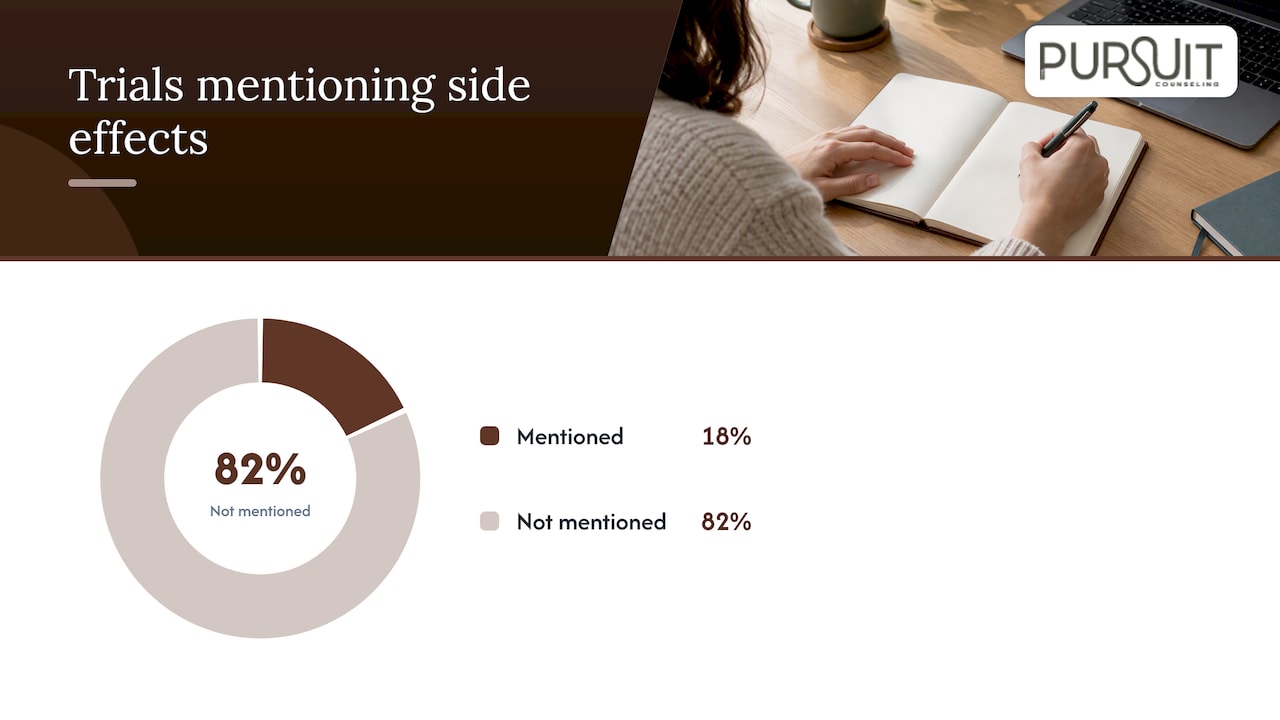
- A review from Tilburg University found that only nine of 51 randomized controlled trials of EMDR mentioned adverse effects at all, and just one used a systematic assessment protocol, a gap that limits how confidently anyone can speak to EMDR’s full safety profile.
- Meta-analytic evidence shows EMDR produces moderate-to-large reductions in PTSD symptoms compared with passive controls, with serious adverse events rare in the trials that did report them, though reporting inconsistency across studies makes that rarity harder to state with full confidence.
The practical takeaway: ask any therapist offering EMDR how they monitor and document side effects session to session. A clinician who tracks this closely is working from a more complete picture than the published literature alone provides.
Differences in side effects based on patient demographics or conditions
Side effects are not uniform across every person who tries EMDR. Clients with complex trauma histories, dissociative tendencies, or multiple co-occurring diagnoses often need more stabilization work before reprocessing begins, and they may experience more intense in-session reactions when that groundwork is skipped. The VA’s decision aid materials point to the value of clear informed-consent conversations precisely because risk tolerance and reaction intensity vary by individual history, not just by diagnosis.
Age and general health can shape the physical side of things too: fatigue or tension headaches may hit harder in someone already managing chronic illness or sleep problems unrelated to therapy. Clients on certain psychiatric medications may notice different emotional intensity during reprocessing, which is part of why coordinating with a prescriber matters. None of this means EMDR is off the table for anyone with a complicated history. It means the pacing, stabilization, and monitoring should be tailored rather than generic.
Comparison of EMDR side effects with those of alternative therapies
EMDR’s side-effect profile looks a lot like other trauma-focused approaches: temporary spikes in distress, fatigue, and sleep disruption show up in exposure-based therapies and trauma-focused cognitive behavioral therapy too. A randomized-trial analysis published in the Journal of Consulting and Clinical Psychology found that temporary symptom exacerbation occurs in a minority of clients across trauma-focused treatments generally, and that this spike does not reliably predict worse outcomes or higher dropout.
What differs is less the type of reaction and more the delivery: EMDR’s use of eye movements or other dual-attention stimulation, combined with structured closure and containment at the end of each session, is designed specifically to limit carryover distress between appointments. Talk therapies without that structured closure step may leave some clients processing raw material for longer stretches between sessions. Neither approach is inherently safer across the board. The deciding factor tends to be how well the specific clinician builds in stabilization and aftercare, regardless of modality.
Tips for minimizing side effects before and during therapy sessions
A few habits make reprocessing sessions more tolerable without changing the work itself.
Before a session, protect your schedule: avoid stacking an intense EMDR appointment against a high-stakes meeting or a day you need to be sharp. Get a reasonable night of sleep beforehand when you can, and eat something before you go so you are not managing low blood sugar on top of emotional processing.
During a session, speak up early if something feels too fast. Containment and body-scan check-ins work best when you flag discomfort in real time rather than pushing through it. If you know grounding techniques that work for you, like paced breathing or a sensory anchor, mention them to your therapist so they can weave them into the session itself rather than only using aftercare. Therapists who explain the eight phases of EMDR up front, including what body scan and closure actually involve, tend to produce clients who feel more in control of the process rather than carried along by it.
Clinician perspective on safety and setting expectations
Informed consent in EMDR should sound specific, not reassuring in a vague way: what reprocessing feels like, what containment looks like, and what counts as a reason to pause. When a client reports a side effect, we are listening for pattern and intensity, not just the presence of discomfort, since discomfort itself is often part of the work doing its job. Our approach means safety planning and pacing adjustments happen in real time during sessions, with follow-up between appointments as an integral part of care.
— Adam Glendye LPC, CPCS
How we can help if side effects are weighing on you
If what you are reading here sounds close to what you are feeling, you do not have to sort it out alone or guess at whether a reaction is normal. 
We offer trauma therapy with EMDR built around careful pacing, informed consent that actually explains what to expect, and clinician supervision that tracks your responses session to session rather than assuming one protocol fits everyone. Here is what that looks like in practice:
- An intake assessment that reviews your history, current stressors, and readiness for reprocessing work
- A tailored pacing plan, adjusted in real time if sessions bring up more than expected
- We offer both in-person and online sessions to fit your schedule.
Reaching out starts with a conversation, not a commitment. Visit our EMDR and trauma therapy services to see how we structure sessions and get in touch to talk through what you are experiencing before deciding on next steps.
This article is general information, not a substitute for advice from a qualified doctor. Consult a qualified healthcare professional about your own circumstances before acting on anything here.
FAQ
Does EMDR have long-term side effects?
Most documented side effects of EMDR are short-term and resolve within days, not weeks or months. Long-term risk data remain limited because, according to a systematic review, most EMDR trials do not systematically track adverse effects past the treatment window.
Who does EMDR not work for?
EMDR is not automatically ruled out for any single diagnosis, but clients with significant dissociation, unmanaged psychosis, or unstable medical conditions often need additional stabilization before reprocessing begins. A therapist trained in EMDR assessment can help determine readiness rather than relying on a general checklist.
Is it possible to experience dissociation during EMDR therapy?
Yes, brief dissociative moments such as feeling distant from your surroundings can occur during reprocessing, particularly for clients with a trauma history that already involves dissociation. Clinicians use grounding and containment techniques to bring clients back to the present, and more severe or prolonged dissociation should be reported right away.
Why am I struggling with EMDR?
Struggling during EMDR often means you are approaching avoided memories, which the American Psychological Association frames as expected processing rather than a sign the treatment is failing. If the struggle feels disproportionate or is not easing with standard pacing and containment, that is a reason to talk with your therapist about adjusting the approach rather than pushing through alone.
Sources
- What is EMDR therapy and why is it used to treat PTSD? — American Psychological Association
- Eye Movement Desensitization & Reprocessing (EMDR): What is it? — U.S. Department of Veterans Affairs (National Center for PTSD)
- Adverse effects of Eye Movement Desensitization and Reprocessing therapy: A neglected but urgent area of inquiry — Tilburg University / review
- Systematic reviews and meta-analyses on EMDR effectiveness and safety — PMC
- Journal of Consulting and Clinical Psychology: symptom exacerbation during trauma-focused therapy