


Yes, trauma intensive therapy is available across Georgia, through EMDR intensives, intensive outpatient programs, day programs, and telehealth delivered by licensed clinicians. These formats suit people with PTSD or trauma symptoms who want faster movement than weekly sessions typically allow, or who feel stuck despite months of talk therapy. If you’re in crisis right now, call or text 988 for 24/7 support. There are local intensive options in Fayette County for those ready to explore this path.
TL;DR:
- EMDR, CPT, and PE are the only trauma therapies with the strongest evidence, typically requiring 10 to 12 weeks of work, whether delivered weekly or intensively.
- Telehealth intensives are a valid and effective option when platforms are secure, and safety protocols like emergency contacts and informed consent are established.
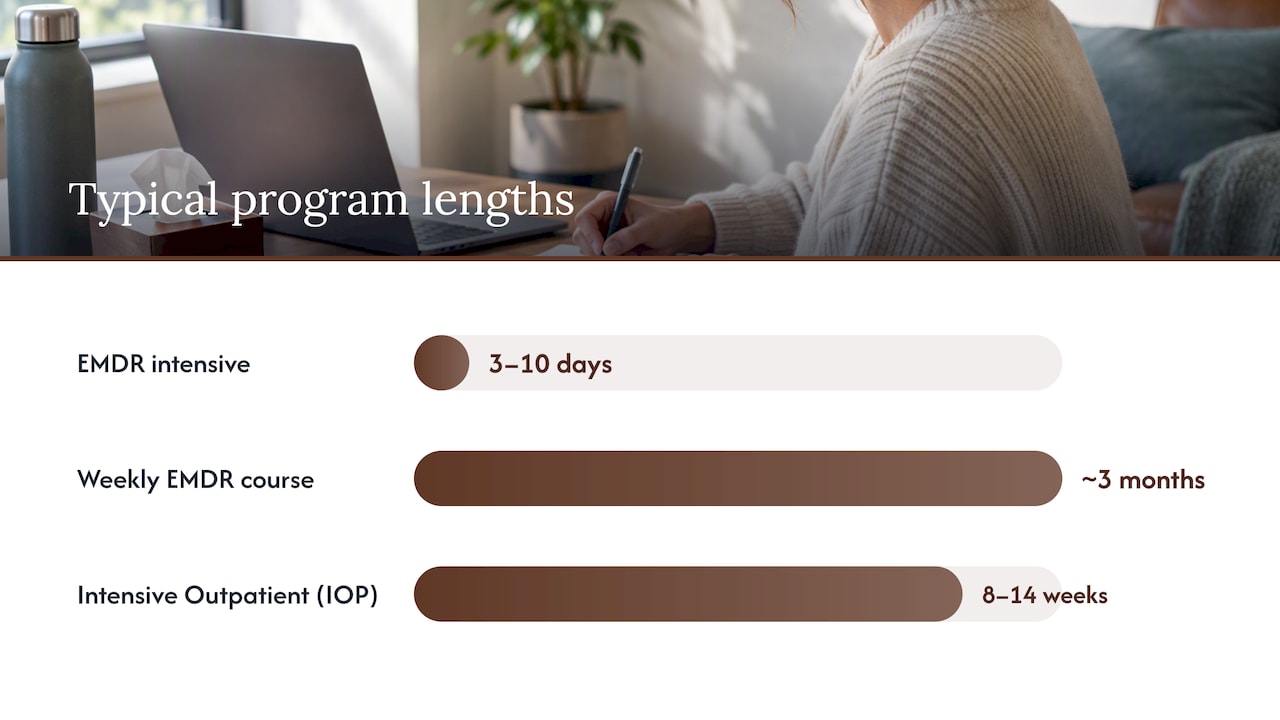
- Intensive programs usually last 3 to 10 days for EMDR or 8 to 14 weeks for outpatient therapy, with longer sessions and increased emotional fatigue compared to weekly slots.
- Proper screening, clinician certification, safety planning, and clear aftercare policies are essential when choosing an intensive program to ensure safety and efficacy.
- Most people benefit from follow-up care after an intensive, including returning to regular outpatient therapy or ongoing check-ins, to support integration and stability.
Table of Contents
- What trauma intensive therapy looks like and the formats you’ll find in Georgia
- Which therapies the evidence actually supports
- What to expect during an EMDR intensive or IOP
- How to choose an intensive program in Georgia
- A local, clinician-backed option in Fayette County
- What comes after the intensive ends
- Getting to and through an intensive program in Georgia
- Clinician perspective: who benefits most, and what a fair trial looks like
- How Pursuit can help: booking an assessment or exploring intensives
- Sources
- FAQ
What trauma intensive therapy looks like and the formats you’ll find in Georgia
“Intensive” describes how care is delivered, not a different kind of therapy. Instead of one session a week stretched across months, treatment gets condensed: longer sessions, more frequent contact, and tighter clinical oversight, all aimed at moving through trauma material without the usual gaps between appointments. That structure changes the experience. A single insight in a weekly session might take three weeks to build on. In an intensive, that same insight gets worked the next morning.
Georgia clinicians offer several versions of this model:
- EMDR intensives: concentrated blocks, often spread across consecutive days, built around processing specific traumatic memories rather than general talk therapy.
- Intensive outpatient programs (IOPs): several hours a week combining individual sessions, group skills training, and clinician check-ins, without requiring an overnight stay.
- Day programs: a step up in hours from IOPs, often used when someone needs more structure than outpatient therapy but doesn’t need 24-hour inpatient care.
- Massed protocol blocks: shorter, accelerated formats, sometimes 3 to 10 days, designed to compress months of weekly work into a single stretch.
- Telehealth and hybrid intensives: the same formats delivered by secure video, which widens access for people outside metro Atlanta.
Telehealth intensives in Georgia carry a few practical requirements. Clinicians typically collect a local emergency contact, confirm where you’ll be physically located during sessions, and document informed consent before starting. Those steps aren’t bureaucratic friction. They’re what makes remote intensive work safe when someone is processing difficult material away from a clinician’s office.
Not every format fits every person. Someone newly diagnosed and still stabilizing daily life might do better easing into weekly care first. Someone who has already done groundwork in therapy, and simply wants to move faster, is often a stronger fit for a concentrated format.
Which therapies the evidence actually supports
Georgia has plenty of programs calling themselves trauma intensives, but the therapy happening inside that structure matters more than the schedule. The VA/DoD Clinical Practice Guideline for the Management of Posttraumatic Stress Disorder and Acute Stress Disorder identifies three trauma-focused psychotherapies as the primary recommended treatments: Prolonged Exposure, Cognitive Processing Therapy, and EMDR. These aren’t three equally vague options. They’re specific, manualized approaches with the strongest research base behind them, and the guideline treats them as first-line care ahead of other interventions when trauma-focused psychotherapy is feasible.
Prolonged Exposure, Cognitive Processing Therapy, and EMDR are recommended as trauma-focused psychotherapies for the treatment of PTSD.
Adapted from the 2023 VA/DoD Clinical Practice Guideline for PTSD
Many people no longer meet criteria for PTSD after roughly 10 to 12 weeks of trauma-focused psychotherapy, according to the National Center for PTSD, which names EMDR, CPT, and PE as the therapies with the strongest evidence behind them. That timeline is a useful anchor: an intensive doesn’t rewrite the biology of trauma recovery, it reorganizes how those same weeks of work get delivered.
The 2023 VA/DoD guideline also addresses format directly, recommending secure video teleconferencing for trauma-focused psychotherapy when it has been validated for telehealth delivery or when in-person options aren’t available. In practice, that means a well-run telehealth intensive isn’t a compromise version of care. It’s a recognized delivery method, provided the platform is secure and the therapy itself is one of the recommended approaches.
None of this removes your voice from the decision—consider learning more about individual therapy services that emphasize trauma-informed care to guide your choice. Choosing between EMDR, CPT, or PE, and between a weekly, intensive, or telehealth format, is a conversation between you and your clinician, not a template applied automatically.
What to expect during an EMDR intensive or IOP
Programs vary, but a few patterns hold across most Georgia providers.
- Timeline: EMDR intensives commonly run 3 to 10 days, compared with roughly three months of weekly EMDR sessions; IOPs often run 8 to 14 weeks. These are typical ranges, not guarantees, since pacing depends on your history and response.
- Session length: intensive days tend to involve longer sessions, sometimes multiple sessions in a single day, compared with the standard 50-minute weekly appointment.
- Emotional activation: it’s common to feel more raw or fatigued during an intensive stretch, since you’re processing material without a week to recover between sessions. Programs manage this with closer monitoring, scheduled check-ins, and a written crisis plan.
- Telehealth safety measures: encrypted platforms, documented emergency contacts, and a clear plan for what happens if you need in-person or emergency support mid-program.
- Fit check before starting: a competent intake process screens for whether an intensive is appropriate right now, rather than assuming everyone benefits from a compressed format.
Pro Tip: Ask any program how they handle a bad day mid-intensive, before you commit. Their answer tells you more about safety planning than their marketing page will.
Intensives aren’t the right starting point for everyone. Active, unstable suicidality or uncontrolled substance use usually means stabilization comes first, with an intensive considered later once you’re on steadier ground. If you’re in that kind of crisis today, call or text 988 for immediate, 24/7 support before anything else.
How to choose an intensive program in Georgia
Vetting a program takes more effort upfront, but it saves you from a bad experience halfway through a five-day commitment. Ask directly about:
- Clinician training: specific certification in EMDR, CPT, or PE, not just general trauma experience.
- Credentials: licensure as an LPC, LCSW, or psychologist, verifiable through Georgia’s licensing boards.
- Supervision and staff ratios: who oversees the clinical team, and how much individual attention you’ll actually get.
- Medical and emergency procedures: what happens if you need more support than the program is built to provide.
- Aftercare planning: whether there’s a documented plan for the weeks after the intensive ends.
Red flags are usually easy to spot once you’re looking for them: promises of a cure, no intake assessment before you’re scheduled, no written safety or aftercare plan, or pressure to prepay in full without a signed agreement outlining terms.
Cost is worth addressing early. Most intensive programs in Georgia run on a private-pay model rather than direct insurance billing, so ask about total cost, payment structure, and whether sliding-scale or financing options exist before you book.
Georgia first responders diagnosed with occupational PTSD may qualify for a ,000 lump-sum benefit and additional long-term disability provisions under the Ashley Wilson Act (HB 451). If that applies to you, ask a prospective program whether their staff can help you understand the claims process, since navigating that paperwork alongside starting treatment is a lot to carry alone.
Before you commit, confirm the scope of care in writing, ask how telehealth sessions are secured if that’s part of the plan, and get cancellation and refund terms on paper rather than a verbal assurance.
A local, clinician-backed option in Fayette County
The Pursuit Counseling, based in Fayetteville, Georgia, offers trauma therapy with EMDR alongside intensive program formats, available both in-person and through telehealth, serving Peachtree City, Senoia, Brooks, Tyrone, and the wider South Atlanta area. This article’s clinical author reference is Adam Glendye, LPC, CPCS.
Reaching out typically starts with an intake conversation: what’s brought you to this point, what you’ve already tried, and whether an intensive format or a different pace of care makes more sense for where you are right now. That conversation is education and screening, not a diagnosis delivered on a first call. A real assessment takes time and happens with a licensed clinician who has met you.
If you’re weighing whether EMDR fits your situation, the EMDR service page walks through how sessions are structured and what training the clinicians bring to that work. For a broader look at intensive formats and how they differ from ongoing weekly care, the intensives landing page outlines program options and next steps for scheduling.
What comes after the intensive ends
An intensive is a concentrated push, not a finish line. Most people benefit from some form of follow-up care afterward, whether that’s returning to weekly individual therapy, joining a lower-intensity group, or simply scheduling periodic check-ins with the clinician who guided the intensive work.
In Georgia, that follow-up often looks like a step-down structure: intensive work first, then a return to standard outpatient sessions at a lower frequency as things settle. Some clinicians build this into the program itself, with a follow-up session scheduled a few weeks out to see how the material is holding up in daily life. Others leave it more open, which is worth asking about before you start.
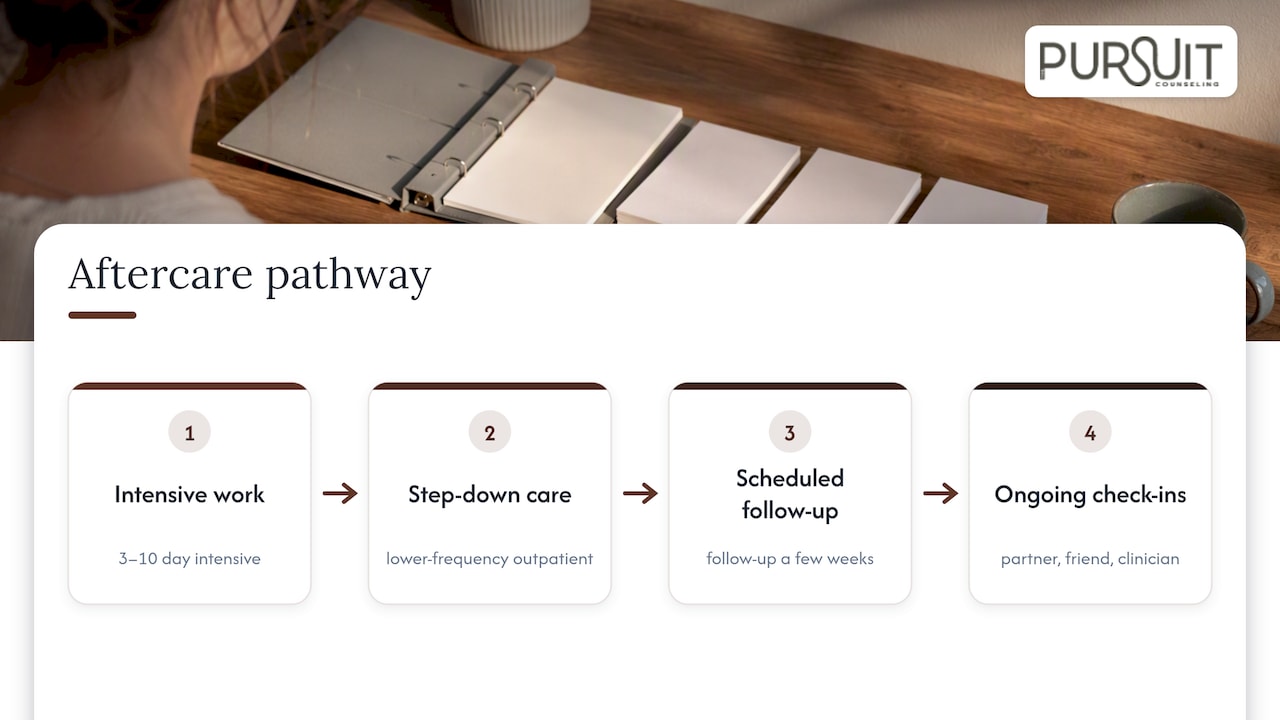
Integration, the process of letting the intensive work settle into daily routines and relationships, tends to go smoother when someone has a support system already in place: a partner who knows what you’ve been through, a friend who can check in, or a therapist who’s available for a shorter session if something resurfaces. Ask a program directly what their aftercare structure looks like before you commit, since a plan that ends the moment the intensive does leaves you managing that transition on your own.
Getting to and through an intensive program in Georgia
Access matters as much as the therapy itself. Georgia is a large state with real gaps between metro Atlanta and its rural counties, and that geography shapes who can realistically reach an in-person intensive.
Transportation is often the first practical hurdle. Multi-day formats mean multiple trips, or a hotel stay, for anyone living more than an hour from a provider. Telehealth closes some of that gap, letting people in rural counties access the same evidence-based therapies without the drive, provided the clinic has confirmed secure video delivery and a documented emergency contact for that location.
Disability accommodations vary by provider, so it’s worth asking directly about physical accessibility, session length adjustments, or communication supports before scheduling. A program that’s thought this through will have a clear answer rather than a vague one.
For rural Georgia residents, telehealth intensives are frequently the more realistic option, not a lesser one. The same three recommended therapies (EMDR, CPT, and PE) can be delivered securely by video, and the 2023 VA/DoD guideline supports that approach when the platform is validated for telehealth use. The deciding factor isn’t distance from Atlanta. It’s whether a program has built its remote delivery with the same safety planning it uses in person.
Clinician perspective: who benefits most, and what a fair trial looks like
Intensives tend to help most when someone has already stabilized daily life, has some support system in place, and has clarity about what they want to work through. Readiness matters more than urgency alone. A reasonable trial looks like this: complete the intensive, then reassess with your clinician a few weeks out to see what shifted and what still needs attention. That reassessment is the honest measure, not how you feel on day one. If you’re weighing this option, the next step is a real assessment with a licensed clinician, and if you’re in crisis today, 988 is available around the clock.
— Adam Glendye LPC, CPCS
How Pursuit can help: booking an assessment or exploring intensives
Weekly therapy works for a lot of people. It doesn’t work for everyone, and if you’ve been circling the same material for months without traction, a concentrated format might get you further in less time. The Pursuit Counseling offers EMDR and intensive therapy formats in Fayetteville and by telehealth, without requiring you to fit into a rigid, one-size schedule to get started.

If you’re considering this path, here’s where to start:
- Book an intake conversation to talk through your history and whether an intensive format fits.
- Ask directly about clinician credentials and specific training in EMDR or other trauma-focused approaches.
- Request a written safety and aftercare plan before committing to a program.
The Pursuit Counseling operates on a private-pay model, and staff can talk through payment structure and options during your first conversation. Explore intensive program options or review the full range of services and specialties to find the starting point that fits where you are.
Sources
- VA/DoD Clinical Practice Guideline for the Management of Posttraumatic Stress Disorder and Acute Stress Disorder (2023)
- Overview of Psychotherapy for PTSD – PTSD: National Center for PTSD
- 988 Georgia — DBHDD
- First Responder PTSD Program (Ashley Wilson Act) — Columbia County resource summary
This article is general information, not a substitute for advice from a qualified doctor. Consult a qualified healthcare professional about your own circumstances before acting on anything here.
FAQ
What is the most intense trauma therapy?
There’s no single therapy universally labeled “most intense.” EMDR, Cognitive Processing Therapy, and Prolonged Exposure are the three approaches with the strongest evidence, and any of them can be delivered in a concentrated, multi-day intensive format rather than spread across weekly sessions. Intensity describes the schedule as much as the therapy itself.
What is the 1013 law in Georgia?
Georgia uses a legal mechanism to initiate an emergency evaluation for someone who may be a danger to themselves or others due to mental illness, allowing temporary involuntary hospitalization for assessment. It’s a crisis intervention tool, separate from voluntary trauma intensive programs, and is typically used by law enforcement, physicians, or licensed clinicians. If you or someone you know is in that kind of danger right now, call or text 988 immediately.
Can racing thoughts be a symptom of PTSD?
Yes, racing or intrusive thoughts are a recognized symptom cluster in PTSD, often tied to hyperarousal or unresolved traumatic memories intruding on daily thinking. Trauma-focused therapies like EMDR, CPT, and PE are designed specifically to help process the memories driving that pattern.
What are the seven stages of trauma healing?
Frameworks describing stages of trauma recovery vary by clinician and model, so there’s no single agreed-upon “seven stages” that applies universally across the field. Broadly, most approaches move from safety and stabilization, through processing the traumatic material, toward integration and reconnection with daily life, though the exact steps differ by therapist and method.
Does The Pursuit Counseling offer EMDR intensives in Georgia?
The Pursuit Counseling provides trauma therapy with EMDR along with intensive program formats, available in-person in Fayetteville, Georgia and through telehealth across the state. An intake conversation is the first step to determine whether an intensive format fits your situation.